









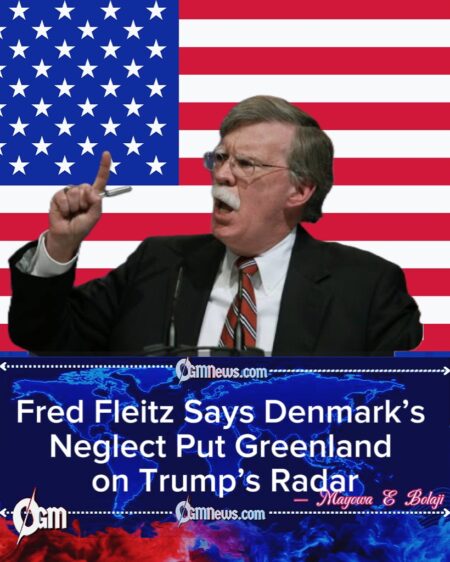
National Security Council chief of staff Fred Fleitz has highlighted concerns over Denmark’s approach to defending Greenland, saying the country’s perceived neglect of the strategically significant territory has drawn the attention of U.S. President Donald Trump, currently serving his second term. According to Fleitz, the president’s interest is a reflection of broader security priorities rather than personal or political motivations.
Fleitz’s comments underscore the growing global focus on Arctic security and the strategic importance of Greenland, which is rich in natural resources and occupies a critical geopolitical position between North America and Europe. The situation raises questions about the responsibilities of allied nations in safeguarding critical territories.
Strategic Importance of Greenland
Greenland, the world’s largest island, is of immense strategic value due to its location in the Arctic, proximity to key shipping routes, and potential natural resource deposits, including rare earth minerals and hydrocarbons. Analysts have long viewed Greenland as a geopolitical linchpin for the U.S. and NATO allies.
Fleitz emphasized that Denmark’s failure to adequately defend or invest in Greenland’s security infrastructure could compromise regional stability. The chief of staff suggested that neglect in Arctic defense creates vulnerabilities that could be exploited by competing global powers.
The Arctic has become a region of heightened military and economic interest, with nations like the U.S., Russia, and China actively monitoring and projecting influence.
Greenland’s security and governance, therefore, carry implications far beyond the island itself.
Fred Fleitz’s Assessment
In public statements, Fred Fleitz argued that President Trump’s interest in Greenland is rooted in pragmatic security concerns rather than territorial ambition.
Fleitz stated that Denmark’s approach has fallen short in meeting defense obligations, leaving strategic gaps that the U.S. must monitor closely.
Fleitz further stressed that Greenland is “too important to be ignored,” noting that the island’s Arctic position makes it a critical node for military operations, surveillance, and international trade routes. The remarks signal that the U.S. is increasingly attentive to its allies’ role in securing strategic assets.
U.S. Security Perspective
From a U.S. security standpoint, Greenland offers vital opportunities for early warning systems, missile defense, and Arctic monitoring operations.
Fleitz’s comments suggest that any perceived gaps in Denmark’s defense posture could trigger U.S. interest in ensuring the island’s security independently.
President Trump, serving his second term, has reportedly been closely following developments in Greenland and other Arctic territories. Officials argue that maintaining strategic oversight is essential to safeguarding both regional and global stability.
The focus on Greenland also reflects a broader U.S. strategy to project power in the Arctic while reinforcing commitments to NATO and allied defense frameworks.
Denmark’s Role and Response
Denmark has long been responsible for Greenland’s defense as part of its sovereign obligations. While Copenhagen maintains military presence and governance, critics argue that resource allocation and strategic planning have not kept pace with increasing geopolitical competition in the Arctic.
Fleitz’s remarks have drawn attention to these concerns, highlighting the need for Denmark to enhance Arctic readiness. Diplomatic sources suggest that improved coordination between Denmark and the U.S. could mitigate potential security gaps and reinforce allied cooperation in the region.
Global Implications of Arctic Security
The situation in Greenland has broader implications for Arctic geopolitics. As ice caps recede and new shipping routes emerge, Arctic territories are becoming more accessible, creating both economic opportunities and security challenges.
Experts suggest that U.S. attention, as highlighted by President Trump’s interest, is aimed at preempting conflicts, ensuring resource security, and maintaining freedom of navigation. Fleitz’s statements underscore the urgency of proactive defense measures and international coordination.
Balancing Diplomacy and Defense
Fred Fleitz’s warnings illustrate the delicate balance between diplomacy and defense. While Greenland remains a Danish territory, the strategic imperatives it represents cannot be overlooked. Ensuring robust defense measures while maintaining strong allied relations is central to both U.S. and Danish interests.
Observers note that proactive engagement, joint exercises, and infrastructure investment could strengthen Greenland’s security, reassure allies, and prevent misperceptions about territorial neglect.