




























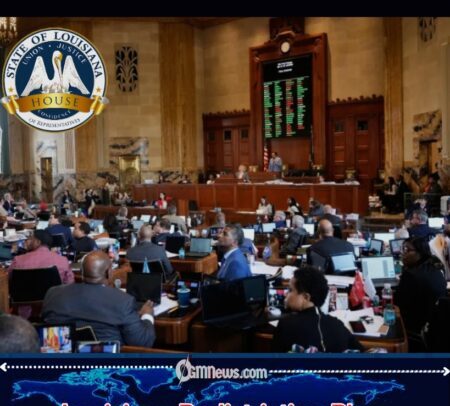
Louisiana Redistricting has become the center of a growing national controversy after state lawmakers approved a new congressional map that is expected to strengthen Republican influence while eliminating one of the state’s two majority-Black congressional districts. The move, signed into law by Republican Governor Jeff Landry shortly after legislative approval, has reignited fierce debates over voting rights, racial representation, and the limits of political power in modern America. Supporters describe the decision as a lawful response to recent court rulings, while critics argue it represents a calculated effort to reshape political outcomes before voters even reach the ballot box.
Louisiana Lawmakers Approve New Boundaries Ahead of Midterm Elections
Louisiana lawmakers approved the new congressional boundaries after a series of legal and political battles surrounding the state’s electoral maps. The plan is expected to create a stronger Republican advantage in congressional elections by reducing the number of majority-Black districts from two to one. Republican leaders defended the proposal as a response to recent judicial rulings that questioned previous district boundaries and their reliance on racial considerations.
Opponents quickly condemned the measure, arguing that the new lines dilute Black voting power in a state where Black residents make up roughly one-third of the population. Democratic officials and civil rights advocates contend that the elimination of a majority-Black district threatens decades of progress in political representation. The debate grew even more heated because the redistricting process unfolded while election preparations were already underway, creating confusion among voters and further intensifying public scrutiny.
Louisiana’s New District Lines Ignite Claims of Modern-Day Gerrymandering
The Louisiana redistricting fight is part of a broader national struggle over congressional maps following recent court decisions that have weakened some protections previously used to challenge voting maps under the Voting Rights Act. Across several Southern states, Republican lawmakers have pursued new district boundaries that could strengthen their party’s position in the U.S. House of Representatives ahead of future elections. Political analysts suggest that these efforts could influence multiple congressional seats nationwide.
The controversy has also renewed concerns about whether partisan objectives are increasingly being pursued through geographic redesign rather than direct voter persuasion. Similar legal disputes have emerged in other states, where courts have been asked to determine whether new district maps unfairly disadvantage minority voters. Those developments suggest that Louisiana’s battle may be only one chapter in a much larger national confrontation over voting rights, representation, and electoral fairness.
As lawsuits appear increasingly likely and political tensions continue to rise, Louisiana Redistricting is poised to remain a major story well beyond the current legislative session. Supporters view the new map as a strategic victory in the fight for congressional control, while critics see a troubling signal about the future of minority representation in American politics. OGM News will continue monitoring legal challenges, electoral developments, and the broader impact this dispute may have on the nation’s evolving political landscape.


Ae888covenuscasino, okay, I'm curious. Gonna check out this site and try to find some amazing...