




























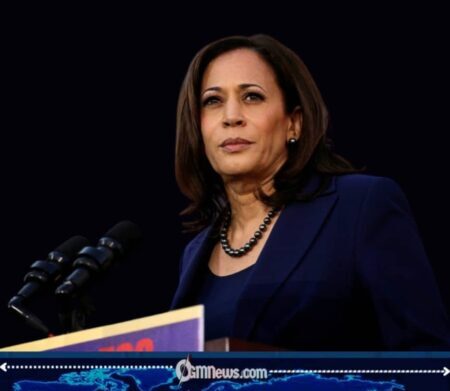
Voting Rights has become the centerpiece of a renewed political confrontation after former Vice President Kamala Harris announced plans to visit New Orleans and publicly challenge a recent Supreme Court decision that critics say could weaken Black representation in Congress. The announcement arrives at a moment of growing concern among civil rights advocates, who argue that recent legal developments may allow states to redraw congressional boundaries in ways that reduce the electoral influence of minority communities. The trip is already drawing national attention, not only because of the legal implications involved, but because it could mark the beginning of a broader Democratic campaign focused on representation ahead of future elections.
Democrats Say Representation Is Under Attack After Landmark Court Ruling
Harris’ planned appearance in New Orleans follows a Supreme Court ruling that significantly altered how courts evaluate voting rights claims related to congressional district maps. The decision emerged from litigation involving Louisiana’s congressional boundaries and has been widely interpreted as making it more difficult to challenge maps alleged to dilute minority voting strength. Critics argue the ruling weakens long-standing protections established under the Voting Rights Act and creates opportunities for states to revisit previously protected majority-Black districts.
The controversy intensified when Louisiana lawmakers approved a new congressional map that removes a majority-Black district created only a few years earlier after federal court intervention. Civil rights organizations and Democratic officials contend that the change could reduce Black representation in the state’s congressional delegation. Republican leaders, meanwhile, have defended the redistricting effort, arguing that political considerations rather than racial motivations drove the new map.
Voting Rights Battle Explodes as Harris Targets Supreme Court Decision
The broader significance of the Voting Rights debate extends well beyond Louisiana. Legal analysts have noted that the Supreme Court’s decision could influence redistricting battles across several Southern states where majority-minority districts have played a significant role in congressional representation. Similar disputes have already emerged in states such as Alabama, where courts recently permitted the use of revised maps that critics say diminish Black voting influence.
Harris’ visit appears designed to transform a legal dispute into a political mobilization effort. Democrats increasingly view voting rights and representation as issues capable of energizing key constituencies, particularly Black voters concerned about electoral access and political influence. The Louisiana event is expected to highlight concerns that recent court decisions could reshape congressional politics for years to come. At the same time, supporters of the rulings argue that the courts are restoring constitutional limits on race-based districting and ensuring that electoral boundaries are not drawn primarily according to racial classifications.
As the national argument over maps, elections, and representation intensifies, Voting Rights is likely to remain at the center of political debate. Harris’ New Orleans appearance may be remembered as either the beginning of a major political counteroffensive or simply the latest chapter in a decades-long struggle over how American democracy balances race, representation, and constitutional law. OGM News will continue monitoring developments as courts, lawmakers, and voters confront the next stage of this evolving battle.



Signing up took less than two minutes and I was already exploring the available games....