


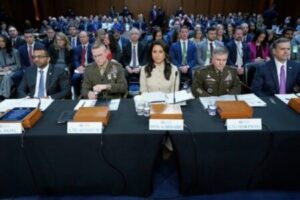





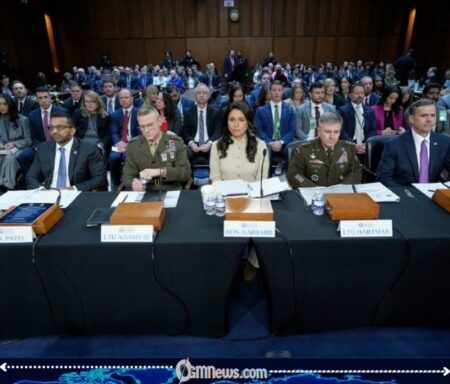
The United States intelligence community has assessed that Iran’s governing structure remains standing but significantly weakened following sustained military strikes, Director of National Intelligence Tulsi Gabbard told lawmakers during a high-profile Senate hearing. Addressing members of the Senate Intelligence Committee, Gabbard outlined the current state of global security threats, placing Iran among the top adversaries alongside other major geopolitical rivals.
Her testimony, delivered as part of the intelligence community’s annual worldwide threat assessment, comes amid continued scrutiny of U.S. military actions and their long-term strategic impact. While emphasizing that Iran’s regime remains operational, Gabbard stressed that its capabilities have been significantly diminished by coordinated U.S. and Israeli strikes, offering lawmakers a measured but consequential evaluation of the ongoing conflict.
Intelligence Community Outlines Global Threat Landscape
During the hearing, Gabbard and senior intelligence officials presented a comprehensive overview of the most pressing threats facing the United States. The annual report identified China, Russia, North Korea, and Iran as the leading state adversaries, each posing distinct military, cyber, and geopolitical challenges.
Officials described a rapidly evolving global security environment marked by increased coordination among adversarial states, technological competition, and regional instability. Lawmakers from both parties pressed intelligence leaders to clarify how these threats intersect, particularly as tensions in the Middle East continue to influence broader global dynamics.
The report also underscored the importance of maintaining intelligence readiness and international alliances, noting that the complexity of modern threats requires coordinated responses across military, diplomatic, and intelligence channels.
Iran’s Capabilities “Degraded” but Government Structure Remains
Gabbard’s characterization of Iran as “intact but largely degraded” captured the central finding of the intelligence assessment regarding the country’s current condition. While the Iranian government continues to function, its military infrastructure and strategic capabilities have been significantly weakened by sustained airstrikes.
The assessment reflects months of analysis following joint U.S. and Israeli operations targeting critical facilities. According to Gabbard, these strikes have disrupted key components of Iran’s defense and operational systems, limiting its ability to project power across the region.
Despite these setbacks, intelligence officials cautioned that Iran retains the capacity to adapt and rebuild over time. The durability of its political institutions, combined with regional alliances, means the country remains a consequential actor on the global stage.
Gabbard Says Nuclear Program Reportedly “Obliterated” in 2025 Strikes
A key point of discussion during the hearing centered on Iran’s nuclear capabilities. In written testimony, Gabbard stated that the country’s nuclear enrichment program had been “obliterated” during strikes carried out in 2025—a conclusion she later confirmed under questioning.
Pressed by Senator Jon Ossoff, Gabbard affirmed that the intelligence community believes Iran has not resumed efforts to rebuild its enrichment infrastructure since the attacks. This assertion, if sustained, represents a significant shift in the long-standing concerns over Iran’s nuclear ambitions.
Gabbard explained that she omitted the term “obliterated” from her oral opening statement due to time constraints, not because of any change in the intelligence assessment. Her clarification appeared aimed at addressing concerns about transparency and consistency in official testimony.
Intelligence Briefings to President Trump Under Scrutiny
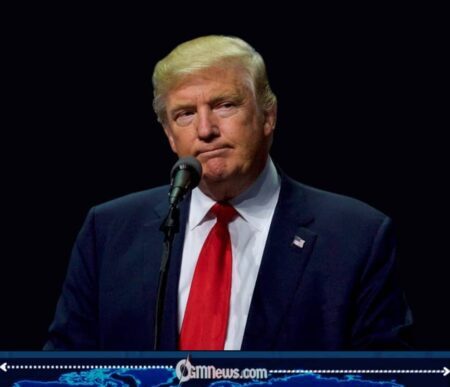
Lawmakers also questioned intelligence leaders about their communications with Donald Trump, who is serving his second term as U.S. president. The focus centered on what information had been provided to the president before and during the military campaign involving Iran.
John Ratcliffe, Director of the Central Intelligence Agency, told the committee that he briefs President Trump multiple times each day. However, both Ratcliffe and Gabbard declined to disclose specific details of those briefings, citing the sensitive nature of intelligence communications.
The exchange highlighted ongoing tensions between congressional oversight responsibilities and the executive branch’s need to protect classified information. Some lawmakers expressed frustration at the limited disclosures, while officials maintained that confidentiality is essential to national security operations.
Questions Surround Fulton County FBI Operation
In a separate line of questioning, Senator Ossoff asked Gabbard about her involvement in a controversial FBI operation in Fulton County related to the seizure of 2020 election materials. Gabbard confirmed that she had been asked by the president to travel to the site on the day the warrant was executed.
According to her testimony, the request came directly from the president and his administration, though she declined to specify how the communication was delivered. She stated that her role was to assist in overseeing the execution of the warrant alongside senior FBI officials.
The disclosure drew attention from lawmakers concerned about the intersection of intelligence leadership and domestic law enforcement activities, particularly in matters connected to past elections.
Leadership Changes and Unanswered Questions
The hearing also took place against the backdrop of recent personnel changes within the intelligence community. Notably, Gabbard was not questioned about the resignation of Joe Kent, who stepped down from his role at the National Counterterrorism Center in protest of the Iran war.
Kent’s departure has raised questions about internal disagreements over U.S. strategy and the broader implications of military engagement in the region. While the issue was not directly addressed during the hearing, it remains a point of interest for policymakers and analysts.
Observers note that leadership shifts during periods of active conflict can signal deeper divisions within national security institutions, though officials have largely refrained from public comment on the matter.
Balancing Strategic Gains and Long-Term Risks
As the hearing concluded, lawmakers and intelligence officials alike acknowledged the complexity of the current geopolitical environment. While the reported degradation of Iran’s capabilities and the destruction of its nuclear program may represent short-term strategic gains, questions remain about long-term stability and regional consequences.
Experts warn that weakened states can still pose asymmetric threats, including cyber operations, proxy conflicts, and unconventional warfare. The intelligence community’s assessment reflects cautious optimism tempered by recognition of these ongoing risks.
Ultimately, the testimony underscored the importance of sustained vigilance, robust oversight, and clear communication between intelligence agencies and policymakers as the United States navigates an increasingly uncertain global landscape.