




















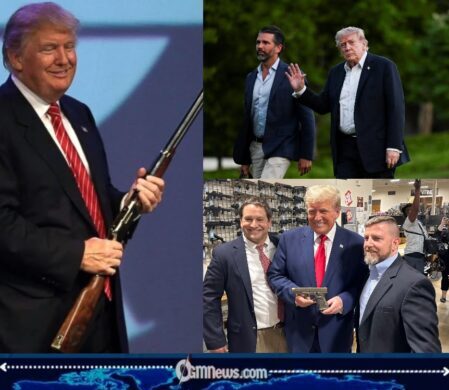
The firearm rule controversy intensified after renewed attention to discussions surrounding a potential large-scale digital firearms marketplace concept, widely referred to online as the “Amazon of guns,” a narrative linked in public discourse to business interests associated with Donald J. Trump Jr., son of Donald J. Trump. The debate has quickly escalated into a broader national conversation, mixing regulatory uncertainty, political symbolism, and viral internet satire into a single unfolding story.
At the center of the controversy is the question of how emerging e-commerce models could intersect with long-standing firearm regulations, and whether proposed adjustments to the firearm rule could unintentionally reshape how weapons are marketed or distributed in the United States. The story has gained traction not through official confirmation of a finished system, but through the intensity of public reaction to the concept itself.
Trump Jr. marketplace idea dubbed “click, buy, pew” across social media
The firearm rule discussion originally stems from broader regulatory conversations about modernization of commerce systems involving restricted goods, including how digital platforms might interface with existing background check requirements and licensing frameworks. Within this environment, the “Amazon of guns” label emerged as a shorthand used in public commentary to describe a hypothetical centralized online marketplace model.
The firearm rule has therefore become a focal point for both supporters and critics of digital expansion in regulated industries. While no finalized platform or policy has been publicly confirmed in the form widely discussed online, the narrative has taken on a life of its own, amplified by political associations and viral interpretation rather than formal legislative text.
Firearm rule debate inspires memes about discount codes for ammunition
In broader policy terms, the firearm rule debate reflects ongoing tensions between technological innovation and regulatory caution in the United States firearms framework. Lawmakers have historically maintained strict oversight mechanisms, including background checks and interstate commerce restrictions, which any digital marketplace would need to navigate.
The firearm rule discussion also highlights concerns about enforcement consistency, data security, and the risk of decentralized sales channels weakening compliance oversight. Analysts note that even speculative models like the “Amazon of guns” concept can influence public opinion and political pressure before any actual legislation is drafted or introduced.
As the debate continues, commentators emphasize that much of the current discourse is shaped by interpretation rather than finalized policy. Still, the firearm rule remains a developing subject of national attention, especially as digital commerce continues to evolve faster than regulatory systems adapt.
The situation is expected to remain fluid, with further clarification likely dependent on future legislative proposals, official statements, and ongoing public scrutiny of how firearm regulation adapts to emerging digital marketplace models.
[…] […]