
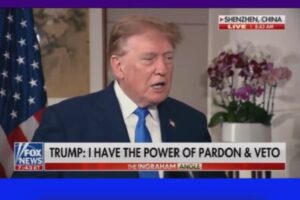
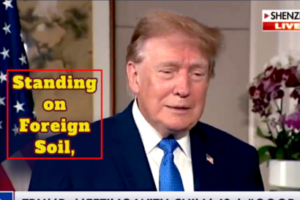



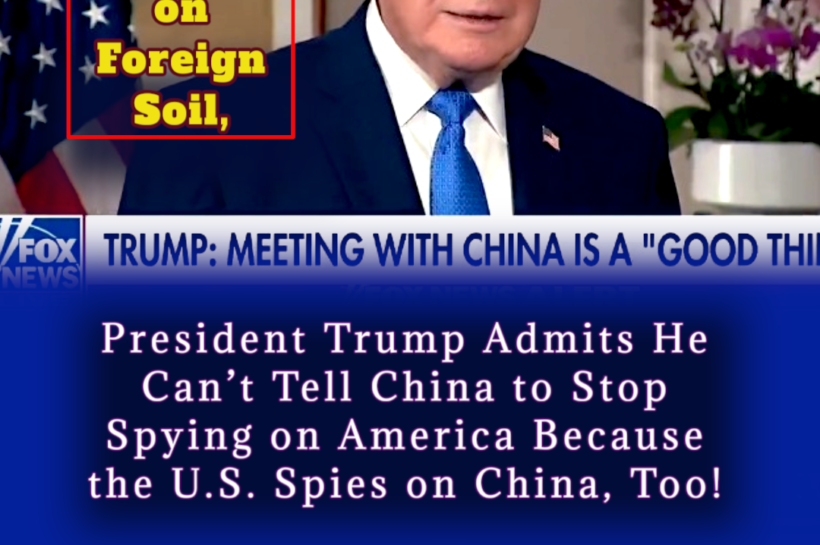






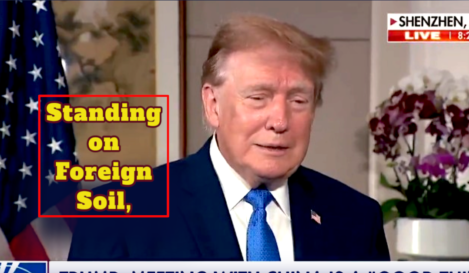
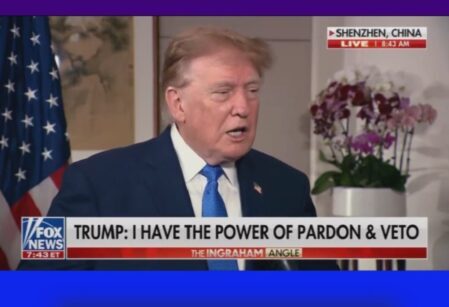
Trump Casually Admits America Spies on China | OGM News — President Donald J. Trump has once again demonstrated that when it comes to international diplomacy, the distance between classified intelligence and casual conversation can sometimes be dangerously short. During an exchange with reporters on foreign soil, Trump openly acknowledged that America spies on China, just as China spies on America, before suggesting that Washington is simply better at the intelligence game. But the most astonishing moment came when the president appeared unwilling to commit to stopping American espionage, even if Beijing demanded it. The exchange raises a serious question: Was Trump merely stating an uncomfortable truth about international intelligence gathering, or was he unnecessarily advertising America’s espionage activities in front of the world?
Trump Turns International Espionage Into a Competition Saying America spies on China
Trump Casually Admits America Spies on China | OGM News — In remarks captured in the exchange provided to OGM News, President Trump appeared remarkably comfortable discussing intelligence operations between two of the world’s most powerful nations. Responding to a question involving China, Iran, and intelligence sharing, Trump compared American intelligence assistance to Ukraine with allegations involving Beijing and Tehran.
Then came the presidential assessment of international espionage: “I think we spy better than they do.” Apparently, in Trump’s diplomatic universe, even covert intelligence operations require a winner, a loser, and preferably a presidential declaration of American superiority. Never mind the delicate nature of intelligence cooperation, counterintelligence, or diplomatic negotiations. The president seemed determined to remind everyone that America is winning a competition most governments prefer not to discuss publicly.
The President Says the Quiet Part Out Loud: America spies on China Too
Trump Casually Admits America Spies on China | OGM News — The exchange became even more remarkable when Trump acknowledged the mutual nature of intelligence gathering between Washington and Beijing. “We spy on China, they spy on us,” he said. The statement itself is hardly a revelation to intelligence professionals, but hearing an American president discuss the practice so casually on foreign soil raises legitimate questions about diplomatic judgment.
To be clear, acknowledging that countries spy on one another is not the same as revealing classified information. Trump did not identify intelligence assets, disclose surveillance techniques, or describe specific covert operations in the supplied remarks. Nevertheless, critics could reasonably question whether such public commentary serves America’s strategic interests. Intelligence agencies spend enormous resources protecting operational secrecy, while the president appeared to be conducting an informal international espionage scoreboard.
When Asked to Stop Spying, Trump Offers No Promises
Trump Casually Admits America Spies on China | OGM News — Perhaps the most revealing moment came when a reporter suggested that Trump should ask China to stop spying on the United States. Instead of delivering a conventional diplomatic response demanding an end to hostile intelligence activities, Trump turned the question around. Beijing, he suggested, could equally demand that Washington stop spying on China.
And would the United States comply? Trump’s answer was hardly reassuring: “I don’t know if I’ll do that.” There it was: a presidential response that seemed to acknowledge the uncomfortable reality of great-power competition while offering little diplomatic polish. Yet the distinction matters. Trump’s refusal to promise an end to espionage does not itself establish misconduct. The more substantial criticism concerns his judgment, the context of his remarks, and whether publicly treating sensitive intelligence matters as conversational banter strengthens or weakens America’s diplomatic position.
America’s Intelligence Secrets Deserve More Than Presidential Bragging Rights
Trump Casually Admits America Spies on China | OGM News — President Trump’s comments expose a fundamental tension between the realities of global intelligence gathering and the responsibilities of presidential communication. Espionage between rival powers is hardly new, but presidential discretion remains an important part of national security leadership. Whether Trump’s remarks were calculated candor or unnecessary bravado, they invite scrutiny of how the White House communicates about sensitive international relationships. OGM News will continue monitoring the diplomatic response, the broader implications for U.S.–China relations, and any developments surrounding the exchange
dHElHiewqJFCkBdBLBz