









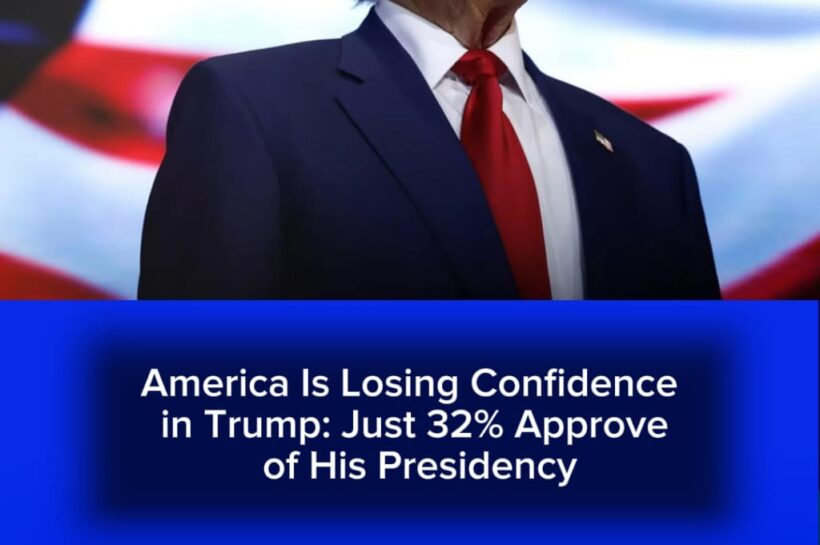











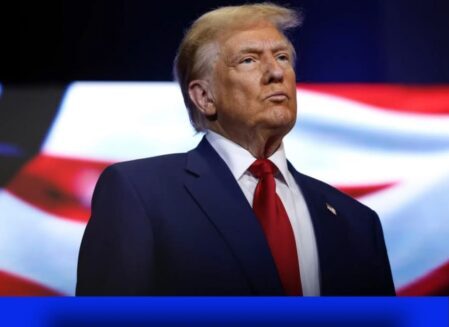
President Donald Trump is discovering that winning the White House and winning public approval are two entirely different political competitions. A fresh Reuters/Ipsos poll has placed his approval rating at 32%, leaving the current president just one percentage point above the lowest rating of his political career, as growing concerns about rising living costs continue to undermine confidence in his administration.
The findings arrive days after Republicans suffered a devastating defeat in the November 3 midterm elections, losing control of both chambers of the US Congress to Democrats. Apparently, American voters have decided that political slogans cannot always compete with the increasingly uncomfortable experience of paying household bills. For an administration that has repeatedly presented its policies as evidence of national progress, the latest figures offer an uncomfortable reality check.
Economic Frustration Becomes Trump’s Biggest Political Headache
According to the Reuters/Ipsos survey conducted between November 6 and 9, only 32% of Americans approve of Trump’s overall performance in the White House. The figure remains unchanged from two previous polls conducted between late October and early November. Although it represents a slight improvement on his career-low 31% recorded in mid-October, the difference is hardly something the White House should be celebrating with fireworks.
The president’s greatest weakness appears to be the cost of living. Just 21% of respondents approve of his handling of the issue, while only 25% approve of his economic stewardship. The war launched by Trump against Iran in February has contributed to sharply rising fuel prices and increased pressure on household finances. In other words, while political arguments may dominate Washington, ordinary Americans are increasingly concerned about what their money can actually buy. It is difficult to sell economic optimism to citizens who are struggling with everyday expenses.
Immigration Performs Better as Democrats Capitalise on Republican Losses
Interestingly, Trump’s immigration policies continue to attract comparatively stronger support. The poll found that 38% of Americans approve of his handling of immigration, considerably higher than his ratings on the economy and cost of living. Among Republican respondents, 81% supported his immigration approach, while 50% approved of his handling of living costs. Trump has intensified deportation operations since returning to the White House in January 2025 and recently promoted Stephen Miller, a key architect of his immigration policies, to the position of White House chief of staff.
Meanwhile, the Republican Party is dealing with the consequences of its November 3 electoral defeat. Democrats secured control of both congressional chambers, made substantial gains in the House of Representatives and flipped traditionally conservative Senate seats, including in Kansas, South Carolina and Texas. The result represents a major political setback for Trump, whose influence over the Republican Party has been central to its national strategy. With the opposition preparing to exercise greater legislative power, the president may discover that governing becomes considerably more complicated when public dissatisfaction and congressional resistance begin working together.
The Reuters/Ipsos poll surveyed 1,705 American adults nationwide between November 6 and 9, with a margin of error of approximately two percentage points. Although polling does not represent the opinion of every American, the findings reveal a troubling pattern for an administration attempting to maintain public confidence.
Trump’s 32% approval rating, combined with his poor economic numbers and the Republican Party’s crushing midterm defeat, presents a significant political challenge for the current president. Immigration remains a comparatively stronger area for his administration, but the cost of living is proving much harder to defend. With Democrats now controlling Congress, the coming months could become an important test of Trump’s political influence, economic promises and ability to regain public confidence. Will the White House turn these numbers around, or are American voters sending an even bigger warning? Stay with OGM News for further developments.

I love how this site combines sports betting with casino games in one seamless experience....