
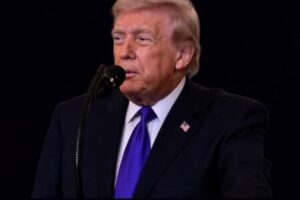





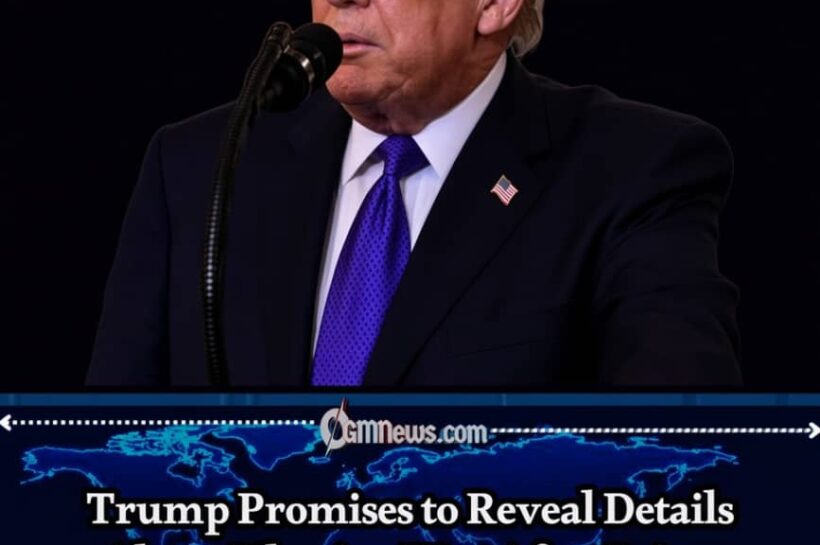
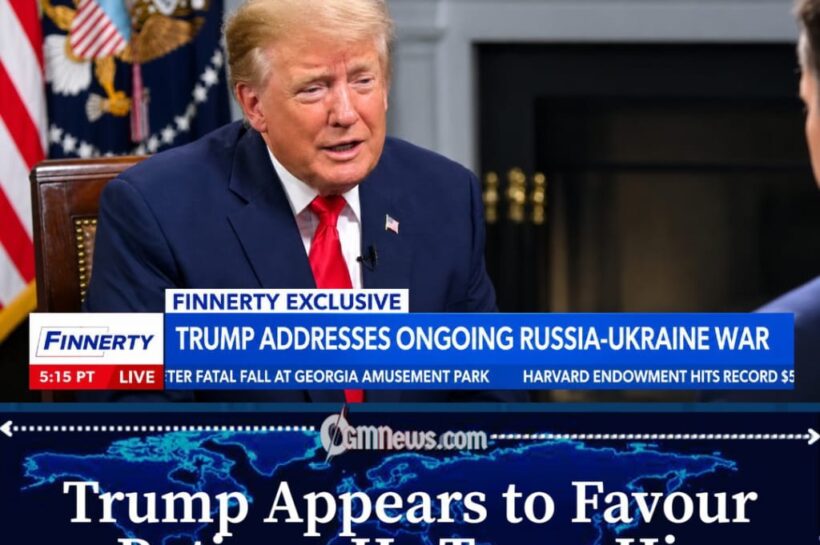





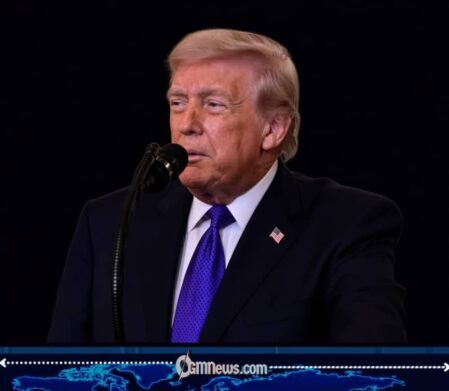
U.S. President Donald Trump has sparked fresh controversy after declining to directly acknowledge Russian President Vladimir Putin’s responsibility for launching the full-scale invasion of Ukraine in February 2022. When a journalist asked whether he had forgotten that Putin started the war, Trump responded, “Well, you know, I know the details, okay? And at some point I’ll release the details.” He then insisted that his priority was ending the conflict, saying he did not care about anything except bringing the war to an end. The exchange, which took place outside the White House on October 16, has renewed questions about Trump’s approach to the conflict and his increasingly strained relationship with Ukrainian President Volodymyr Zelensky.
A Direct Question About Putin, but No Direct Answer
The exchange began when a journalist challenged Trump’s criticism of Zelensky and asked whether he had forgotten that Putin started the war. Rather than directly answering the question, Trump claimed to know the details surrounding the conflict and promised to disclose them at some point in the future. He then redirected attention toward his stated objective of ending the fighting, arguing that both leaders should stop the war.
Trump’s response is significant because Russia’s full-scale invasion of Ukraine on February 24, 2022, is a documented historical event. Russian forces crossed into Ukrainian territory following months of military escalation, and Putin announced what Moscow called a “special military operation.” Although the conflict has a longer history, including Russia’s annexation of Crimea in 2014 and fighting in eastern Ukraine, those earlier events do not change the fact that Russia launched the full-scale invasion in February 2022.
Trump’s Criticism of Zelensky Raises Further Questions
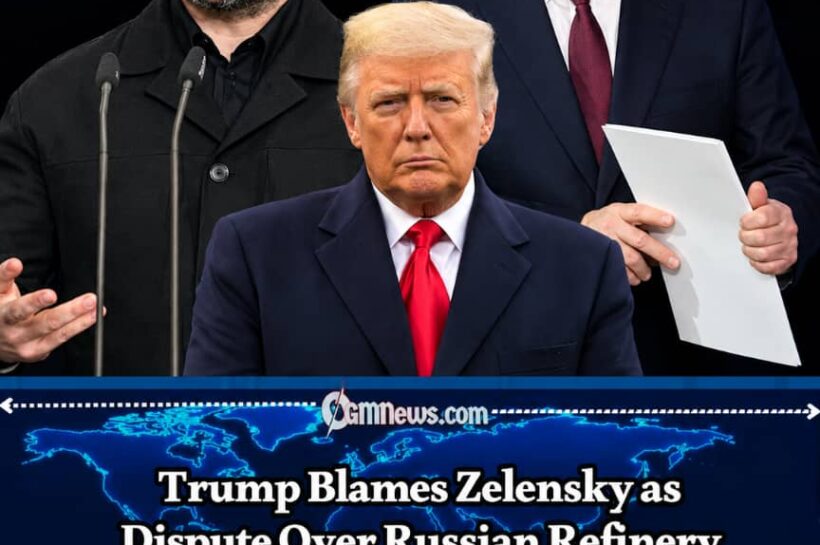
Trump has repeatedly criticised Zelensky, recently describing the Ukrainian leader as difficult to deal with and suggesting that Ukraine needs different leadership. He has also focused on Ukrainian attacks against Russian oil refineries, arguing that such operations contribute to higher energy prices. His comments have fuelled concerns among some of Ukraine’s supporters that Washington is placing increasing pressure on Kyiv while adopting a more accommodating tone toward Moscow.
Zelensky, meanwhile, has maintained that Ukraine has the right to defend itself against Russian aggression. Kyiv argues that its military operations are intended to weaken Russia’s ability to sustain the war, while Moscow continues its own attacks on Ukrainian territory and infrastructure. The disagreement highlights a central challenge for any peace negotiations: ending the fighting requires addressing the conditions under which both countries would stop military operations and whether Ukraine would receive credible security guarantees.
Trump Says Ending the War Is His Priority
After promising to release more details later, Trump said he wanted the war to end and claimed that both Putin and Zelensky wanted the same outcome. He also cited extremely high monthly military casualty figures, although such estimates are difficult to verify independently and should be treated cautiously without reliable supporting evidence. His remarks indicate that he continues to frame the conflict primarily around the need for a negotiated end to the fighting.
However, a desire to end a war and an agreement on how to end it are two different things. Ukraine wants to preserve its sovereignty and protect itself against another Russian attack, while Russia has pursued territorial and political objectives that Kyiv rejects. Any settlement would therefore face difficult questions involving occupied territory, military security, sanctions and the future relationship between Ukraine and its Western partners.
Conclusion: A Promise to Reveal Details, but No Explanation Yet
Trump’s promise to release details about the origins of the war has created another point of controversy in an already tense debate over U.S. policy toward Ukraine. His immediate emphasis was on ending the fighting, but he did not explain what information he intended to disclose or how it would alter the established historical record of Russia’s February 2022 invasion.
The broader issue is whether Washington’s approach can produce a durable peace without undermining Ukraine’s security or rewarding further aggression. For now, Trump’s statement offers no new evidence to change the established account of how the full-scale invasion began. Follow OGM News for further updates on Trump, Zelensky, Putin and the diplomatic efforts surrounding the war.
As someone who values fairness and quick payouts this spot has been a breath of...