












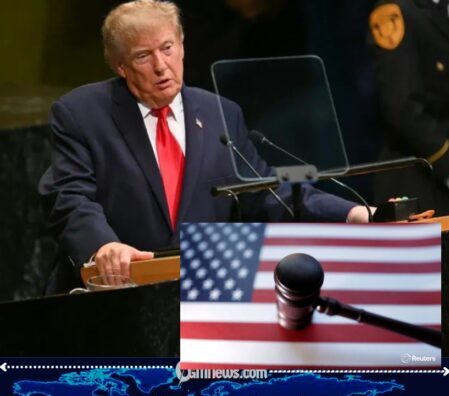
In a ruling that has handed the Trump administration another legal headache, U.S. District Judge Amir Ali has blocked the federal government from conditioning counterterrorism funding for state and local governments on compliance with election-administration changes. The decision, issued Monday, September 28, 2026, puts a temporary stop to a policy that had effectively given some anti-terrorism dollars an unexpected second job: encouraging states to change how they run elections.
The dispute centers on roughly $1.1 billion in Homeland Security Grant Program funding. Earlier this year, the Department of Homeland Security said FEMA would withhold 20 percent of certain grants until recipients complied with election-related requirements supported by the administration, including measures involving paper ballots, voter-citizenship verification and election audits.
Trump’s Anti-Terror Grant Plan Hits a Courtroom Roadblock
The policy created an unusual administrative puzzle. The grants were established to help states and local governments prepare for terrorism and other threats, supporting activities such as emergency planning, cybersecurity, protective equipment and public-safety operations. The new conditions, however, connected part of that funding to election administration.
In July, a coalition of 25 states and the District of Columbia separately challenged the conditions, arguing that the federal government was using emergency and counterterrorism funding to pressure states over policies that were outside the purpose of the grants. Other cities and counties, including governments in Texas, Ohio and Tennessee, brought the case that produced Monday’s ruling.
Judge Rules Against Trump Administration Over Election-Related Grant Conditions
Judge Ali sided with the counties and cities challenging the policy, concluding that the administration had exceeded FEMA’s authority by attaching the election requirements to the counterterrorism grants. In practical terms, the ruling means states and local governments cannot simply be told that terrorism-prevention money comes with an election-policy assignment attached.
The ruling adds another chapter to the broader legal battle over the federal government’s role in election administration. The Trump administration has argued that its measures are intended to strengthen election security, while opponents have challenged whether federal agencies have the statutory authority to impose such conditions through grant programs created for other purposes. Earlier court challenges have also scrutinized attempts to connect federal funding with election-related requirements.
For the moment, the message from the courtroom is rather straightforward: a grant designed to prepare America for terrorism cannot automatically be transformed into a bargaining chip for election changes simply because someone in Washington has discovered a creative way to put the two subjects in the same sentence. The legal battle, however, is not necessarily over, and the administration’s broader efforts concerning election policy remain under judicial and political scrutiny. Watch out for future updates on the story of OGM News.Factual note: The underlying reporting confirms that the ruling was issued on September 28, 2026, by U.S. District Judge Amir Ali, and that the challenged policy involved withholding 20% of certain FEMA grants pending compliance with election-related requirements.
[…] […]