











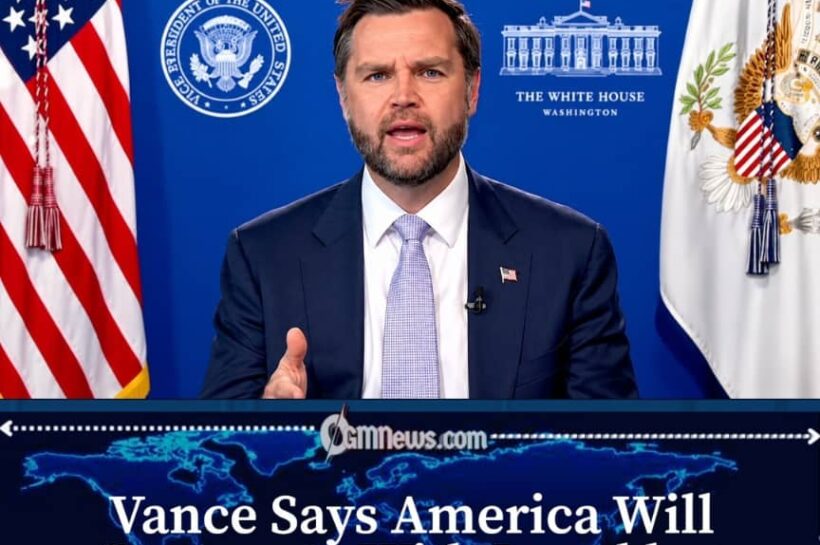










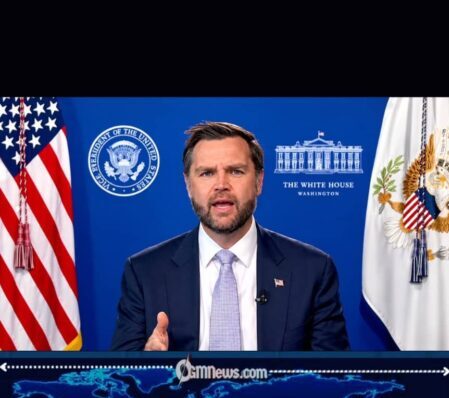
U.S. Vice President JD Vance has delivered a remarkably blunt message on Washington’s relationship with Israel, declaring that America must pursue its own interests in the Middle East rather than allowing its foreign policy to become subordinate to the Israeli government. “We’re going to work with people when we work with them. We’re going to disagree when we disagree, and we’re going to pursue America’s interests,” Vance said. The remarks come as disagreements between Washington and Israeli officials have become increasingly visible, particularly over Iran and the direction of U.S. policy in the region.
Vance Reminds Washington Who Signs the Foreign-Policy Cheques
Vance’s statement may sound like ordinary diplomatic language, but in Washington it lands like a chair being dragged across a very quiet room. The vice president’s argument is that Israel can remain an important American partner without automatically determining what the United States does throughout the Middle East. In June, Vance similarly said U.S. and Israeli interests are not always perfectly aligned, while emphasizing that Washington must pursue American interests when the two countries disagree.
The timing is particularly significant because relations between the two governments have experienced visible friction over the Iran conflict and diplomatic efforts. Vance has previously criticized Israeli officials for attacking the Trump administration’s approach to Iran, while Prime Minister Benjamin Netanyahu and Vance have also held direct discussions over their disagreements. Meanwhile, the Trump administration is still dealing with the consequences of a prolonged Middle Eastern conflict and competing expectations from regional partners.
The Special Relationship Meets the ‘We Can Disagree’ Department
The vice president’s latest position effectively places a giant imaginary sign over the White House foreign-policy office: “Partnership does not mean automatic agreement.” Vance’s language suggests that Washington intends to cooperate with Israel where American and Israeli interests overlap, while reserving the right to take a different position when they do not. That approach is consistent with his earlier comments that the United States and Israel can be close partners while still having conflicting interests.
For the political theatre surrounding the Trump administration, the statement also arrives at an interesting moment. The current president, Donald J. Trump, remains closely involved in Middle Eastern policy, while Vance has increasingly been visible in discussions surrounding Iran and regional diplomacy. Recent reporting has also described concerns among senior Trump advisers that the Iran conflict could continue for years, adding further pressure to Washington’s effort to define what its long-term Middle East strategy should actually be.
For now, Vance has made the administration’s message unusually clear: Israel remains a partner, but American foreign policy is supposed to serve American interests. Whether that principle produces a lasting change in Washington’s Middle East strategy or merely another chapter in the increasingly complicated U.S.-Israel relationship remains to be seen. OGM News will be watching closely for what comes next—because in Washington, apparently even long-standing alliances now come with a “terms and conditions” page.
[…] […]