

























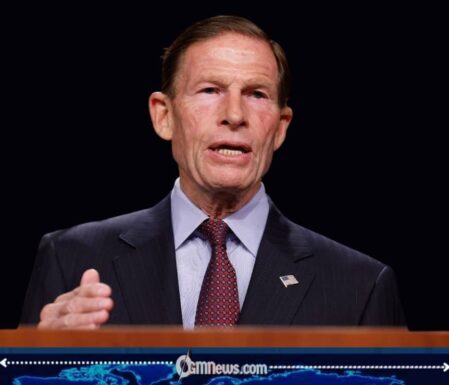
Crypto Coin has become the latest flashpoint in Washington after Democratic Senator Richard Blumenthal accused President Donald Trump of profiting from his cryptocurrency ventures in ways that raise serious ethical questions. Blumenthal compared the president’s crypto project to what he described as a potential “pump-and-dump” scheme and argued that the situation reflects a “presidency for profit.” His remarks have added fresh political tension to the growing national debate over cryptocurrency regulation and presidential ethics.
The criticism immediately drew pushback from supporters of Trump’s crypto projects, who rejected allegations of wrongdoing and argued that the ventures operate within existing laws. While political rhetoric has intensified, the dispute has also renewed public interest in how elected officials should manage private financial interests while serving in public office.
Blumenthal Questions Ethics of President Trump’s Cryptocurrency Business
Senator Blumenthal has spent months pressing for greater transparency surrounding President Trump’s cryptocurrency businesses. As ranking member of the Senate Permanent Subcommittee on Investigations, he previously launched inquiries into Trump’s crypto ventures, citing concerns about possible conflicts of interest, foreign investments and the president’s ability to influence markets while simultaneously benefiting financially from the industry.
Blumenthal’s latest comments build upon those earlier concerns, arguing that public confidence in government depends on ensuring elected officials do not appear to profit from policies affecting their private businesses. Trump’s supporters continue to reject those claims, maintaining that the president’s business interests are managed separately and insisting that criticism is politically motivated rather than evidence of misconduct.
Congressional Criticism Intensifies Over President Trump’s Crypto Ventures
The Crypto Coin controversy extends beyond partisan politics into a wider debate about cryptocurrency regulation and market integrity. President Trump’s financial disclosures have drawn significant attention because they indicate substantial earnings from crypto-related ventures, including his branded digital assets and other blockchain businesses. Those disclosures have fueled renewed calls from some lawmakers for stronger ethics rules governing elected officials involved in digital asset markets.
Market analysts note that meme coins are inherently volatile investments whose values often fluctuate based on public attention rather than traditional economic fundamentals. Academic research has also found that pump-and-dump schemes have existed across segments of the cryptocurrency market for years, although applying that label to any specific project requires evidence established through investigation rather than political accusation. At present, Blumenthal’s remarks represent allegations that supporters of the project firmly dispute, and no court has determined that President Trump’s crypto ventures constitute illegal market manipulation.
As Congress continues debating cryptocurrency legislation, President Trump’s digital asset businesses are likely to remain at the center of political and regulatory discussions. Whether the controversy ultimately results in new ethics reforms, additional investigations or simply continued partisan debate, the Crypto Coin issue has become another defining test of how public office and private digital wealth intersect in the modern political era.
[…] […]