





























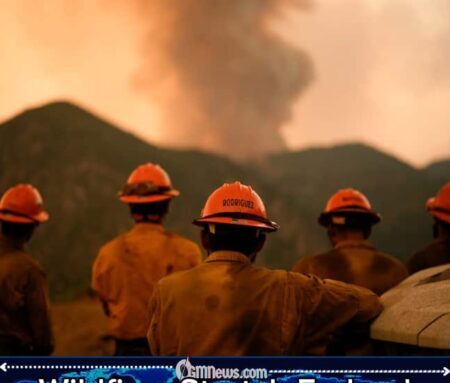
Wildfires are once again scorching the American West, but many federal firefighters say the greatest challenge this season is not only the flames racing across drought-stricken landscapes—it is the growing strain on the people expected to stop them. As dangerous fire conditions intensify, concerns over staffing shortages, exhausted crews and limited resources have reignited debate over whether recent federal workforce reductions have left emergency responders facing one of their toughest wildfire seasons in years. The Trump administration, meanwhile, maintains that federal firefighting resources remain fully prepared and capable of responding aggressively to new outbreaks.
Wildfires Under Pressure On Demand Of working Conditions
Federal firefighters across several western states have described increasingly demanding working conditions as dozens of major fires burn simultaneously across the region. According to firefighters, fire experts and public officials, prolonged drought, below-average snowpack, unusually dry vegetation and persistent heat have combined to create conditions that allow fires to spread rapidly while stretching personnel across multiple incidents. Some firefighters say experienced personnel have retired, accepted deferred resignations or left public service, leaving fewer seasoned leaders available to supervise complex wildfire operations.
The staffing debate has become increasingly political. Several firefighters and wildfire specialists argue that workforce reductions and organisational restructuring have compounded challenges that already existed within the federal wildfire system, including recruitment difficulties, burnout and retention problems. However, the U.S. Forest Service disputes suggestions that it lacks operational capacity, stating that it has met or exceeded its firefighter hiring targets and continues deploying thousands of personnel nationwide. Officials also point to a very small percentage of unfilled emergency resource requests as evidence that the national response system remains functional despite mounting demand.
Wildfires: Resources and Reality Of Years Of Accumulated Risk
Beyond the immediate staffing debate, wildfire experts note that today’s challenges are the result of years of accumulating risks rather than a single policy decision. Climate trends have contributed to longer fire seasons across much of the western United States, while decades of fuel buildup in forests have increased the likelihood that smaller fires can rapidly become destructive megafires. Emergency managers have repeatedly warned that when multiple states experience major fires simultaneously, even well-equipped jurisdictions can compete for aircraft, crews and specialised incident management teams.
The Trump administration is simultaneously pursuing significant reforms to federal wildfire management, including the creation of a unified Wildland Fire Service and a renewed emphasis on rapidly suppressing new fires. Supporters argue the changes will improve coordination and protect communities more effectively. Critics, however, caution that restructuring during an active fire season may temporarily complicate operations, while some fire scientists continue to advocate for balanced strategies that combine rapid response with long-term forest management and fuel reduction. The debate highlights a broader reality: wildfire preparedness depends not only on emergency response but also on sustained investment in prevention, workforce development and resilient landscapes.
As the peak wildfire season continues, the effectiveness of federal and state cooperation will likely face even greater tests. Whether the current system proves sufficient or requires further reform may become clearer as additional fires emerge across the American West. OGM News will continue monitoring developments as officials, firefighters and affected communities confront another demanding wildfires season.



Logging in is a breeze and the site stability is amazing even during peak hours....