























The Kennedy Center has become the latest battleground in a high-profile clash over presidential influence, institutional authority, and public symbolism after an appeals court rejected an emergency request to keep President Donald J. Trump’s name on the facade of the renowned performing arts venue. The decision intensified a controversy that has drawn crowds, sparked legal arguments, and transformed a dispute over signage into a national debate about who gets to shape the identity of America’s cultural landmarks.
As workers assembled scaffolding and prepared for the removal process, spectators gathered outside the building to witness what many viewed as the latest chapter in a remarkably public struggle. A thunderstorm briefly interrupted operations, adding another layer of suspense to a day already dominated by legal drama and political symbolism.
Trump Name Battle Sparks New Clash Over Power and Public Memory
The conflict stems from a federal court ruling issued by Judge Christopher Cooper, who determined that the addition of Trump’s name to the Kennedy Center was unlawful. In a detailed opinion, Cooper concluded that Congress established the institution’s name and that any official change would require congressional action rather than administrative or board-level decisions. The ruling ordered the removal of Trump’s name from the building and associated branding materials.
Efforts to halt the order intensified as Justice Department lawyers and Kennedy Center leadership sought emergency relief from the appeals court. Their request was filed shortly before a court-imposed deadline, but judges declined to intervene. In anticipation of compliance, internal directives reportedly instructed staff to restore official references to “The John F. Kennedy Center for the Performing Arts” and eliminate branding linked to the disputed renaming effort.
Kennedy Center Gives Trump Name a Very Short Standing Ovation
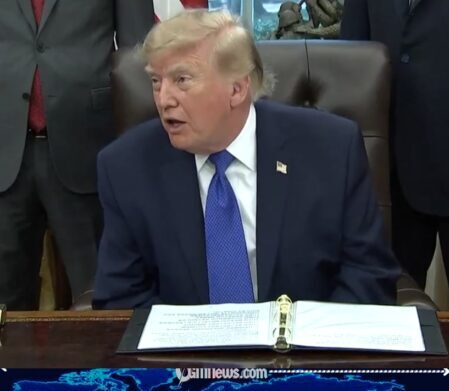
The Kennedy Center controversy did not emerge in isolation. Following his return to the White House, President Trump exercised substantial influence over the institution through leadership changes and board appointments. Those actions generated significant debate within arts communities, with some performers and cultural figures distancing themselves from the venue amid concerns about political involvement in a traditionally non-partisan institution.
The dispute also reflects a broader conversation about public memorials, national landmarks, and presidential legacy. The Kennedy Center was established as a living memorial to President John F. Kennedy, and critics of the renaming effort argued that altering the institution’s identity risked undermining that historical purpose. Supporters, meanwhile, viewed the changes as part of a broader effort to reshape cultural institutions in line with a new vision for arts and public life. The legal challenge brought by Representative Joyce Beatty ultimately placed those competing interpretations before the courts, resulting in the rulings now driving the center’s transition back to its original branding.
The Kennedy Center remains open, and the legal fight over the Trump Name appears to be entering a new phase rather than ending altogether. While workers may soon complete the physical removal of the lettering, the political and cultural questions raised by the controversy are likely to persist. OGM News will continue monitoring developments surrounding the Kennedy Center, the institution’s future leadership, and any further legal or political responses to the court’s decision.
[…] […]