

















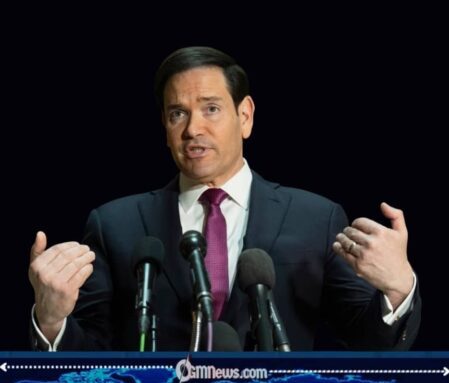
The Strait of Hormuz has returned to the center of global geopolitical tension after U.S. Secretary of State Marco Rubio issued a forceful warning to Iran over threats surrounding one of the world’s most strategically important shipping routes. Speaking during ongoing negotiations tied to regional security and maritime access, Rubio declared that the international community would not accept any Iranian attempt to impose restrictions, tolls, or political leverage over the narrow waterway that carries a significant share of global oil exports. His remarks also signaled that President Donald J. Trump remains deeply involved in efforts to secure a broader regional agreement before tensions spiral further.
Trump Administration Pushes New Deal as Gulf Shipping Crisis Deepens
Rubio’s comments reflected growing frustration among U.S. allies over repeated concerns that Iran could use the Strait of Hormuz as a bargaining chip during negotiations. He insisted that the waterway must remain open and accessible to international shipping “one way or the other,” describing any attempt to obstruct maritime traffic as unlawful and unsustainable for the global economy. The strong language appeared carefully aimed at reassuring Gulf allies while also warning Tehran that Washington sees unrestricted navigation as a red line.
The secretary of state further argued that even countries often viewed as geopolitical rivals to the United States, including Russia and China, have little interest in supporting any system that allows Iran to effectively tax or regulate international shipping through the strait. Analysts say Rubio’s remarks were notable because they framed the issue less as a bilateral U.S.-Iran dispute and more as a broader international economic concern. The statement also reinforced the Trump administration’s “good deal or no deal” approach, suggesting that negotiations may collapse entirely if Iran refuses core conditions tied to shipping access and regional security guarantees.
Marco Rubio Says World Will Not Accept Iranian Control of Strait of Hormuz
The Strait of Hormuz remains one of the world’s most critical energy corridors, linking Gulf oil producers to international markets through a narrow maritime passage between Iran and Oman. Security tensions in the region have repeatedly triggered fears of oil price spikes, shipping delays, and military escalation over the past several decades. Energy analysts have long warned that even temporary disruptions in the strait could have immediate consequences for fuel prices and global supply chains, particularly during periods of existing economic uncertainty.
Recent diplomatic activity surrounding the Gulf has intensified following reports of direct conversations between President Trump and several regional leaders aimed at shaping a preliminary framework for a broader security understanding. Rubio hinted that negotiators are still struggling over specific wording and legal details within the draft proposal, a reminder that many international agreements often reach their most fragile stage just before completion. Critics have joked that diplomats may soon need separate negotiations simply to agree on punctuation marks, but officials close to the talks insist that every phrase matters because of the potential military and economic consequences attached to the final language.
The broader dispute also reflects Iran’s continuing effort to maintain leverage in regional politics while under pressure from sanctions, security concerns, and international scrutiny over its strategic ambitions. At the same time, Gulf nations remain wary of any arrangement that could allow Tehran to gain greater influence over international trade routes. While no formal agreement has yet been announced, the current negotiations are already being viewed as one of the most sensitive diplomatic tests facing the Trump administration’s Middle East strategy.
For now, the Strait of Hormuz remains open, but the political waters surrounding it are becoming increasingly turbulent. Whether the latest negotiations produce a breakthrough or another diplomatic stalemate, Rubio’s warning has made one thing unmistakably clear: the battle over the future of the Strait of Hormuz is no longer just about ships and oil tankers it is rapidly becoming a test of power, influence, and credibility across the entire region.

[…] […]