



















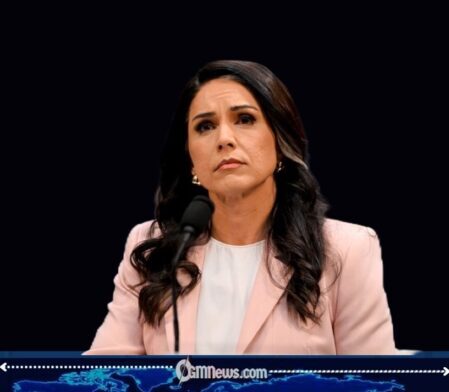
Tulsi Gabbard’s resignation as Director of National Intelligence has thrown fresh attention onto the growing instability inside President Donald J. Trump’s administration, with the departure arriving during heightened international tensions and continuing disputes over intelligence assessments tied to Iran. While Gabbard framed her decision as a necessary step to support her husband after his diagnosis with a rare form of bone cancer, the timing has already sparked intense political speculation across Washington.
The Gabbard resignation immediately became one of the most discussed political developments of the week, not only because of the emotional circumstances surrounding her family, but because it leaves a critical intelligence position vacant during one of the most sensitive foreign policy periods of the administration. Trump publicly praised Gabbard’s service and announced that her deputy, Aaron Lukas, would temporarily oversee the office until a permanent replacement is selected.
Gabbard Steps Down Amid Family Health Crisis and Iran Tensions
The Gabbard resignation comes after months of growing scrutiny surrounding her leadership of the Office of the Director of National Intelligence. Since assuming office earlier in 2025, Gabbard had repeatedly positioned herself as a reform-minded outsider determined to reduce bureaucracy and challenge what she described as inefficiency and abuse of power within the intelligence system. Her proposal to cut staffing levels by nearly 40 percent drew both praise from fiscal conservatives and concern from intelligence veterans who feared operational disruptions.
Her tenure became even more controversial because of disagreements linked to Iran. Gabbard consistently expressed skepticism toward military escalation involving Tehran and publicly avoided endorsing aggressive intervention strategies. Earlier this year, she testified before lawmakers that intelligence findings did not indicate Iran was actively building a nuclear weapon, a position later publicly dismissed by President Trump, who declared that she was “wrong.” The unusual public disagreement between a sitting president and his intelligence chief fueled speculation about internal divisions within the administration.
The resignation also revived debates surrounding Gabbard’s appearance earlier this year at election headquarters in Fulton County, Georgia, during a federal law enforcement operation connected to the 2020 election investigation. Critics questioned why the nation’s intelligence chief was present during a domestic election-related enforcement action, while supporters argued she was monitoring potential national security concerns tied to election integrity. The incident intensified partisan tensions and further complicated her already polarizing reputation.
Trump Loses Another Cabinet Member as Political Storm Hits DNI Office
The Gabbard resignation now places additional pressure on an administration that has already experienced several major Cabinet-level departures this year. Political analysts note that frequent turnover at senior levels of government often creates uncertainty within federal agencies, particularly in national security institutions where continuity and long-term planning are considered essential.
Senator Mark Warner, the leading Democrat on the Senate Intelligence Committee, responded by emphasizing that any successor must restore trust in the office and ensure intelligence professionals can operate without political interference. His remarks reflected broader concerns among critics who believe intelligence agencies have become increasingly politicized during recent years. Meanwhile, supporters of Gabbard argue she attempted to challenge entrenched institutional culture and paid a political price for refusing to fully align with interventionist policies.
Beyond politics, the human aspect of the Gabbard resignation has resonated strongly with many Americans. Her letter describing her husband Abraham as her “rock” during deployments, campaigns, and years of public service introduced a rare emotional moment into a political climate often dominated by confrontation and strategy. Even some political opponents acknowledged that stepping away from one of the nation’s most demanding jobs to focus on family reflected a deeply personal sacrifice.
The Gabbard resignation is likely to remain a major topic in Washington for weeks as attention shifts toward who President Trump may select to oversee America’s intelligence community during a volatile geopolitical period. For now, the story stands as both a deeply personal family crisis and another sign of continuing turbulence surrounding power, loyalty and national security inside modern American politics.
https://shorturl.fm/5TtQZ