

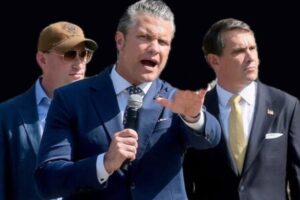









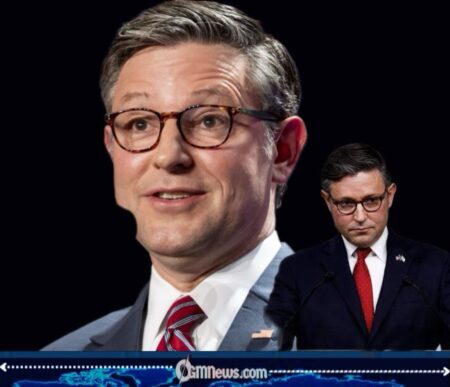
The phrase “We have your back” was meant to comfort grieving police families during National Police Week. Instead, it triggered another political firestorm across America. House Speaker Mike Johnson stood on the Capitol steps this week honoring fallen officers and praising law enforcement service, but within hours, critics online transformed the solemn ceremony into a fierce debate about January 6, political memory, and what genuine support for police officers actually looks like.
Johnson’s remarks came during a high-profile Capitol event attended by lawmakers, police families, and law enforcement representatives. While supporters praised the ceremony as a necessary tribute to sacrifice and public service, critics argued the location itself carried uncomfortable symbolism. The Capitol steps remain one of the most emotionally charged political sites in modern American history following the January 6 riot that injured more than 140 officers defending Congress.
Mike Johnson Praises Law Enforcement While Citizens Question Political Contradictions
Speaker Johnson used the ceremony to reaffirm Republican support for law enforcement, declaring to officers and their families: “We have your back.” He also credited President Donald J. Trump’s administration for policies he claimed contributed to a significant reduction in law enforcement deaths in 2025. According to figures referenced during the event, officer fatalities reportedly dropped by roughly 25 percent compared to the previous year.
The ceremony itself followed the traditional format of National Police Week, an annual event honoring officers killed in the line of duty. American flags surrounded the Capitol grounds while families of fallen officers gathered for memorial tributes and speeches. Yet despite the emotional tone, the internet quickly shifted attention away from the ceremony and toward the unresolved political tensions surrounding January 6.
Online reactions became especially intense after critics resurfaced footage of the Capitol riot alongside Johnson’s speech. One sarcastic viral comment read: “We have your back… right after we pardon this guy for attacking you.” Another accused politicians of selectively honoring police officers depending on political convenience. Several users also questioned whether public praise for officers would translate into long-term healthcare, compensation, or emotional support for affected families once media attention faded.
Capitol Police Tribute Overshadowed by Public Backlash Over January 6 Comments
The backlash reflects a broader national divide that continues to follow nearly every major law enforcement discussion in American politics. Since the January 6 attack, many Capitol Police officers and their families have openly criticized politicians they believe minimized the violence or defended rioters after the incident. Some officers previously testified before Congress about the physical injuries and emotional trauma they experienced during the attack on the Capitol.
Recent political debates surrounding pardons, prosecutions, and descriptions of January 6 participants have only deepened public skepticism. Critics argue that political leaders cannot simultaneously position themselves as defenders of law enforcement while supporting narratives perceived as sympathetic to those involved in attacking police officers during the riot. Supporters of Johnson and President Trump, however, maintain that honoring law enforcement and debating legal outcomes tied to January 6 are separate political matters.
The controversy also highlights how National Police Week — traditionally viewed as a solemn and bipartisan observance — has increasingly become entangled in America’s wider political culture wars. Even ceremonies designed to honor fallen officers now unfold under the shadow of social media fact-checking, partisan distrust, and a public unwilling to forget past political contradictions.
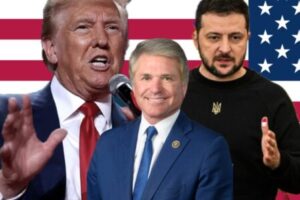
For now, the images remain striking: politicians standing beneath American flags promising unwavering support for police officers, while millions online replay old footage from the very same Capitol steps. In modern American politics, memory has become as powerful as messaging, and every public tribute now risks becoming a public trial. OGM News will continue monitoring reactions surrounding National Police Week and the growing debate over political accountability tied to support for law enforcement.
https://shorturl.fm/XPOeg