








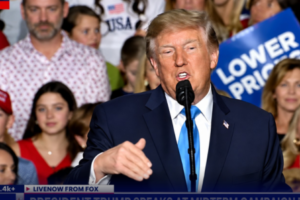

















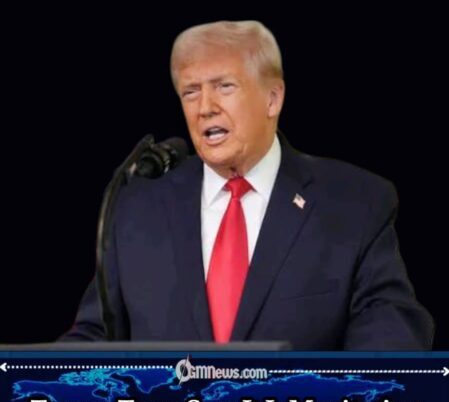
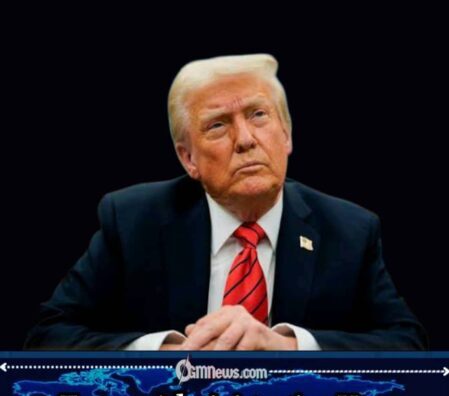
President Donald Trump has said he personally decided to keep the Strait of Hormuz closed in order to prevent Iran from earning hundreds of millions of dollars in daily oil revenue. Speaking about the escalating regional crisis, Trump said advisers supported reopening the critical shipping lane, but he opposed the move because he believed Tehran should not benefit financially before reaching a broader settlement.
According to the trump, Iranian officials had approached the United States with a proposal to reopen the strategic waterway. Trump said he rejected the idea after calculating that resumed traffic could generate as much as $500 million a day for Iran through renewed exports and shipping activity.
The comments have attracted global attention because the Strait of Hormuz remains one of the world’s most important maritime corridors, carrying a significant share of international energy supplies through the Gulf.
The Global Importance of the Strait of Hormuz
The Strait of Hormuz connects the Persian Gulf to the Gulf of Oman and the Arabian Sea, making it one of the most strategically important waterways in the world. A substantial portion of global oil and liquefied natural gas shipments passes through the narrow channel each day.
Any disruption in the strait can quickly affect international energy prices, shipping insurance costs, and broader economic stability. That is why tensions in the area are closely monitored by governments and financial markets worldwide.
For decades, the strait has been considered a sensitive pressure point in relations between Iran and Western powers, especially during periods of military confrontation or sanctions disputes.
Trump’s Economic Pressure Strategy
President Trump framed the closure as part of a broader pressure campaign aimed at weakening Iran’s financial position. By limiting access to a major trade route, the administration appears to be using economic leverage alongside diplomatic and military pressure.
Trump argued that allowing the waterway to reopen without concessions would effectively reward Tehran at a time when the United States is trying to increase pressure on the Iranian government. His comments suggested that the administration sees control of the strait as a bargaining tool.
Supporters of the policy say restricting Iran’s oil-related income could strengthen Washington’s negotiating position, while critics warn that prolonged disruption could create wider economic risks beyond the region.
Questions Over ‘Total Control’
One of the most closely examined parts of Trump’s remarks was his statement that the United States has “total control” over the strait. Military analysts note that while American naval forces maintain a strong presence in the region, the situation remains highly complex.
Iran has historically demonstrated the ability to challenge shipping in the area through patrol vessels, drone surveillance, and regional proxies. Experts caution that no single country can easily claim absolute control over such a contested waterway.
Several observers have also noted that the narrow geography of the strait makes it particularly vulnerable to disruption, even when major naval powers are actively operating nearby.
International Reaction to the Statement
The president’s comments have prompted concern among international allies that the dispute could lead to a broader regional confrontation. European governments have urged restraint while emphasizing the importance of maintaining free passage for commercial shipping.
Energy-importing nations in Asia are also closely watching developments, since any prolonged closure could significantly affect fuel supplies and prices. Several governments have reportedly increased consultations with Washington about contingency planning.
Diplomatic officials say the remarks may complicate efforts to reduce tensions because they publicly link maritime access to broader political negotiations between Washington and Tehran.
A High-Stakes Test for Regional Stability
The controversy surrounding the Strait of Hormuz illustrates how quickly regional security disputes can become global economic concerns. Even limited disruption can have consequences that extend far beyond the Middle East.
For the Trump administration, the issue has become a test of whether economic pressure can achieve strategic goals without triggering a larger conflict. The president’s comments indicate he sees financial leverage as central to that approach.
Whether the closure remains temporary or becomes part of a longer standoff may depend on how both Washington and Tehran calculate the risks of escalation in the coming weeks.
Ae888covenuscasino, okay, I'm curious. Gonna check out this site and try to find some amazing...