





















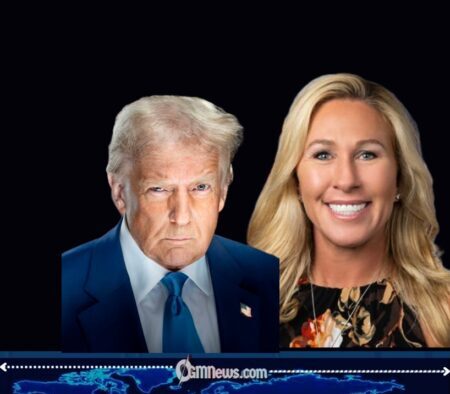
A widening rift within the “Make America Great Again” (MAGA) movement has come into sharp focus as U.S. President Donald Trump publicly traded barbs with former ally Marjorie Taylor Greene amid escalating tensions over Iran policy. The dispute, playing out across social media, coincided with a fragile ceasefire involving Iran and a high-level meeting between Trump and Mark Rutte, underscoring the intersection of domestic political fractures and international security concerns.
What began as policy disagreement has evolved into a personal and political confrontation, with both figures questioning each other’s credibility and influence within the conservative base. The episode reflects broader ideological strains within Trump’s support coalition, particularly over foreign intervention and national security priorities.
A Public Feud Between Trump And Greene Rekindled on Social Media
The latest exchange between Trump and Greene unfolded on the president’s social media platform, where he mocked the former congresswoman following a special election in her former district. Trump celebrated the victory of his endorsed candidate, Clay Fuller, describing him as a significant improvement over Greene and portraying the result as a validation of his political influence.
The president’s comments marked a notable escalation in tensions with Greene, once one of his most loyal allies in Congress. His remarks also revived a familiar pattern from his political career, where social media has served as a platform for direct and often combative engagement with critics and former supporters alike.
Greene responded swiftly, challenging Trump’s narrative and disputing the significance of the election outcome. She argued that the district had long been a Republican stronghold and suggested that the reduced margin of victory indicated waning enthusiasm for Trump-backed candidates.
Special Election Signals Shifting Political Dynamics
The special election to replace Greene in a conservative Georgia district provided the immediate backdrop for the dispute. Although Republican candidate Clay Fuller secured victory, the margin was narrower than expected in a district historically dominated by the party.
Trump highlighted his strong performance in the district during the 2024 presidential election, where he won by a wide margin. However, analysts have noted that the closer result in the special election may reflect changing voter sentiment or lower turnout, rather than a definitive shift in party allegiance.
Greene seized on the narrower margin as evidence that Trump’s influence might not be as decisive as he claims. She contrasted Fuller’s performance with her own previous electoral success, arguing that her stronger showing demonstrated continued grassroots support for her brand of politics.
Iran Policy at the Heart of the Divide
Beyond personal rivalry, the dispute underscores deeper ideological divisions within the MAGA movement, particularly regarding U.S. policy toward Iran. Trump’s recent rhetoric, including threats to target Iranian infrastructure, has drawn criticism from some conservatives who oppose foreign military intervention.
Greene has emerged as a vocal critic of such positions, warning against escalation and calling for restraint. In a striking move, she invoked the possibility of using the 25th Amendment to remove the president, arguing that extreme rhetoric could lead to unnecessary conflict.
Her stance reflects a segment of Trump’s base that prioritizes non-interventionism and views foreign wars as contrary to the “America First” agenda. This faction has grown more assertive in recent years, challenging traditional hawkish approaches within Republican foreign policy circles.
Escalation of Rhetoric and Political Stakes
The exchange between Trump and Greene has been marked by unusually sharp rhetoric, even by the standards of contemporary U.S. politics. Trump’s derogatory language and Greene’s accusations of betrayal signal a breakdown in what was once a closely aligned political relationship.
Greene accused the president of abandoning key campaign promises, including commitments to avoid foreign conflicts. She also suggested that his actions could inadvertently benefit political opponents, particularly Democrats seeking to capitalize on internal Republican divisions.
The intensifying rhetoric raises questions about the potential long-term impact on party unity. While public disagreements are not uncommon, the personal nature of this feud may deepen existing fractures and complicate efforts to present a cohesive political front.
Implications for the Republican Party and MAGA Base
The Trump–Greene dispute highlights broader tensions within the Republican Party as it navigates competing visions for its future. On one side are those aligned with Trump’s assertive foreign policy stance; on the other are voices like Greene’s advocating for a more restrained approach.
These divisions could have electoral implications, particularly in closely contested races where unity among conservative voters is crucial. The narrower margin in the Georgia special election may serve as an early indicator of potential challenges ahead.
Political observers note that while Trump remains a dominant figure within the party, dissent from prominent allies like Greene suggests that his influence is not uncontested. The evolution of this dynamic will likely shape the party’s strategy and messaging in the coming months.
Global Context: Diplomacy and Domestic Politics Intertwined
The timing of the feud, coinciding with a delicate ceasefire involving Iran and Trump’s meeting with NATO leadership, underscores the interplay between domestic politics and international diplomacy. Public disagreements over foreign policy can carry implications beyond national borders, influencing perceptions of U.S. stability and strategic direction.
As Trump engages with global leaders on security issues, divisions within his political base may complicate efforts to project a unified stance. Allies and adversaries alike are likely to monitor these developments closely, assessing their potential impact on U.S. policy decisions.
The situation also highlights the challenges of balancing domestic political considerations with the demands of international leadership, particularly in times of heightened geopolitical tension.
A Movement at a Crossroads
The escalating feud between Trump and Greene illustrates a pivotal moment for the MAGA movement, as internal disagreements over policy and leadership come to the forefront. While personal rivalries have amplified the conflict, the underlying issues reflect substantive debates about the direction of U.S. foreign policy and the identity of the conservative movement.
As events continue to unfold, the extent to which these divisions reshape political alliances and voter behavior remains uncertain. What is clear, however, is that the unity that once defined the Trump–Greene partnership has given way to a more complex and contested political landscape.
[…] […]