




















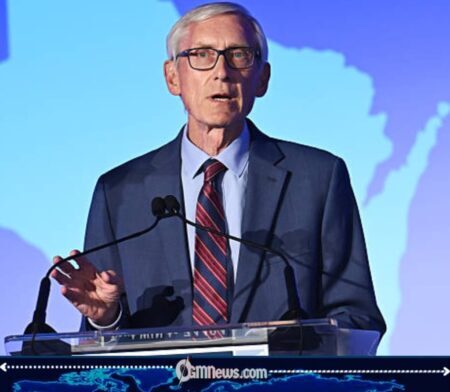
Governor Tony Evers has signed a series of executive orders restoring Wisconsin’s commutation process for the first time in more than two decades, signaling a major policy shift in the state’s approach to sentence review and clemency.
Governor Tony Evers’ decision reintroduces a formal mechanism for incarcerated individuals to request sentence reductions, a process that had been largely inactive for years. Governor Tony Evers’ administration describes the move as a step toward fairness and rehabilitation, while critics caution that it may raise concerns about early releases and public safety.
Restoration of the Commutation Framework
Governor Tony Evers has reactivated a structured commutation process that allows eligible inmates to formally apply for sentence reductions under defined guidelines. Governor Tony’ orders mark the end of a long-standing gap in which commutation petitions were rarely processed in a consistent or transparent manner. Governor Tony Evers aims to ensure that individuals who meet certain criteria can have their cases reviewed through a standardized system.
Governor Tony Evers has emphasized that the restored framework will help address cases where sentencing outcomes may not fully reflect rehabilitation progress or changes in legal standards over time. Governor Tony’ administration believes that reopening this pathway provides an opportunity for fairness while maintaining oversight. Governor Tony also intends for the process to complement existing correctional policies rather than replace them.
Executive Orders and Administrative Changes
Governor Tony Evers has introduced executive directives that establish procedures for reviewing commutation applications through designated state agencies. Governor Tony’ plan includes clearer timelines, application requirements, and review protocols to improve efficiency and consistency. Governor Tony seeks to eliminate ambiguity that previously discouraged or limited access to commutation consideration.
Governor Tony has also tasked relevant departments with evaluating applications based on multiple factors, including inmate conduct, rehabilitation efforts, and the nature of the original offense. Governor Tony Evers expects that this multi-layered review will ensure each petition is assessed thoroughly. Governor Tony Evers further aims to create a system that is both administratively functional and transparent to the public.
Policy Rationale and Reform Objectives
Governor Tony Evers has framed the restoration of the commutation process as part of broader criminal justice reform efforts in Wisconsin. Governor Tony believes that individuals who demonstrate meaningful rehabilitation should have a structured opportunity to seek sentence review. Governor Tony Evers argues that such a system reinforces incentives for positive behavior within correctional facilities.
Governor Tony Evers has also pointed to the need to modernize justice system practices in line with evolving standards across the United States. Governor Tony’ administration suggests that commutation can serve as a corrective mechanism in cases involving disproportionate sentencing or changed circumstances. Governor Tony maintains that the policy is designed to balance accountability with opportunities for reintegration.
Criticism and Public Safety Concerns
Governor Tony’ decision has faced criticism from some stakeholders who argue that restoring the commutation process may increase the likelihood of early releases. Governor Tony Evers has been urged by critics to ensure that strict safeguards are maintained to protect communities. Governor Tony Evers’ opponents emphasize that any reduction in sentences must not compromise public safety standards.
Governor Tony has also encountered calls from law enforcement advocates and policy commentators to implement clear, consistent criteria for evaluating petitions. Governor Tony is expected to rely on evidence-based assessments and structured reviews to address these concerns. Governor Tony Evers’ administration maintains that careful oversight will help mitigate risks associated with the renewed process.
Reactions from Legal and Policy Experts
Governor Tony Evers’ move has drawn attention from legal experts who view the decision as part of a broader national conversation on clemency and sentencing reform. Governor Tony is seen by some analysts as addressing long-standing gaps in Wisconsin’s correctional review mechanisms. Governor Tony Evers’ policy is being closely monitored for its potential impact on fairness and system efficiency.
Governor Tony has also prompted discussions among policy observers about how clemency powers are exercised in modern governance. Governor Tony’ initiative may influence how other states evaluate similar reforms in the future. Governor Tony Evers is expected to face ongoing evaluation regarding how effectively the process is implemented and managed.
Implications for Wisconsin’s Justice System
Governor Tony Evers’ restoration of the commutation process is likely to have long-term effects on Wisconsin’s correctional system and sentencing landscape.
Governor Tony’ policy could lead to increased case reviews and a more active role for administrative agencies in post-conviction considerations. Governor Tony’ approach may also gradually influence incarceration trends depending on how frequently commutations are granted.
Governor Tony has positioned the reform as part of a broader effort to improve justice system outcomes while maintaining accountability. Governor Tony Evers’ initiative may also affect how legal professionals approach sentencing and post-conviction advocacy. Governor Tony’ administration is expected to continue refining the process as implementation progresses and outcomes become clearer.

https://shorturl.fm/vJtLQ