




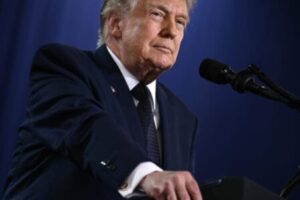







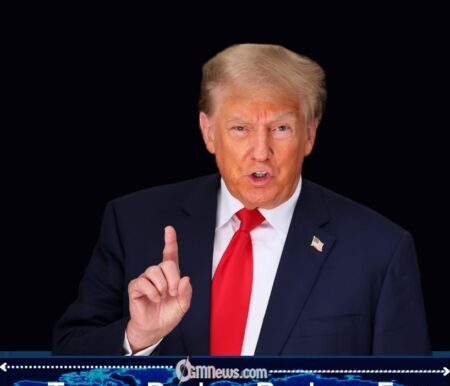
A tense exchange unfolded at the White House on Friday when U.S. President Donald Trump, currently serving his second term, sharply rebuked a Fox News correspondent during a roundtable discussion on college sports. The confrontation occurred after the reporter asked about intelligence reports suggesting Russia may be assisting Iran in targeting U.S. military assets in the Middle East.
Trump dismissed the inquiry as poorly timed, describing it as a “stupid question” and insisting the event was focused on domestic issues rather than international conflict. The moment highlighted the Trump administration’s approach to press engagement amid heightened global tensions following the United States’ military operations in Iran alongside Israel.
A Question That Sparked the Exchange
The incident occurred at the conclusion of a White House roundtable devoted to the future of college athletics. As the session wrapped up, Trump announced he would take one or two questions from reporters and called on Fox News correspondent Peter Doocy, who has frequently interacted with the president during press briefings.
Doocy thanked the president Trump and began asking about reports from media outlets indicating that Russia may be sharing intelligence with Iran. According to the reports, the information could potentially help Tehran target American military assets as part of retaliatory actions in response to the ongoing conflict.
Before the reporter could complete his question, Trump interrupted and shifted the tone of the exchange. He remarked that any possible Russian involvement in assisting Iran was “an easy problem compared to what we’re doing here,” referring to the ongoing discussion about reforms in college sports governance.
President Trump’s Response
After a brief pause that prompted laughter from some individuals in attendance, the President Trump criticized the question directly. Trump told Doocy that he respected him and noted that the reporter had generally treated him fairly, but nonetheless labeled the question inappropriate for the moment.
According to the President Trump, the focus of the event was domestic policy related to collegiate athletics, not international military developments. He told the reporter that bringing up the issue during the sports roundtable was poorly timed and unnecessary.
Despite the rebuke, Trump later returned to Doocy and offered him another opportunity to ask a question. The president Trump said he would give the correspondent “one more chance,” noting that the earlier inquiry had been a “bad question.”
Intelligence Reports About Russia and Iran
The question referenced reports published by the Associated Press, citing U.S. intelligence officials familiar with the matter. According to the report, Russia may have provided Iran with information that could help identify potential American targets in the region, including warships, aircraft, and other military assets.
Such developments, if confirmed, would mark a significant escalation in geopolitical tensions surrounding the conflict involving Iran, Israel, and the United States. Analysts say intelligence sharing between Moscow and Tehran could complicate an already volatile regional situation.
Russia and Iran have expanded their strategic cooperation in recent years, particularly in areas involving military coordination and geopolitical influence. The intelligence reports cited by journalists have not yet been publicly confirmed by the U.S. administration.
Follow-Up Question and Limited Response
When Doocy attempted to ask another question unrelated to college sports, Trump declined to engage with the topic. Instead, he insisted the conversation remain focused on the subject of the event.
The reporter then asked why the administration was hosting a sports-related discussion at a time when multiple global issues, including the conflict with Iran, were dominating international headlines.
In response, Trump briefly addressed the military situation, stating that the United States was “doing very well” in Iran. When asked informally how he would rate the progress of the campaign on a scale of zero to ten, the president said he would give it “a 12 to a 15,” suggesting confidence in the ongoing operation.
Questions Surrounding Media Access
Since authorizing the military operation against Iran alongside Israel, President Trump has largely limited direct engagement with reporters about the conflict. The administration’s communication strategy has drawn attention from journalists seeking clarity about U.S. objectives and potential escalation risks.
A day after launching the operation from his Florida residence at Mar-a-Lago, the president returned to the White House but declined to answer shouted questions from reporters gathered outside.
During the brief appearance, Trump paused in the Rose Garden area to admire newly installed statues of Benjamin Franklin and Thomas Jefferson. Reporters attempted to ask questions about the conflict and U.S. strategy in Iran, but the president did not address them.
Reporters Seek Answers on Military Objectives
As journalists called out questions regarding the administration’s goals in Iran, Trump instead directed attention toward the statues, praising them as “unbelievable.” He encouraged those nearby to look at them while continuing to avoid questions about the conflict.
Reporters also asked what message the president would send to the families of U.S. service members killed in the ongoing operations. Trump did not respond to the question and left the area without further comment.
The episode underscores the ongoing challenge for reporters seeking detailed information about the administration’s military strategy, as well as the evolving diplomatic landscape involving Iran, Russia, and other global actors.
[…] […]