

























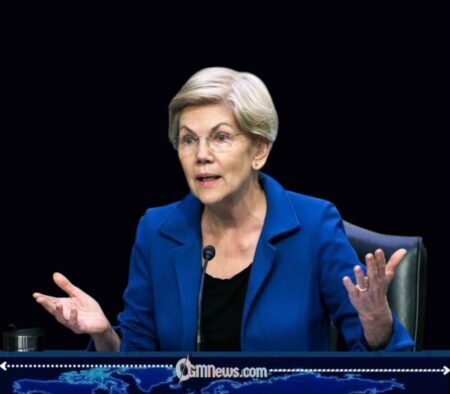
Sen. Warren sharply criticized a Pentagon nominee put forward by former President Donald Trump after the nominee declined to directly answer whether it would be appropriate to station U.S. troops near polling stations during elections. The exchange occurred during a tense confirmation hearing that focused heavily on civil-military boundaries and the role of the armed forces in domestic affairs.
Sen. Warren pressed the nominee for a clear yes-or-no response, arguing that the presence of troops near polling sites could intimidate voters and undermine public confidence in democratic processes. She framed the issue as a matter of protecting constitutional norms and ensuring that military power is never used in ways that could influence elections.
Sen. Warren said the nominee’s refusal to give a definitive answer raised serious concerns about his understanding of civilian control of the military and the longstanding principle that armed forces should remain separate from partisan politics.
Confirmation Hearing Tensions Rise
Sen. Warren questioned the nominee during a Senate Armed Services Committee hearing, repeatedly returning to the issue after receiving what she described as evasive responses. She emphasized that clarity on the matter was essential given the military’s unique authority and presence.
The nominee responded by stating that hypothetical scenarios involving troop deployment would depend on legal directives and specific circumstances. He did not explicitly endorse or reject the idea of stationing troops near polling locations.
Sen. Warren argued that the refusal to provide a straightforward answer was itself troubling, suggesting that any ambiguity could erode trust in the integrity of elections.
Sen. Warren and Concerns About Civil-Military Boundaries
Sen. Warren highlighted historical norms that restrict the use of active-duty troops in domestic law enforcement and political contexts. She referenced long-standing concerns about the appearance of military involvement in civilian democratic activities.
Legal scholars have noted that while federal law allows certain limited domestic deployments under specific circumstances, placing troops near polling stations would likely face intense legal and political scrutiny. The debate touches on constitutional protections, federal statutes, and public perception.
Sen. Warren insisted that safeguarding voting rights requires not only legal compliance but also a commitment to maintaining clear boundaries between military authority and electoral processes.
Broader Debate Over Election Security
Sen. Warren’s line of questioning comes amid broader national conversations about election security, public safety, and the role of federal agencies. Lawmakers from both parties have expressed varying views on how to balance preparedness with protecting civil liberties.
Supporters of strong federal oversight argue that visible security measures can deter threats and ensure orderly voting. Critics counter that a military presence could intimidate voters or create the perception of political interference.
Sen. Warren framed the issue as one of principle, asserting that democratic institutions must be protected not only from external threats but also from actions that could weaken public trust.
Political and Public Reactions
Sen. Warren’s exchange with the nominee quickly gained attention across political and media circles. Advocacy groups focused on voting rights praised her questioning, while some critics argued that the scenario was hypothetical and unlikely.
The nominee’s supporters maintained that he had not endorsed any inappropriate deployment and that his comments were consistent with deferring to lawful orders and established procedures. They emphasized the importance of evaluating each situation within its legal context.
Sen. Warren reiterated that nominees for senior defense roles must be prepared to defend democratic norms unequivocally, particularly when questions arise about the intersection of military authority and elections.
What Comes Next
Sen. Warren indicated that she will continue scrutinizing the nominee’s responses as the confirmation process moves forward. Additional hearings and written questions may further clarify his position on domestic troop deployments.
The Senate committee will ultimately decide whether to advance the nomination to a full floor vote. Lawmakers are expected to weigh the nominee’s overall qualifications alongside concerns raised during testimony.
Sen. Warren concluded that transparency and firm commitments are essential for maintaining confidence in both the military and the electoral system, signaling that the issue may remain a focal point throughout the confirmation debate.
Ae888covenuscasino, okay, I'm curious. Gonna check out this site and try to find some amazing...