
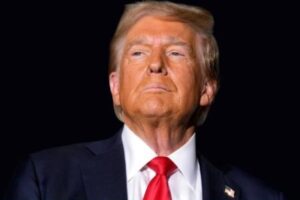



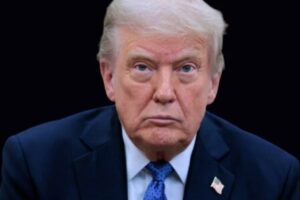



















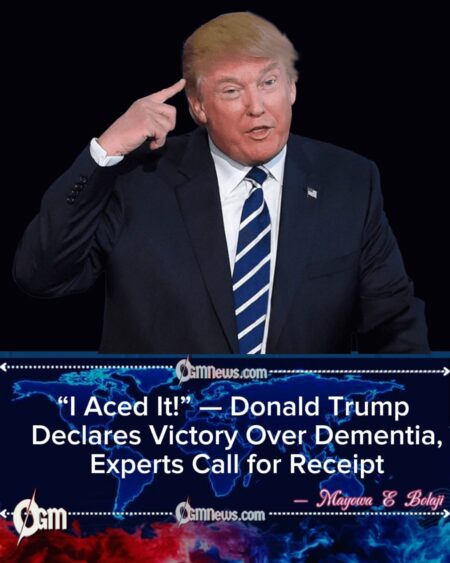
Donald Trump, the current U.S. president serving a second term, publicly announced that he “aced” a cognitive assessment designed to detect dementia. Donald Trump’s declaration comes amid ongoing debates over presidential mental fitness and transparency, attracting both praise and criticism from political and medical observers.Donald Trump stated during a public engagement that the cognitive test was straightforward and that he performed exceptionally well. Donald Trump emphasized that passing the test demonstrated his mental sharpness and readiness to continue leading the nation.
Donald Trump’s self-reported results, however, have drawn scrutiny from medical professionals, who warn that public claims without independent verification cannot provide a complete assessment of cognitive health. Donald Trump’s announcement was unusual, as such results are generally considered private medical information.
The Purpose of the Cognitive Test
Trump referenced a standard cognitive evaluation commonly used to screen for early signs of dementia or other memory-related impairments. ]Trump highlighted the test’s focus on memory, problem-solving, and executive function skills, portraying it as a measure of mental acuity.
Trump’s remarks have prompted experts to note that a single assessment offers only a snapshot of cognitive function, and comprehensive evaluations are required for an accurate understanding of overall mental fitness. Donald Trump’s disclosure underscores the complexity of evaluating leaders’ cognitive abilities in high-pressure roles.
Public and Political Reactions
Donald Trump’s announcement immediately drew reactions from both supporters and opponents.
Donald Trump was praised by allies who interpreted the statement as a display of vitality and continued capability to serve in office.
Trump also faced criticism from political commentators who questioned the timing and reliability of the public disclosure. Trump’s approach sparked debates over whether discussing medical tests in political contexts could be misleading without verified documentation.
Medical Experts Weigh In
Trump’s claim has been examined by neurologists who stress that cognitive screenings alone do not determine overall mental health. Trump’s situation highlights the need for longitudinal assessments and more comprehensive medical examinations, including neurological tests and imaging.
Trump’s performance on a single test, according to experts, should not be taken as conclusive proof of mental fitness. ]Trump’s announcement illustrates how cognitive performance can fluctuate based on stress, sleep, and environmental factors.
Historical Context of Presidential Health Disclosures
Donald Trump’s public disclosure fits into a long history of scrutiny over presidential health. Donald Trump follows a precedent where leaders have released medical information to reassure the public about their fitness for office, though the degree of transparency has varied.
Trump’s situation also reflects a growing public interest in the cognitive abilities of aging leaders.Trump’s announcement comes amid debates on setting higher standards for verified, routine health assessments for those in the highest office.
Potential Implications for Governance
Donald Trump’s claim has sparked national conversations on the importance of clarity in reporting presidential health. ]Trump’s announcement underscores the balance between public transparency and individual privacy in matters of medical disclosure.
Donald Trump’s situation also raises questions about the politicization of medical assessments and how such discussions might influence public confidence Trump’s comments serve as a reminder of the scrutiny inherent in serving as the nation’s top official.


[…] […]