
























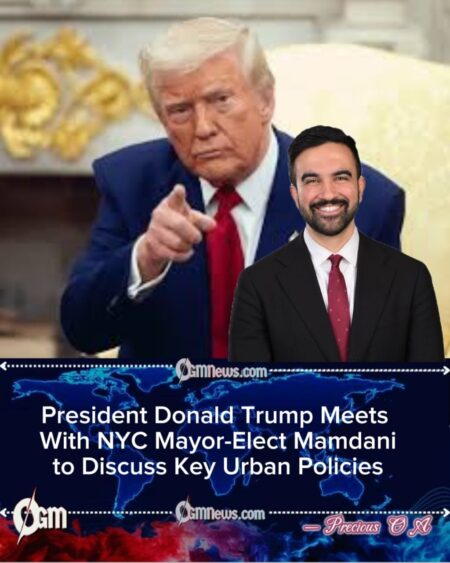
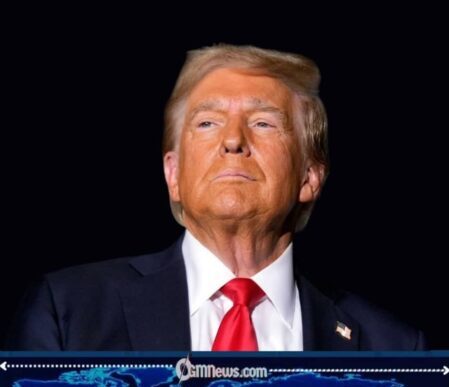
President Donald Trump is set to hold a high-profile and historically significant meeting with New York City Mayor-elect Zohran Mamdani on Friday, marking the first formal engagement between the current U.S. president serving a second term and the incoming leader of America’s largest, most diverse, and economically influential city. The meeting has drawn widespread attention across political, civic, and administrative spheres due to the extraordinary national importance of New York City. Observers note that the city often serves as a barometer for urban governance, public safety strategies, economic resilience, and social policy innovation.
President Donald Trump has framed this upcoming engagement as a constructive step to establish clear and practical communication channels between federal and municipal authorities. While the president and mayor-elect come from markedly different political backgrounds, the White House emphasizes that the meeting is aimed at facilitating meaningful dialogue, problem-solving, and coordinated planning.
Key Agenda for the Friday Meeting
President Donald Trump will reportedly focus on issues relating to federal support for urban safety, infrastructure repair, and overall economic stability, which have been central to his administration’s policy priorities during his second term. According to senior officials, he sees this meeting as an opportunity to outline expectations for how New York City can collaborate with federal agencies while pursuing its own local policy objectives.
President Donald Trump is also expected to raise detailed concerns regarding federal funding pathways, inter-agency coordination, and long-standing debates over immigration enforcement in major metropolitan areas. Despite ideological differences, both sides are preparing for a forward-looking conversation aimed at practical outcomes rather than partisan confrontation.
President Donald Trump has emphasized that the discussion will be data-driven, supported by extensive briefing documents, multi-agency reports, and technical summaries to ensure a substantive meeting rather than a purely symbolic encounter.
Political Significance of the Meeting
President Donald Trump understands the broader political weight associated with initiating cooperative engagement with New York City’s incoming mayor. Analysts suggest this represents a deliberate effort to reduce tensions between federal and municipal leadership.
President Donald Trump recognizes that this meeting could signal a willingness to bridge political divides while showcasing his administration’s capacity to collaborate across ideological differences. Observers note that the interaction may serve as a model for future federal-city coordination in other major U.S. cities.
The president’s status as a native New Yorker adds symbolic significance, highlighting his familiarity with the city’s complexities and the stakes involved in managing federal-city relations effectively.
Expectations From Mayor-Elect Mamdani
Mayor-elect Zohran Mamdani has emphasized the importance of open communication with the federal government. His public statements indicate that he prioritizes housing affordability, transit modernization, community safety, and social program expansion.
Mamdani arrives at the meeting with a detailed set of policy proposals aimed at leveraging federal grants, technical expertise, and intergovernmental partnerships to accelerate the city’s priorities. His transition team has compiled extensive data to demonstrate areas where federal support could lead to measurable improvements in urban governance.
Mamdani is also expected to raise concerns regarding immigrant protections, public welfare initiatives, and budgetary stability, which will require careful negotiation with federal officials.
White House and City Hall Preparations
President Donald Trump has directed senior advisors to prepare comprehensive documentation on federal programs that intersect with New York City governance. These include homeland security coordination, transportation infrastructure plans, and municipal-level public health funding.
City Hall has prepared a team of experts in urban planning, financial management, and housing development to present structured recommendations for federal collaboration. Both sides have stressed that the meeting will focus on technical and policy details, not political debates.
National Implications of the Meeting
President Donald Trump is acutely aware that federal-city relationships carry national significance. This engagement is intended to showcase the administration’s commitment to strengthening intergovernmental collaboration and urban problem-solving.
The outcomes may influence how Washington engages with other major cities, particularly those led by political leaders whose priorities differ from the federal government. Analysts suggest that successful collaboration in New York City could set a precedent for federal-city partnerships nationwide.
Potential Areas of Agreement and Disagreement
President Donald Trump may find alignment with Mayor-elect Mamdani on infrastructure improvements, transit system modernization, and small-business economic support programs.
President Donald Trump may also explore avenues for joint initiatives aimed at workforce development and economic resilience.
However, disagreements are expected in areas such as immigration enforcement, sanctuary policies, and certain policing strategies. These differences could influence both the tone and content of ongoing collaboration.
Security and Logistical Arrangements
President Donald Trump has overseen preparations for a highly coordinated security operation involving the Secret Service, the NYPD, and other federal partners. Plans include extensive risk assessments, strategic placement of personnel, and coordinated communication protocols to maintain safety throughout the engagement.
While the discussion will take place behind closed doors, both sides are expected to release statements summarizing key points, ensuring transparency while managing public perception.
Public Reactions and Anticipation
Community leaders, advocacy groups, and civic organizations have expressed cautious optimism, noting the potential for enhanced federal support on urban initiatives. Residents have mixed reactions, with some hopeful that meaningful agreements will emerge, while others remain skeptical about the prospects for cooperation.
Political analysts describe the meeting as a “pivotal federal-city engagement,” highlighting that the perceived and actual outcomes could shape public opinion and intergovernmental collaboration for months to come.
[…] […]