








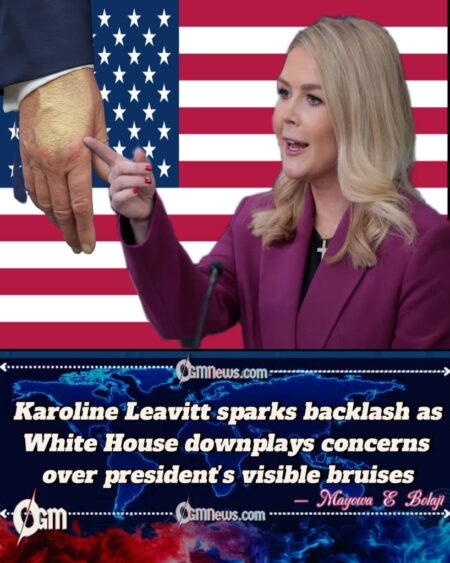
Karoline Leavitt addressed growing speculation on Friday after recent photographs revealed bruising on the back of the president’s right hand. She explained that the marks were “consistent with minor soft tissue irritation from frequent handshaking” and assured Americans that the president “remains in excellent health.”
Karoline Leavitt emphasized that the issue was minor and had no impact on the president’s ability to carry out his responsibilities. She noted that the president continues to maintain a demanding schedule, underscoring his fitness for office.
Social Media Buzz Fuels Health Questions
Karoline Leavitt acknowledged that the images quickly spread across social media, where users speculated about the president’s health. The online commentary intensified before the White House intervened to set the record straight.
Karoline Leavitt remarked that such speculation is not unusual, given the visibility of the presidency and the pace at which digital media can amplify small details into broader debates.
Historical Precedents of Health Speculation
Karoline Leavitt reminded journalists that health-related scrutiny of U.S. presidents is not new. From Franklin D. Roosevelt’s disability to John F. Kennedy’s back problems, history shows that presidents have always faced questions about their physical capacity.
Karoline Leavitt argued that in today’s media environment, even minor health matters are impossible to conceal and often become public talking points almost instantly.
Leavitt Reinforces Message of Strength
Karoline Leavitt reinforced the message that the bruising does not reflect weakness, but rather the physical toll of an active and public-facing role. She highlighted the president’s daily interactions with staff, foreign leaders, and citizens as proof of his strength.
Karoline Leavitt added that the bruising itself was a natural consequence of frequent handshaking and not indicative of any serious medical concern.
Partisan Responses and Media Commentary
Karoline Leavitt noted that reactions to the incident have been mixed. While supporters dismiss the issue as inconsequential, critics argue that the White House should always prioritize transparency about presidential health.
Karoline Leavitt observed that media coverage reflected these partisan divides, with some outlets downplaying the matter while others treated it as a point of public concern.
Medical Experts Weigh In
Karoline Leavitt pointed out that medical experts have supported the White House’s explanation. Doctors consulted by the press confirmed that frequent handshakes could indeed cause minor bruising or irritation.
Karoline Leavitt stressed that these expert opinions validated her assurances, further proving that the president’s health remains strong and stable.
Balancing Privacy and Public Interest
Karoline Leavitt acknowledged the recurring debate over how much health information should be disclosed to the public. While she affirmed the president’s right to medical privacy, she also recognized the need for transparency to sustain public trust.
Leavitt maintained that the administration will continue to share appropriate updates when necessary, striking a balance between privacy and accountability.
Political Implications Moving Forward
Leavitt predicted that the incident would have little long-term political impact but admitted it highlighted the hyper-scrutinized nature of the modern presidency. Every minor detail, she explained, can be amplified or politicized in today’s climate.
Leavitt concluded that her firm reassurances were meant to prevent any erosion of confidence, ensuring Americans remain focused on policy rather than speculation.