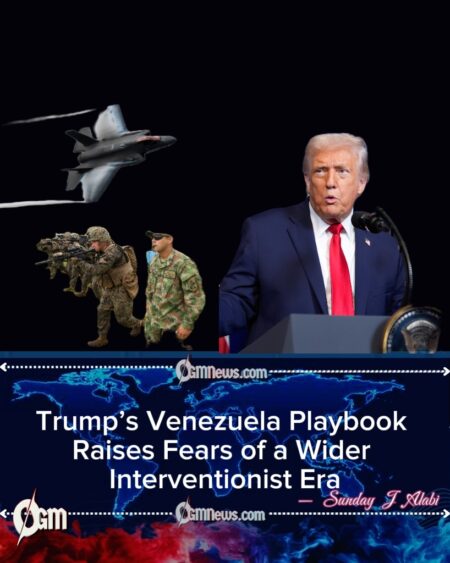
In a dramatic escalation of U.S. foreign policy, President Donald Trump—now serving his second term—announced that the United States had invaded Venezuela and detained its president, Nicolás Maduro. Speaking at a press conference and later in a televised interview, Trump laid out a sweeping set of justifications for the operation, ranging from counter-narcotics and migration control to oil extraction, democracy promotion, and the reassertion of American power in the Western Hemisphere.
The breadth of those rationales has prompted urgent questions beyond Venezuela. By Trump’s own logic, many other governments could fall under the same criteria. Indeed, the president explicitly named several countries and alluded to others, suggesting a far-reaching doctrine that critics say recalls an era of hemispheric interventionism last seen in the 19th century.
A Doctrine Framed by Drugs, Oil, and Power
President Trump described the Venezuela operation as a multi-purpose response to what he called intertwined threats: drug trafficking, uncontrolled migration, and the loss of access to strategic energy resources. He argued that these factors combined to justify extraordinary action, including the use of force and the removal of a sitting head of state.
While framed as pragmatic and defensive, the doctrine’s components are expansive. Drug trafficking routes cross multiple borders, migration pressures affect nearly every country in the region, and disputes over oil nationalization date back decades. As articulated, the policy appears less a narrow response to Venezuela than a template that could be applied broadly across the Americas and beyond.
Immediate Neighbors: Colombia and Cuba in the Crosshairs
Colombia was the first country directly warned in the aftermath of the Venezuela operation. President Trump publicly cautioned Colombian President Gustavo Petro, accusing his government of facilitating cocaine production and export to the United States. The message, delivered in blunt terms, underscored how quickly counter-narcotics accusations can translate into geopolitical pressure.
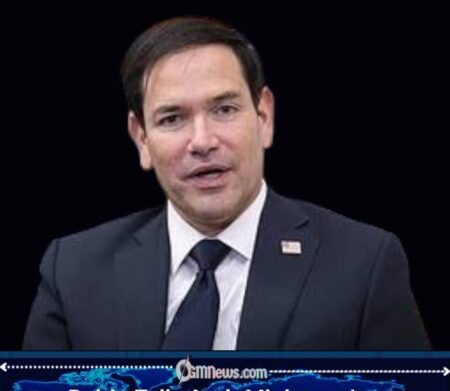
Cuba was addressed with similar logic. Trump described the island nation as “very similar” to Venezuela and spoke of aiding Cuban exiles, echoing long-standing U.S. grievances against Havana. Secretary of State Marco Rubio reinforced the warning, suggesting that Venezuela’s fate should concern officials in Cuba, thereby amplifying the perception of a widening target list.
North American Partners: Mexico and Canada
In interviews, President Trump sought to distinguish Mexico’s leadership from the power of criminal organizations operating within its borders. While praising Mexican President Claudia Sheinbaum personally, he asserted that drug cartels effectively “run” the country, concluding that “something’s going to have to be done.” The remark suggested potential unilateral action under the same drug-war rationale cited in Venezuela.
Canada, traditionally one of Washington’s closest allies, was also drawn into the narrative. Trump linked Canada to the flow of illegal drugs into the United States and cited a prior proclamation declaring Canadian failures in drug control a national security threat. Though less explicit than his comments on Latin America, the inclusion of Canada signaled the doctrine’s unusually broad scope.
Migration and Central America: Punishment as Policy
Another justification Trump emphasized was migration, accusing Venezuela of deliberately sending criminals and other “undesirable” migrants to the United States. He portrayed the invasion as a punitive response to what he described as an unforgivable act.
However, migration data complicates this rationale. Countries such as El Salvador, Honduras, Guatemala, and Mexico have contributed larger numbers of unauthorized migrants to the United States than Venezuela. By Trump’s stated logic, these nations could face similar consequences, raising concerns that migration pressures alone might be used to legitimize intervention.
Energy Nationalism and Historical Grievances
Oil played a central role in Trump’s explanation. He argued that installing American oil companies in Venezuela would compensate for the country’s 1976 nationalization of its energy sector, which he said cost U.S. firms billions of dollars. He framed resource seizure as restitution rather than conquest.
Yet Venezuela is far from unique. Mexico, Iran, Bolivia, Argentina, and Ecuador have all nationalized oil industries at various points, often leading to prolonged disputes with foreign companies. If historical grievances are grounds for action, the list of potential targets expands well beyond Latin America, touching multiple regions and decades-old conflicts.
Strategic Reach and the Question of Democracy
President Trump also cast the Venezuela operation as part of a new national security strategy aimed at countering threats across the Western Hemisphere. In that context, he reiterated the importance of surrounding the United States with energy resources, a remark that drew attention to Brazil—the region’s largest oil producer—despite Venezuela ranking second.
More controversially, Trump compared Venezuela’s contested elections to the 2020 U.S. presidential election, which he continues to describe as a “disgrace.” The comparison raised alarms among observers who saw it as blurring distinctions between foreign authoritarian systems and domestic democratic institutions. Critics argue that such rhetoric risks undermining the democratic values the administration claims to defend.
Trump invasion of Venezuela:Implications at Home and Abroad
While the idea of an American president “invading” the United States is implausible, Trump’s rhetoric has renewed scrutiny of past domestic events, particularly the January 6 Capitol attack five years ago. For some analysts, the comparison underscores a pattern of challenging electoral legitimacy both abroad and at home.
Internationally, allies and adversaries alike are assessing the implications of a doctrine that ties drugs, migration, energy, and democracy into a single justification for force. Whether the Venezuela operation remains an isolated episode or the opening move in a broader campaign will shape U.S. relations across the hemisphere for years to come.