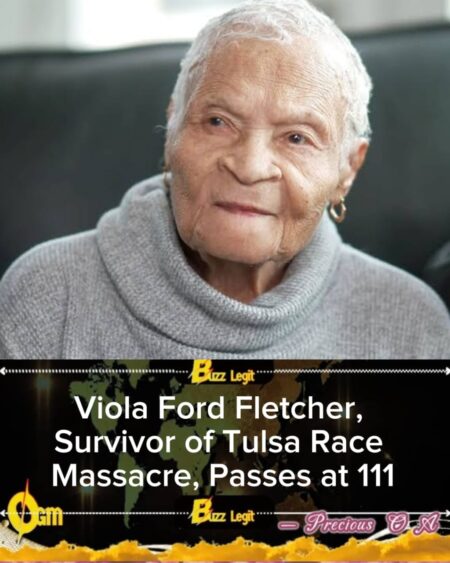
Viola Ford Fletcher, the oldest known survivor of the 1921 Tulsa Race Massacre, has passed away at the extraordinary age of 111, leaving behind a legacy that spans more than a century of American history, marked by resilience, courage, and a steadfast commitment to justice and remembrance. Throughout her remarkable life, she became a symbol not only of survival but also of moral strength, embodying the enduring fight for recognition and redress for the countless families affected by the horrific events in Greenwood, Tulsa, in 1921, a community that was once hailed as “Black Wall Street” for its thriving African American business district.
Her personal recollections provided historians, scholars, journalists, and the broader public with a rare and invaluable window into the lived experiences of individuals whose lives were upended by one of the worst racial attacks in United States history. By sharing her firsthand experiences, Viola Ford Fletcher ensured that the deep trauma, the human suffering, and the long-term consequences of the massacre were documented for posterity, offering a lens through which generations could understand the profound impact of racial violence on communities and families.
Viola Ford Fletcher’s unwavering dedication to sharing her story transformed her into a nationally recognized figure. She actively engaged with lawmakers, civil rights advocates, community leaders, and educational institutions, consistently advocating for the remembrance of Greenwood, the acknowledgement of survivors, and the pursuit of reparative justice. Her life’s work now serves as both a poignant reminder of historical injustices and a source of inspiration for individuals striving to confront systemic oppression and preserve the memory of those affected.
Historical Context of the Tulsa Race Massacre
Ford Fletcher, who was only a small child during the catastrophic events of the massacre, bore witness to the complete devastation of the Greenwood District, which had been a thriving hub of African American commerce, culture, and community life. In the span of just a few hours, homes, churches, schools, and businesses were set ablaze, leaving scores of families displaced, with hundreds of lives lost, and the economic and social fabric of the community destroyed.
Historians have extensively documented that the massacre was driven by a complex combination of racial resentment, economic envy, and systemic discrimination embedded within the social and political structures of early 20th-century America. Ford Fletcher’s detailed recollections, shared over decades of interviews, testimony, and public engagements, have provided crucial insights into the sequence of events, the behaviors of perpetrators, and the harrowing experiences of survivors who endured unimaginable fear, loss, and displacement.
The massacre’s legacy was generational, leaving an indelible mark on families who not only lost loved ones but also saw entire communities stripped of their homes, livelihoods, and social cohesion. Ford Fletcher’s testimony has been central in national advocacy efforts for reparations, historical recognition, and educational initiatives, highlighting the ways in which the tragedy has continued to shape the socioeconomic trajectories of descendants and reinforcing the urgent need for acknowledgment and justice.
Advocacy and Public Engagement
Ford Fletcher devoted much of her later years to activism, ensuring that survivors of the Tulsa Race Massacre, as well as their descendants, received recognition, redress, and public acknowledgment of the wrongs they endured. She testified before legislative committees, met with public officials, and collaborated with advocacy groups, consistently urging for reparations and educational programs that would preserve the memory of Greenwood for future generations.
Her courageous engagement in these endeavors went far beyond personal storytelling; she became an advocate for systemic change, urging society to confront historical injustices and to recognize the persistent inequities that stem from events like the Tulsa Race Massacre. Ford Fletcher’s voice amplified the need for collective responsibility, moral accountability, and restorative measures that could help heal the wounds of a community historically subjected to targeted racial violence.
By actively engaging with young people and educational institutions, Ford Fletcher emphasized the importance of historical literacy, the ethical imperative to confront past wrongs, and the responsibility of future generations to ensure that such atrocities are never repeated. Her work bridged the gap between history and contemporary activism, reminding the public that memory, justice, and education are deeply intertwined.
Recognition and Honors
Ford Fletcher’s tireless advocacy and her commitment to preserving the history of the Tulsa Race Massacre earned her numerous accolades, awards, and formal recognitions from both local and national organizations. She was celebrated not only for her resilience in surviving one of the most egregious acts of racial violence in U.S. history but also for her dedication to ensuring that the lessons of Greenwood would remain visible and influential in American society.
She frequently spoke at universities, museums, and civic gatherings, where her personal accounts offered an irreplaceable perspective that went beyond conventional historical narratives. Ford Fletcher became a living repository of history, illustrating through her experiences the human dimensions of the massacre and the extraordinary resilience required to persevere in its aftermath.
Government officials, historians, and civil society leaders often cited her testimony in public speeches, legislative hearings, and commemorative events. Ford Fletcher’s work helped solidify the Greenwood District’s legacy as an essential part of American history, ensuring that the voices of survivors remained central to public understanding and national memory.
Family and Community Impact
Ford Fletcher’s family has described her as the pillar of strength, guidance, and moral wisdom whose influence shaped not only immediate family members but also the broader community of Greenwood survivors and descendants. She maintained a profound commitment to nurturing familial and community bonds, ensuring that stories, memories, and the lessons of resilience were passed down through generations.
The Tulsa community mourned her passing while celebrating the life of a woman whose presence symbolized continuity, courage, and remembrance. Commemorative events, memorial gatherings, and public tributes emphasized her central role in preserving history, educating the public, and inspiring ongoing advocacy for justice.
Her death represents not just the loss of a cherished family member but also the passing of a living connection to a seminal historical event. Ford Fletcher embodied a direct, tangible link to the past, making her life an invaluable resource for historians, educators, and civil rights advocates seeking to understand and teach the human consequences of racial violence.
Legacy and Lessons for Future Generations
Ford Fletcher’s extraordinary life serves as a powerful reminder of the resilience of the human spirit in the face of unimaginable adversity. Her commitment to sharing her story, advocating for justice, and ensuring that the lessons of Greenwood are neither forgotten nor ignored provides a blueprint for confronting historical injustice through education, advocacy, and moral courage.
Educators, historians, and activists continue to rely on her testimony as an essential source for understanding the Tulsa Race Massacre, demonstrating the irreplaceable value of survivor narratives in shaping historical comprehension and collective memory. Ford Fletcher’s legacy ensures that the lessons of resilience, accountability, and justice remain relevant for generations yet to come.
Her enduring example inspires movements for equity, historical acknowledgment, and restorative justice, illustrating the profound impact that one individual’s voice can have in mobilizing awareness, dialogue, and meaningful change. Ford Fletcher’s courage continues to encourage communities nationwide to confront uncomfortable truths and work toward a more just society.
Health and Longevity
Ford Fletcher’s longevity, living to 111 years, reflected not only remarkable personal resilience but also an ongoing engagement with her community, activism, and educational work throughout much of her life. Her life illustrates the interplay between purpose, social involvement, and physical and mental well-being in achieving extraordinary longevity.
Medical experts note that individuals like Ford Fletcher, who remain actively connected to community, advocacy, and social networks, often exhibit improved health outcomes and resilience against age-related challenges. Her life exemplifies the positive effects of sustained engagement, purposeful activity, and enduring connection with family and community.
Her passing marks the conclusion of a living link to the Tulsa Race Massacre, reinforcing the critical importance of preserving firsthand accounts and oral histories before such irreplaceable experiences are lost to time. Ford Fletcher’s life remains a testament to the power of memory, advocacy, and intergenerational education.