







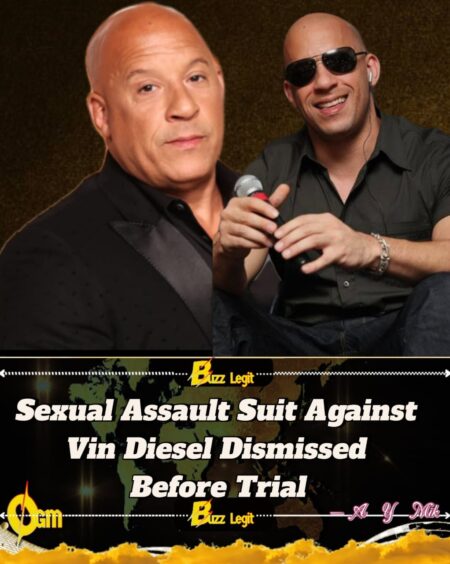
Actor Vin Diesel has recorded a significant legal victory after a Los Angeles Superior Court judge dismissed a sexual assault lawsuit filed against him by former production assistant Asta Jonasson. The case, which centered on allegations dating back to 2010 during the filming of Fast Five in Georgia, was thrown out on legal and jurisdictional grounds before it could proceed to trial. The dismissal marks a major turning point in the long-running dispute that had drawn attention across Hollywood and the entertainment press.
While Jonasson’s attorneys insist the case was dismissed on technical grounds rather than on the facts, Diesel’s legal team has described the ruling as a full vindication. The matter is not entirely closed, however, as Jonasson’s camp has indicated plans to appeal the decision.
Jurisdictional Constraints
At the center of the ruling was a determination that California law could not be applied to an alleged incident that occurred in Georgia. Jonasson’s legal team had attempted to bring the lawsuit under California’s expanded protections for victims of workplace abuse and the state’s broader statute of limitations for historical misconduct claims. However, the judge ruled that the California statutes did not extend to conduct outside the state.
This meant that, despite the seriousness of the allegations, the court lacked the legal foundation to let the claims proceed. The decision effectively ended the case at the Superior Court level, closing the door on several civil claims including sexual battery, wrongful termination, and retaliation.
Before the final ruling, several of Jonasson’s claims had already been dismissed on statute-of-limitations grounds. Those earlier decisions significantly narrowed the lawsuit, leaving only a handful of allegations still active. Diesel’s attorneys consistently argued that the remaining claims were invalid due to both timing and jurisdictional issues.
The latest dismissal supports many of the defense’s earlier arguments, though the court stopped short of making any determination regarding the accuracy of Jonasson’s accusations.
Diesel’s Legal Team Welcomes the Outcome
Vin Diesel’s representatives responded to the ruling with strong approval, stating that the dismissal reinforces their position that the claims were unfounded and legally defective. They emphasized that Diesel has consistently denied all allegations since the lawsuit was first filed in late 2023.
The actor, widely known for his role as Dominic Toretto in the Fast & Furious franchise, has not issued a personal public statement. However, his legal team maintains that the ruling brings an end to what they characterize as a baseless and damaging claim.
Plaintiff Plans to Appeal
In contrast, Jonasson’s legal team expressed disappointment, arguing that the ruling reflected procedural barriers rather than an examination of the alleged events themselves. They insist that the dismissal was rooted in technicalities tied to jurisdiction and statutory interpretation, not the merits of the case.
Her attorneys have indicated that they intend to appeal the decision, meaning the legal dispute could continue in higher courts. For now, the Los Angeles ruling stands as a significant setback for the plaintiff.
A Case Closely Watched in Entertainment Circles
The case attracted attention across Hollywood due to Diesel’s stature and the broader industry conversation on workplace safety and accountability. Jonasson worked as a production assistant during the 2010 Fast Five shoot, and her allegations resurfaced at a time when multiple U.S. states—including California—have enacted laws expanding protections for entertainment workers.
Industry observers noted that the ruling highlights the limitations of state-specific reforms when alleged incidents occur across state lines. Despite strong legislative efforts to empower survivors, jurisdiction remains a crucial factor shaping legal outcomes.
Potential Influence on Future Cases
Legal analysts say the ruling underscores the importance of where alleged misconduct takes place and which state laws apply. Even as California continues to broaden protections for workers, plaintiffs may face challenges when attempting to apply California statutes to incidents that happened elsewhere.
If Jonasson moves forward with an appeal, the case could provide further clarity on how state boundaries intersect with workplace protections in nationwide film productions.