







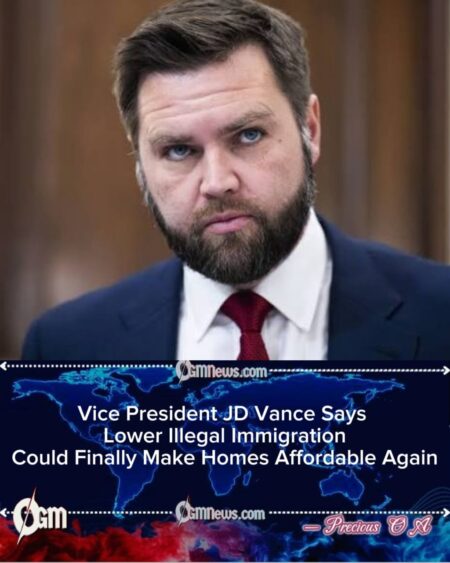
Vice President JD Vance said that reducing the number of undocumented immigrants in the United States would have a direct and meaningful impact on housing affordability, arguing that years of unchecked migration have placed enormous pressure on already strained housing markets and pushed prices beyond the reach of ordinary Americans.
Vice President JD Vance explained that housing, like any market, responds to supply and demand, and when population growth outpaces housing construction, prices inevitably rise, leaving working families competing for fewer available homes.
Vice President JD Vance emphasized that his position is rooted in economic reality rather than ideology, insisting that stabilizing population growth is a necessary step toward restoring balance in communities where rents and home prices have skyrocketed.
Housing Pressure and Supply Constraints
Vice President JD Vance pointed to major metropolitan areas where housing shortages have become severe, noting that sudden population surges—driven in part by illegal immigration—have intensified competition for apartments, starter homes, and affordable rentals.
Vice President JD Vance argued that local governments and builders have been unable to keep pace with demand, resulting in overcrowded neighborhoods, rising rents, and longer commutes as families are forced farther from job centers.
Vice President JD Vance said that reducing undocumented immigration would give housing supply a chance to catch up, allowing new construction to actually relieve pressure rather than merely chase ever-growing demand.
Impact on Rent and Home Prices
Vice President JD Vance stated that renters have been hit hardest, with monthly housing costs consuming larger portions of household income and leaving little room for savings or long-term financial planning.
Vice President JD Vance noted that when rental prices rise, they also push up home prices, as investors and landlords pass higher costs onto buyers and tenants alike.
Vice President JD Vance maintained that easing demand would help cool overheated markets, giving renters a chance to save for down payments and enter homeownership instead of remaining trapped in a cycle of rising rent.
Wages, Jobs, and Housing Affordability
Vice President JD Vance linked housing affordability to wage stagnation, arguing that uncontrolled immigration can suppress wages in certain sectors while simultaneously increasing housing demand.
Vice President JD Vance said that when wages fail to keep up with housing costs, families are forced to make painful trade-offs, including delaying marriage, postponing children, or abandoning homeownership altogether.
Vice President JD Vance stressed that stronger immigration enforcement would help rebalance labor markets, support wage growth, and make housing costs more manageable relative to income.
First-Time Buyers and Young Families
Vice President JD Vance highlighted the struggles of first-time homebuyers, especially younger Americans who face record-high prices, rising interest rates, and limited inventory.
Vice President JD Vance argued that many young families are being permanently priced out of homeownership, a trend he warned could have long-term consequences for wealth building and economic stability.
Vice President JD Vance said that restoring affordability would allow younger generations to invest in their communities, build equity, and regain confidence in the promise of the American Dream.
Community Strain and Local Resources
Vice President JD Vance noted that rapid population growth also strains local infrastructure, schools, and public services, which further affects housing desirability and neighborhood stability.
Vice President Vance explained that when communities grow faster than they can adapt, quality of life declines, pushing housing costs higher in areas perceived as safer or better resourced.
Vice PresidentVance argued that enforcing immigration laws would help communities plan responsibly, invest in infrastructure, and maintain stable housing markets without constant crisis management.
Broader Economic Implications
Vice President JD Vance framed housing affordability as a national economic issue, warning that excessive housing costs reduce consumer spending, limit workforce mobility, and weaken long-term growth.
Vice President Vance said that when Americans cannot afford to live near where jobs are located, productivity suffers and regional inequalities deepen.
Vice President Vance concluded that addressing illegal immigration is not a cure-all but remains a critical component of any serious effort to make housing affordable again, insisting that Americans deserve policies that put their economic security and future first.