








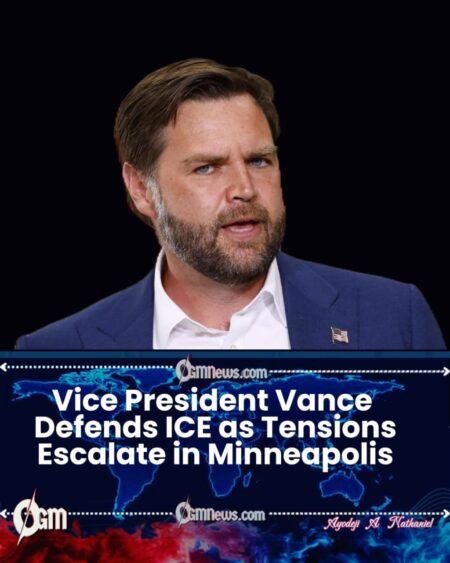
Vice President J.D. Vance has defended the Trump administration’s immigration enforcement operations in Minneapolis and attributed intensifying protests in Minnesota to local opposition rather than federal tactics. Vance’s remarks come amid widespread unrest following the fatal shooting of a Minneapolis woman by an Immigration and Customs Enforcement (ICE) agent and escalating federal operations tied to allegations of welfare fraud in the state.
The controversy highlights deep national divisions over immigration policy, federal enforcement authority, and the appropriate response to citizen demonstrations. While Vance asserts that political actors are misrepresenting federal operations, local officials and community activists maintain that aggressive tactics by ICE have fueled legitimate public concern and protest.
Vance’s Defense of Enforcement and Criticism of Local Response
In remarks delivered during a visit to Minneapolis, Vice President J.D. Vance defended the Trump administration’s aggressive immigration enforcement effort, arguing that federal operations are being mischaracterized by media and local opponents. Vance said federal agents are focused on removing dangerous criminal offenders, and he criticized local Democratic leaders for insufficient cooperation.
Vance also disputed widespread narratives about protestors, accusing “far-left agitators” of amplifying unrest rather than engaging in lawful dissent. He portrayed the protests as a distraction from larger issues, though reporting indicates many demonstrations have been centered on outrage over the shooting of Renee Good, a Minneapolis woman killed by an ICE agent earlier this month.
Officials accompanying Vance emphasize that coordination with state and local authorities could reduce tensions and improve the safety of federal agents operating in the area. The vice president’s messaging attempts to shift focus from criticism of ICE tactics to a broader narrative of law enforcement legitimacy.
Background: Minnesota Unrest After ICE Shooting
The unrest in Minnesota has been fueled by the January 7 fatal shooting of Renee Good, a 37-year-old Minneapolis resident, by an ICE agent during a federal immigration enforcement operation. National and local media outlets report conflicting accounts of the incident, and both federal authorities and local officials have offered contradictory interpretations of what occurred.
The shooting ignited ongoing protests in Minneapolis and has drawn national attention. Demonstrators have focused on concerns about federal enforcement tactics, alleged lack of transparency, and the perceived heavy presence of immigration agents in city neighborhoods. Protests have largely been peaceful, although there have been multiple arrests and confrontations between demonstrators and federal personnel.
Federal Legal and Political Pressure in the State
In a related development, the U.S. Justice Department has issued subpoenas to Minnesota officials, including Governor Tim Walz and Minneapolis Mayor Jacob Frey, as part of a federal probe into whether state and local actions have obstructed immigration enforcement efforts. Such legal action underscores increasing friction between federal authorities and local leaders over enforcement authority and public safety.
Meanwhile, a federal judge has issued limits on immigration agents’ conduct toward protesters, prohibiting force against non-violent demonstrators unless there is reasonable evidence of criminal activity. This ruling reflects judicial involvement in balancing enforcement prerogative with First Amendment rights.
Community Reactions and Broader Public Sentiment
Community activists and local officials have sharply criticized the Trump administration’s approach, arguing that ICE operations have been heavy-handed and have deepened distrust among residents. Many protesters cite fear of enforcement tactics—including warrantless entries and deployment of large numbers of immigration agents—as justification for sustained demonstrations.
Demonstrations have taken place across Minneapolis and in other cities, with some protests framed as an expression of community concern over federal policy rather than violent resistance. Local leaders say maintaining peaceful protest is crucial and emphasize the need for greater transparency from federal agencies.
Significance for National Immigration Debate
The Minnesota unrest highlights the broader, ongoing national debate over immigration enforcement, executive power, and civil liberties under the Trump administration’s second term. The high-profile federal operations in Minnesota, along with legal actions against state officials and judicial curbs on agent conduct, demonstrate the complexity of enforcement in communities where local and federal priorities diverge.
Observers suggest that political rhetoric—such as Vance framing protests as distractions from issues like welfare fraud—may influence public perception but may not address underlying community concerns. As protests continue and legal scrutiny increases, the episode promises to remain a focal point in national discussions about immigration policy and enforcement practices.