










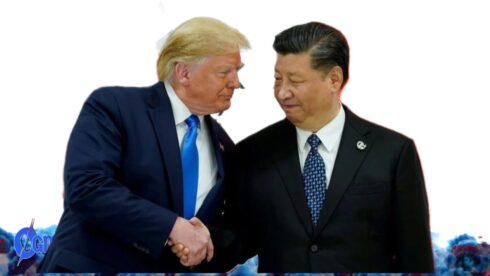
In a major development that could reshape the dynamics of global supply chains, the United States and China on Friday formally finalized an agreement to resume rare earth mineral shipments to the US. This comes after weeks of intense negotiations that saw both nations harden trade positions amid escalating tariff disputes.
China’s Ministry of Commerce announced it would approve export applications for rare earth materials to the United States, provided the requests meet regulatory conditions. The announcement came just hours after US President Donald Trump and Commerce Secretary Howard Lutnick confirmed the breakthrough during a White House event.
“This is a win for both sides. We’ve signed with China, and we’re looking forward to moving ahead,” Trump declared, offering few additional details. Lutnick added that “once China starts delivering rare earths to us, we’ll take down our countermeasures,” referencing export restrictions the US imposed earlier this year in retaliation for China’s export curbs.
–Rare Earths at the Heart of the Dispute
Rare earth minerals, critical components in everything from smartphones and electric vehicles to missile guidance systems and fighter jets, have become a major flashpoint in the broader US-China trade war. China currently controls around 90% of the world’s rare earth processing capacity, making it a pivotal player in the global tech and defense supply chain.
Tensions escalated sharply after the US imposed a fresh round of tariffs on Chinese goods in April. In response, China tightened its export controls on rare earths, effectively halting shipments to the US and straining industries dependent on these materials. The standoff deepened when the US retaliated with export curbs on high-tech products like semiconductors, jet engines, and ethane.
Last month, talks in Geneva produced an initial de-escalation agreement, but the deal quickly unraveled amid accusations that China was dragging its feet on lifting export restrictions. This triggered an urgent round of negotiations in London earlier this month, ultimately leading to Thursday’s formal agreement.
Key Terms of the Agreement between US and China
Under the terms of the new deal, China has agreed to expedite the approval process for rare earth exports to the United States. In return, Washington will roll back a series of countermeasures, including export restrictions on key industrial inputs and limitations on Chinese student visas.
Specifically, President Trump confirmed that the US will maintain a tariff structure of 55% on Chinese imports, while China will impose a reduced 10% tariff on US goods — a significant scaling back from earlier, harsher rates. Both sides agreed to streamline bureaucratic processes to facilitate faster trade in rare earths and associated components like industrial magnets.
“The magnets and any necessary rare earths will be supplied up front by China,” Trump posted on social media shortly after the deal was announced. Meanwhile, the US Commerce Department has reportedly authorized ethane shipments to China, another indication that broader trade barriers are easing.
OGMNews.COM
US, China Strike Rare Earth Deal to Ease Trade Tensions — But Risks Remain
Despite the deal’s positive tone, serious concerns remain about its implementation. Industry insiders report that Chinese exporters must still navigate the country’s strict dual-use licensing regime, which requires detailed documentation about the end use of rare earth materials. Some fear that US defense contractors may still be excluded from accessing certain critical minerals.
Moreover, analysts caution that the deal may only represent a temporary thaw. “This looks like a six-month reprieve,” said Daniel Clifton, managing partner at Strategas Research. “If broader issues aren’t resolved, we could easily see restrictions reimposed.”
US industries have already felt the pinch. Automakers like Ford and General Motors faced production slowdowns due to shortages of rare earth components for electric vehicle batteries. Likewise, the defense sector has raised alarms about potential vulnerabilities in military supply chains.
What Lies Ahead: Opportunities and Uncertainties
The next challenge lies in monitoring whether both sides follow through on their commitments. Commerce Secretary Lutnick emphasized that the US will begin lifting countermeasures only “once China starts delivering” the promised shipments of rare earths.
The agreement also signals a possible easing of tensions in other sectors. President Trump hinted that the US may relax visa restrictions on Chinese students — a move likely welcomed by American universities and tech firms reliant on global talent.
However, the long-term picture remains uncertain. The US, along with allies in the EU, Canada, and Australia, is accelerating efforts to diversify supply chains and reduce dependence on Chinese rare earths. New mining projects and processing facilities are underway globally, but experts agree these efforts could take years to fully materialize.
For now, the deal marks a significant, if fragile, step toward stabilizing trade relations between the world’s two largest economies — but it is far from a final resolution.


