








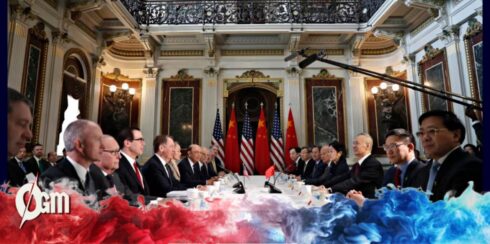
A high-level delegation from the United States, led by Commerce Secretary Howard Lutnick, is set to meet Chinese officials in London on Monday in a renewed effort to ease trade tensions between the world’s two largest economies. The talks follow a temporary truce on tariffs last month and a phone call between President Donald Trump and Chinese President Xi Jinping, which both sides described as positive. Key issues on the agenda include China’s rare earth exports and Beijing’s restricted access to United States technology.
Renewed Effort to End a Protracted Trade War
After months of escalating tensions, Washington and Beijing are making another attempt to settle their long-running trade dispute. Monday’s meeting in London is the latest in a series of negotiations following tit-for-tat tariffs that peaked at 145% earlier this year.
The United States delegation includes Commerce Secretary Howard Lutnick, Treasury Secretary Scott Bessent, and Trade Representative Jamieson Greer. China will be represented by Vice Premier He Lifeng and other senior trade officials. The stakes are high, with both economies feeling the impact of disrupted supply chains and heightened trade barriers.
Rare Earths and Semiconductors at the Heart of Dispute
At the center of the negotiations are China’s exports of rare earth metals—crucial for manufacturing smartphones, electric vehicles, and other high-tech products—and the United States restrictions on sales of semiconductors and AI-related technology to Chinese firms.
Washington has accused Beijing of breaching the Geneva truce by limiting exports of rare earth magnets, while Beijing says United States violations include halting the sale of chip design software and blocking access to advanced American technologies. Analysts say both sides must find common ground if they hope to prevent further damage to the global tech ecosystem.
OGM News.COM
“Trump and Xi Strike Secret Deal? Critics Demand Transparency in High-Stakes London Summit”
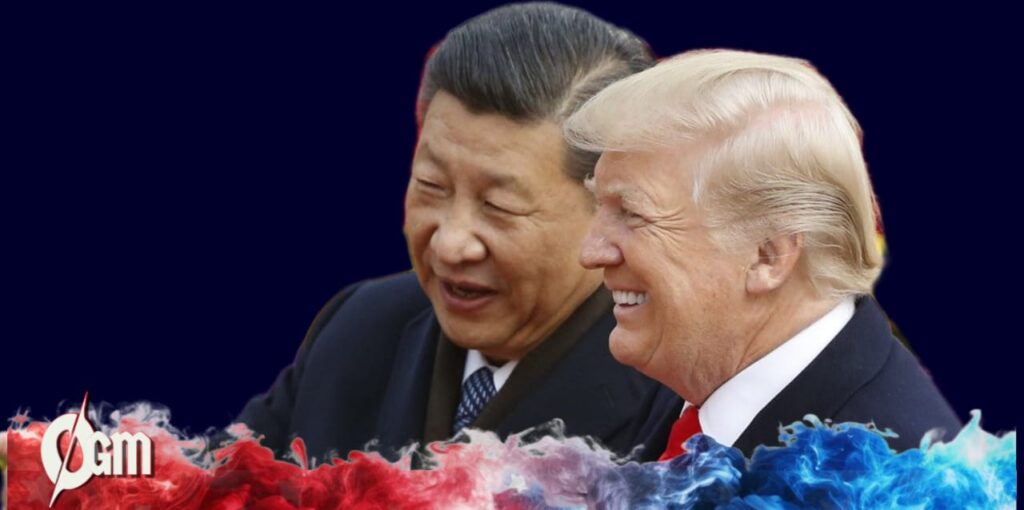
The decision to resume talks in London follows a phone call last week between President Trump and President Xi, which the White House characterized as “a very good talk.” Trump said the conversation resulted in “a very positive conclusion for both countries,” raising hopes of a breakthrough.
According to Chinese state media, Xi urged Trump to withdraw “negative measures” against China, signaling Beijing’s willingness to negotiate. The call was the first direct communication between the two leaders since the trade war erupted in February, adding symbolic weight to the upcoming meeting.
Strategic Inclusion of Lutnick Signals Shift in US Tactics
Commerce Secretary Howard Lutnick, known for his role in implementing tough export controls on China, is a key addition to the U.S. delegation. Analysts say his involvement signals a more assertive United States stance on protecting technological superiority, while also demonstrating flexibility in achieving a balanced deal.
Swetha Ramachandran, a fund manager at Artemis, told the BBC that Lutnick’s presence underscores the importance of rare earths and advanced tech in the negotiations. “There are enough chips on the table here that could make it acceptable for both sides to walk away with desired outcomes,” she noted.
London Talks Follow Chinese Diplomatic Push in UK
Before meeting the United States delegation, Vice Premier He Lifeng held discussions with UK Chancellor Rachel Reeves on Sunday, emphasizing the need for deeper Sino-British cooperation in economics and finance. The meeting highlights China’s broader diplomatic efforts to stabilize trade relationships amid pressure from Washington.
One contentious issue between the UK and its allies is China’s plan to build a new embassy at Royal Mint Court in London. The United States has raised concerns about the site’s proximity to sensitive financial infrastructure, underlining the geopolitical dimensions of the broader trade negotiations.
Global Economic Outlook Dampened by Trade Uncertainty
The Organization for Economic Co-operation and Development (OECD) recently lowered its forecast for global growth to 2.9%, citing a “significant” rise in trade barriers. The agency warned that the weakened outlook will affect nearly every major economy, with the United States.-China standoff being a major contributing factor.
Meanwhile, new data released by Beijing on Monday showed a weaker-than-expected performance in Chinese exports and imports. While exports in May grew by 4.8% year-on-year, imports dropped 3.4%, raising concerns about waning global demand and internal economic challenges within China.
Outlook: A Critical 90-Day Countdown
Last month’s Geneva truce gave both sides 90 days to reach a comprehensive trade agreement. As the London talks begin, the clock is ticking. Failure to secure progress could see the reimposition of higher tariffs, further supply chain disruptions, and increased volatility in global markets.
Observers hope the momentum from the Trump-Xi call, along with the presence of key negotiators in London, can pave the way for at least a partial resolution. For now, the world watches closely, aware that the outcome of these talks may determine the direction of global trade and economic stability for years to come.