




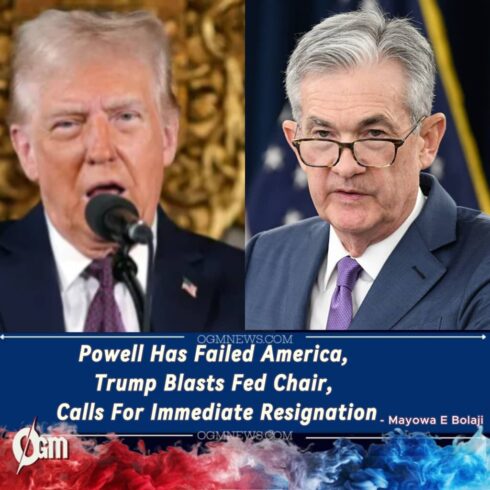
President Donald Trump has called for the immediate resignation of Federal Reserve Chairman Jerome Powell. The President accused Powell of gross economic mismanagement and suggested that his continued leadership poses a “clear and present danger” to American financial stability. The stunning rebuke, delivered in a fiery post on Truth Social and later reiterated during a televised address, marks a new peak in Donald Trump’s long-running feud with the central bank.
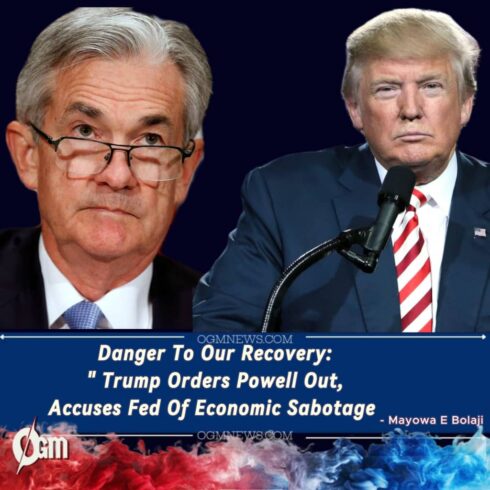
President Donald Trump’s demand came unexpectedly on Tuesday morning, catching both markets and political observers off guard. In a sharply worded statement, Trump declared, “Jerome Powell should resign immediately. His decisions have harmed the American worker, sabotaged our economy, and continue to threaten our recovery.” He further accused the Fed Chair of playing politics with interest rates and failing to control inflation.
The timing of Donald Trump’s denunciation—coinciding with a critical Federal Reserve policy meeting—has heightened political drama in Washington. Though Trump has clashed with Powell before, this is the first time during his second term that he has explicitly called for Powell’s ouster in such uncompromising terms.
White House Aligns with Donald Trump’s Position
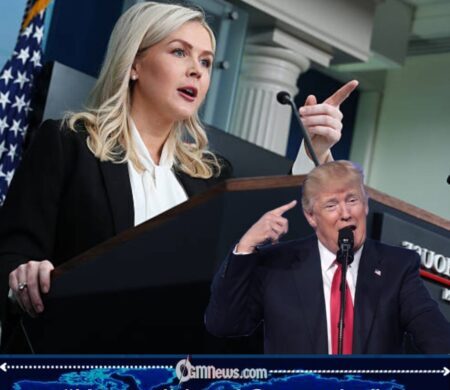
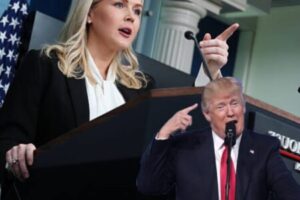
Shortly after Donald Trump’s remarks, White House Press Secretary Dana Walters echoed the President’s concerns, stating that the administration “no longer has confidence in Jerome Powell’s ability to manage the nation’s monetary policy.” Walters pointed to stagnant wage growth, market volatility, and persistent inflation as indicators of Powell’s “systemic failures.”
According to senior administration sources, discussions are already underway within the White House to explore the legal and political feasibility of removing Powell before the end of his term. While the President cannot unilaterally dismiss the Fed Chair, his administration appears willing to apply pressure through Congressional allies.
Federal Reserve Maintains Silence Amid Crisis
The Federal Reserve has yet to officially respond to President Donald Trump’s statement. Powell himself has remained silent, opting to continue with scheduled economic briefings and meetings. A senior Fed official, speaking anonymously, said the institution is “focused solely on fulfilling its dual mandate of price stability and full employment, irrespective of political turbulence.”
Despite growing pressure, the central bank’s leadership appears committed to upholding its independence. Analysts suggest the Fed may now face intensified scrutiny from the Trump administration and heightened political attacks if interest rate policy diverges from the White House’s economic agenda.
Economic Community Reacts with Alarm and Division
Reactions from economists and financial experts have been sharply divided. While some conservative economists backed Trump’s critique, others warned that undermining the Fed’s independence could have dangerous long-term consequences. Former Treasury Secretary Larry Summers called the demand “a frontal assault on the autonomy of U.S. monetary policy.”
Stock markets reacted nervously to the news, with the Dow Jones Industrial Average dropping 280 points within hours of Trump’s remarks. Bond markets also showed signs of volatility, reflecting investor anxiety over the future of interest rate decisions and central bank independence.
Powell’s Track Record Under Renewed Scrutiny
Jerome Powell, who was first appointed by President Donald Trump in 2018, has faced a tumultuous tenure marked by the pandemic, historic inflation surges, and an increasingly volatile global economy. While some credit him for acting decisively during the COVID-19 crisis, critics accuse him of being slow to respond to post-pandemic inflation.
Trump’s accusation that Powell “failed America’s workers” has reignited debate over Powell’s cautious rate hike strategy and his attempts to balance inflation control with labor market resilience. Critics say his policies have failed to reduce the cost-of-living burden for average Americans.
OGMNews.COM
Donald Trump Declares War on the Fed: Demands Jerome Powell’s Immediate Exit Amid Inflation Row
Many Republican lawmakers have expressed support for Trump’s broader economic agenda but have been cautious about endorsing Powell’s immediate resignation. Senate Banking Committee Chair Mark Reynolds (R-TX) stated, “The President raises legitimate concerns, but we must protect the institutional independence of the Federal Reserve.”
Others, like Rep. Marjorie Taylor Greene (R-GA), were less reserved, tweeting: “Powell has failed. President Trump is right to call him out.” The intra-party divide reflects broader tensions within the GOP over how far to support Trump’s bold economic maneuvers.
Legal Barriers to Ousting the Fed Chair
Despite Donald Trump’s clear demand, removing a sitting Federal Reserve Chair is not straightforward. The Fed is designed to be independent of the executive branch, and the law does not grant the President unilateral authority to fire its chairman without cause.
Legal scholars suggest that any attempt to force Powell’s resignation would likely face immediate legal challenges and provoke a constitutional crisis. However, the Trump administration could still apply indirect pressure, including launching Congressional investigations or leveraging budgetary tools.
Global Implications and Geopolitical Reverberations
Global markets are watching the unfolding conflict with unease. Economists in the EU, China, and the UK warned that instability within the U.S. monetary framework could ripple across international markets, especially given the dollar’s status as the world’s reserve currency.
China’s state-run Global Times described the situation as “another episode of American dysfunction,” while German Chancellor Annalena Baerbock urged the U.S. to “protect its financial institutions from political interference.” The World Bank and IMF have both declined to comment, citing the sensitivity of the matter.
What Comes Next? Trump’s Strategy Moving Forward
While Jerome Powell’s term as Chair officially ends in 2026, it is clear that President Donald Trump is now seeking to fast-track his exit. Sources close to the administration suggest Trump may nominate a loyalist economist if Powell resigns under pressure or is otherwise removed by legal maneuver.
As the White House prepares for a turbulent economic summer, the fate of Powell—and the integrity of U.S. monetary policy—hangs in the balance. Whether this confrontation results in Powell’s departure or merely intensifies partisan conflict remains to be seen, but one thing is clear: President Trump is not backing down.