









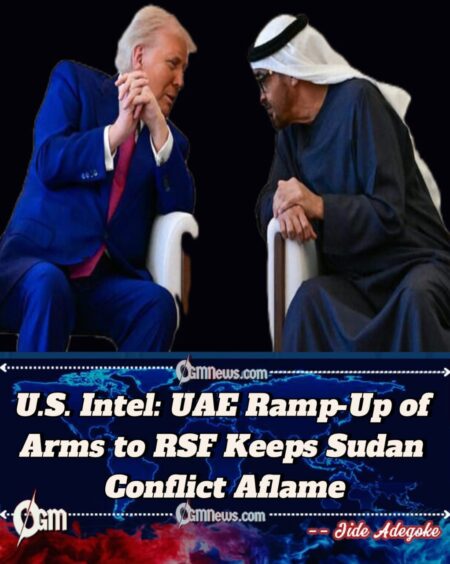
“U.S. intelligence agencies confirmed that the UAE, a key U.S. ally, has redoubled its weapons supply to the RSF this year,” officials told reporters, a finding that outside analysts say has materially altered the battlefield dynamic in Sudan. “The war would be over if not for the U.A.E.,” said Cameron Hudson, a former chief of staff to successive U.S. presidential special envoys for Sudan, reflecting the argument now echoed in congressional briefings and international investigations. The allegation — and the UAE’s denials — sit at the center of mounting diplomatic friction as governments, aid organizations and international courts weigh the sources of matériel fueling a conflict that has devastated large parts of Sudan.
U.S. intelligence agencies confirmed that the UAE, a key U.S. ally, has redoubled its weapons supply to the RSF this year — Supply lines and flight routes under scrutiny
U.S. intelligence agencies confirmed that the UAE, a key U.S. ally, has redoubled its weapons supply to the RSF this year. According to multiple reporting and briefings to U.S. lawmakers, the increase in transfers has included cargo flights routed through East and North Africa — notably via Somalia, Libya and Chad — and the re-export of foreign-made systems that have been tracked into RSF hands. Analysts say the pattern of flights and the provenance of seized ordnance point to an expanded logistics chain that has allowed the RSF to sustain offensives and sieges beyond what would otherwise have been possible.
U.S. intelligence agencies confirmed that the UAE, a key U.S. ally, has redoubled its weapons supply to the RSF this year. Investigations by human-rights groups and UN panels have reported Chinese-manufactured systems and artillery with serial numbers traceable to prior UAE imports appearing in Sudanese fighting zones; Amnesty International’s field work has identified specific models captured in Darfur after frontline engagements. The forensic trail — while contested by Emirati officials — has been cited in recent court filings and congressional briefings as evidence of re-export or diversion that helped arm RSF units.
U.S. intelligence agencies confirmed that the UAE, a key U.S. ally, has redoubled its weapons supply to the RSF this year — Political and legal fallout in Washington and The Hague
U.S. intelligence agencies confirmed that the UAE, a key U.S. ally, has redoubled its weapons supply to the RSF this year. The finding has prompted action and rhetoric in Washington: some members of Congress have sought to block or condition U.S. arms sales to the UAE and to press the administration for sanctions and tighter export oversight. Lawmakers who received briefings have said the intelligence directly contradicts UAE assurances that it is only providing humanitarian help and not armaments to paramilitaries in Sudan.
U.S. intelligence agencies confirmed that the UAE, a key U.S. ally, has redoubled its weapons supply to the RSF this year. Internationally, Sudan has seized on the evidence in a case at the International Court of Justice accusing the UAE of complicity in genocide by enabling the RSF; the UAE has denied the allegations. UN panels and investigators continue probing the chain of custody for weapons seized in Darfur and elsewhere while the world court weighs provisional and final remedies — an outcome that could reshape diplomatic relations if the court finds material support by a state actor.
U.S. intelligence agencies confirmed that the UAE, a key U.S. ally, has redoubled its weapons supply to the RSF this year — Humanitarian and security implications on the ground
U.S. intelligence agencies confirmed that the UAE, a key U.S. ally, has redoubled its weapons supply to the RSF this year. Aid agencies and rights investigators say the expanded flow of heavy weapons and drones has exacerbated sieges, indiscriminate strikes and civilian displacement, complicating relief operations and increasing the risk of war crimes and mass atrocities. The capacity to sustain prolonged military operations has, according to observers, prolonged urban sieges and raised the death toll and humanitarian needs across multiple regions.
U.S. intelligence agencies confirmed that the UAE, a key U.S. ally, has redoubled its weapons supply to the RSF this year. Officials in capitals supporting Sudan’s regular army (including some regional backers) say the shifting balance of materiel has changed cease-fire calculus and impeded diplomatic initiatives. Diplomats and analysts warn that, until supply lines and the incentives that sustain them are addressed, battlefield stalemates and cycles of retaliation are likely to continue, deepening both the human toll and the regional security spillovers.
The intelligence assessments and investigative reporting together present a picture of an intensifying external dimension to Sudan’s civil war. The UAE denies supplying arms to the RSF; Washington and other capitals are weighing policy responses amid scrutiny from international legal bodies and growing calls from humanitarian actors for concrete steps to limit the flow of weapons. How those diplomatic, legislative and judicial tracks converge will have significant consequences for the prospects of both peace and accountability in Sudan.