










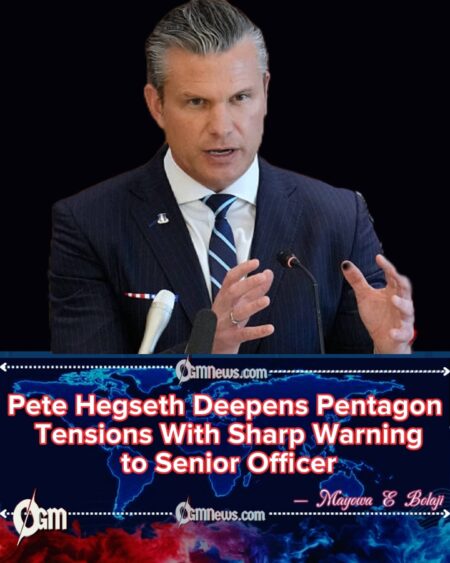
U.S. Defense Secretary Pete Hegseth sparked controversy after telling a senior naval admiral to “resign” during a closed-door strategy meeting, insisting that “when you get an order, you move out fast and don’t ask questions.”
Hegseth delivered the rebuke after the admiral raised operational concerns about a deployment timeline, prompting an unusually tense exchange witnessed by several top commanders.
Pete Hegseth Reinforces Civilian Authority Over Military Leadership
Hegseth underscored the principle that civilian leaders hold ultimate authority over military decision-making, signaling that hesitation from senior commanders is unacceptable in urgent strategic environments.
Hegseth argued that questioning orders after policy decisions are finalized can delay missions and weaken national defense readiness.
Pete Hegseth Confronts Military Caution and Internal Dissent
Pete Hegseth challenged what he described as excessive caution among some military leaders, insisting that immediate execution is necessary once directives are issued at the highest levels.
Hegseth met pushback from officers who believe senior commanders must raise objections when strategic risks are significant, a long-standing expectation within U.S. military culture.
Hegseth Remains Silent as Pentagon Withholds Details
Pete Hegseth has not released a formal statement clarifying the full context of the exchange, leaving Pentagon officials divided over how to respond publicly.
Hegseth has generated internal debate, with some aides praising his assertiveness while others worry that dismissing military input could undermine morale.
Pete Hegseth Draws Congressional Scrutiny Following Confrontation
Hegseth now faces potential oversight inquiries as lawmakers question whether senior officers are being pressured to suppress essential strategic advice.
Hegseth may be asked to testify before defense committees, particularly as political tensions rise and national security becomes a central policy issue.
Hegseth Shapes the Future of Civil-Military Relations
Hegseth is expected to influence forthcoming reviews of communication standards between commanders and civilian leaders, especially regarding how disagreements should be handled.
Hegseth has set the stage for ongoing debate over whether strict obedience or open internal dissent best serves U.S. security interests as global threats evolve.


