






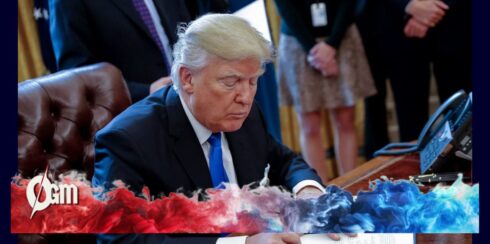
A new travel ban signed by President Trump took effect Monday, targeting citizens from 12 countries—primarily in Africa and the Middle East. The proclamation, which the president Trump finalized last week, halts most travel to the United States from Afghanistan, Myanmar, Chad, Republic of Congo, Equatorial Guinea, Eritrea, Haiti, Iran, Libya, Somalia, Sudan, and Yemen.
The directive also imposes enhanced restrictions on citizens from seven additional countries—Burundi, Cuba, Laos, Sierra Leone, Togo, Turkmenistan, and Venezuela—who are applying for U.S. visas from abroad. According to guidance issued by the State Department, travelers from these nations who already hold valid visas may still enter the country, but new visa applications will be denied unless they meet narrow exemption criteria.
President Trump Justifies Move with Security, Visa Overstay Data
President Trump defended the policy as a necessary step to strengthen U.S. national security. Citing a recent Homeland Security report, the administration claims that the affected nations either lack adequate passport screening and documentation protocols or have failed to cooperate with U.S. efforts to repatriate their citizens who violate immigration rules.
The ban heavily references visa overstay rates, particularly for eight of the 12 banned countries. The president Trump also pointed to a recent terrorist attack in Boulder, Colorado—allegedly committed by a visa overstayer from Egypt—as evidence of the threat posed by lax immigration enforcement, even though Egypt is not on the new restriction list.
Legal Experts Note Strategic Framing to Avoid Court Reversals
Unlike the chaotic rollout of President Trump’s original travel ban during his first term, this iteration appears more deliberately structured to withstand judicial review. Legal experts say the administration’s emphasis on overstay data and visa-processing standards suggests a calculated attempt to address flaws that led to court defeats in 2017 and 2018.
“This version of the travel ban focuses on countries’ document integrity and cooperation with U.S. immigration authorities,” said Linda Chavez, a constitutional attorney. “It appears designed to avoid the accusations of religious discrimination that plagued earlier versions.”
OGMNews.COM
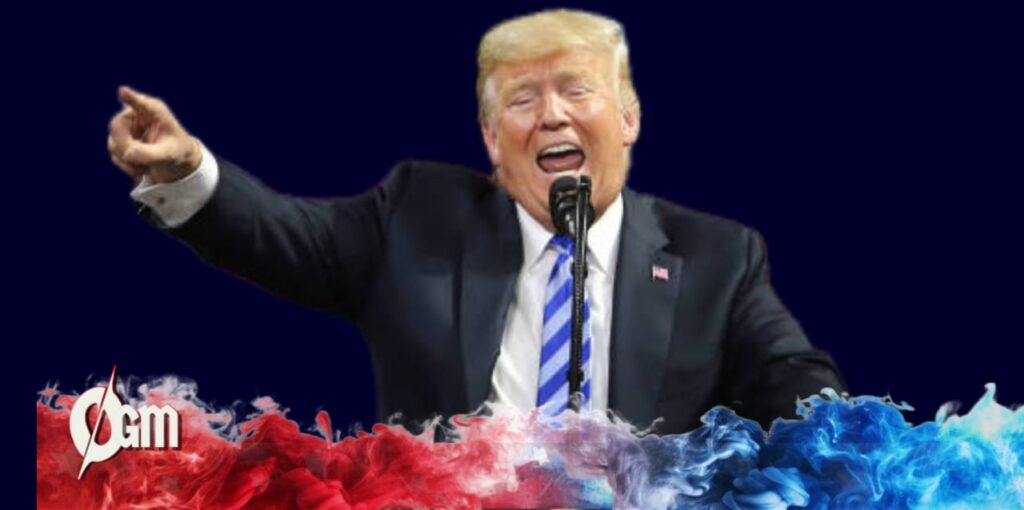
Global Outrage Erupts as President Trump’s Expanded Travel Ban Targets 12 Countries
Though the ban excludes travelers with previously issued visas and some categories of humanitarian exceptions, it has triggered widespread concern among immigrant families and refugee advocates. In Haiti, for example, where political instability and violence continue to escalate, residents say the ban further blocks legitimate paths to safety.
Elvanise Louis-Juste, a Haitian-American awaiting a flight at Newark Airport, expressed dismay over the new restrictions. “I have family in Haiti, so it’s pretty upsetting to see and hear,” she said. “This ban closes the door on people who are simply trying to escape danger.”
Humanitarian Groups Condemn the Trump administration Policy as Discriminatory
Several humanitarian and refugee resettlement organizations have denounced the proclamation, arguing that it unfairly targets vulnerable populations under the guise of security. Oxfam America president Abby Maxman called the ban “a political maneuver masquerading as policy.”
“This policy is not about national security—it is about sowing division and vilifying communities that are seeking safety and opportunity in the United States,” Maxman said in a statement. Groups working with Afghan refugees were particularly alarmed, noting that while some Afghans with Special Immigrant Visas are exempt, many others remain at risk.
Calm at Airports, But Confusion Lingers
Despite the ban’s far-reaching implications, there were no immediate scenes of chaos at major airports, such as those seen in early 2017. At Los Angeles International Airport and other key hubs, operations remained orderly, though some travelers and immigration attorneys expressed confusion over the policy’s details.
Consular officials have begun rejecting applications from the affected countries, prompting applicants to seek clarifications. “There’s still a lot of gray area regarding waivers and exemptions,” said Hassan Abdelrahman, an immigration attorney in New York. “Until more formal guidance is released, uncertainty will remain.”
Political and Global Fallout
The new ban has already strained relations with several nations, including Afghanistan, which was a major source of U.S.-aligned refugee resettlement. Between October 2023 and September 2024, more than 14,000 Afghan refugees were admitted into the U.S.—a number likely to drop sharply under the new policy.
The decision is also fueling concern in countries not currently listed, such as South Africa, where leaders fear potential inclusion in future bans. Diplomats and advocacy groups across Africa and the Middle East are preparing formal responses and seeking clarification from Washington.
As President Trump continues his aggressive immigration crackdown during his second term, critics warn that the administration’s reliance on executive action to reshape immigration policy could trigger further legal and political confrontations—both at home and abroad.