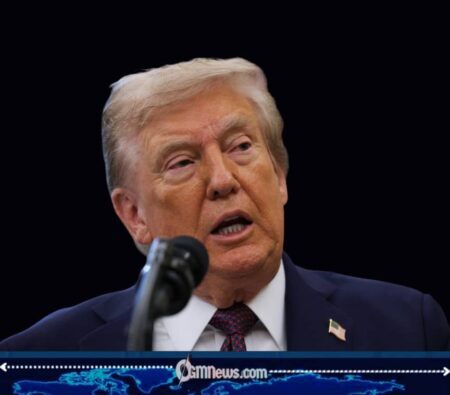




The decision by U.S. President Donald Trump, now serving a second term in office, to introduce a new round of tariffs has ignited a fresh debate among economists, business leaders, and policymakers. The policy follows a ruling by the U.S. Supreme Court that overturned his earlier global tariff framework, forcing the Trump administration to reconsider its strategy.
Rather than abandoning the policy altogether, the White House opted to invoke a rarely used legal provision to impose a new 15 percent across-the-board tariff on imports. Supporters of the administration argue that the move is designed to protect American industries and rebalance global trade relationships.
However, critics warn that the policy could have far-reaching economic consequences. Many economists believe the tariffs could increase costs for consumers, disrupt corporate planning, strain diplomatic relations, and introduce new uncertainty into global markets.
Supreme Court Ruling and a New Legal Path
The current tariff initiative emerged after the U.S. Supreme Court struck down the Trump administration’s earlier global tariffs. The court’s decision forced the Trump administration to explore alternative legal mechanisms to pursue its trade strategy.
President Trump responded by invoking Section 122 of the Trade Act of 1974, a provision that has never before been used by a U.S. president. The measure allows temporary tariffs if the country faces severe international payment imbalances that threaten the stability of the dollar.
Legal experts note that the provision permits tariffs for up to 150 days while policymakers address the economic issue that justified the action. The Trumpadministration has signaled that additional tariffs targeting specific products could follow once the temporary measure expires.
Critics, however, argue that the United States does not currently face the kind of balance-of-payments crisis required to justify such action. They contend that the country’s persistent trade deficit has long been offset by strong capital inflows from foreign investors, meaning there is no immediate threat to the dollar’s stability.
Economic Concerns and Business Uncertainty Over New Trump Administration
Economists warn that the new tariff regime may create significant uncertainty for businesses and investors. Trade policies that shift rapidly can complicate long-term planning for corporations, especially those operating across global supply chains.
Many companies rely heavily on imported raw materials and components. When tariffs increase costs unpredictably, firms may delay investments, postpone hiring decisions, or reconsider plans to expand production.
Trade economist Gary Clyde Hufbauer of the Peterson Institute for International Economics noted that uncertainty surrounding tariff policy can discourage investment and hiring. Businesses, he said, may adopt a wait-and-see approach rather than commit to large projects while trade policies remain in flux.
This hesitation could slow economic growth in the United States and potentially ripple through global markets.
Impact on Manufacturing and Industry
While tariffs are often promoted as a tool to strengthen domestic manufacturing, some industry leaders argue that earlier tariff policies had mixed results.
Manufacturers have reported higher input costs for imported materials and components, which can reduce competitiveness in both domestic and international markets. Supply chains that rely on foreign parts may become more expensive and complicated under tariff regimes.
For example, Ford Motor Company disclosed that it paid nearly $2 billion in tariffs on imported parts and materials in a recent year. Such expenses, executives say, can significantly affect operational budgets and long-term planning.
Employment data has also raised concerns. Manufacturing jobs declined by more than 100,000 positions in the previous year, prompting debate about whether tariffs have delivered the intended benefits for American industry.
Rising Costs for American Consumers
Another major concern is the potential effect of tariffs on household finances. Economists widely agree that tariffs on imports often translate into higher prices for goods purchased by consumers.
Products ranging from clothing and furniture to coffee and electronics may become more expensive when import taxes are imposed. These increases occur because businesses frequently pass additional costs along to customers.
Research by the nonpartisan Tax Foundation estimated that earlier tariffs introduced by the Trump administration amounted to roughly $1,000 in additional annual costs per U.S. household. Analysts from the Yale Budget Lab estimate that the latest tariffs could increase inflation by approximately 0.5 to 0.6 percent.
On average, households may face an additional financial burden of between $600 and $800 if the policy remains in place, according to the same analysis.
Strained Trade Relations and Global Reaction
The new tariff policy may also have diplomatic consequences. Several countries that had previously negotiated lower tariffs with the United States now face the prospect of higher import duties under the new framework.
Governments in the United Kingdom, Australia, and other allied nations have expressed concern that earlier agreements could effectively be overturned by the new policy. Trade officials fear the move could complicate existing economic partnerships.
Tensions have also emerged with the European Union, a 27-nation bloc that had been negotiating trade arrangements with Washington. Some European lawmakers have questioned whether agreements reached under the previous tariff framework remain valid.
Bernd Lange, chair of the European Parliament’s international trade committee, described the situation as confusing and uncertain, saying businesses and governments alike are struggling to interpret the evolving trade landscape.
Debate Over Economic Strategy Of Trump Administration
The tariff debate highlights broader disagreements over the role of protectionist trade policies in modern economies. Supporters argue that tariffs can help protect domestic industries from unfair competition and strengthen national manufacturing.
Opponents contend that tariffs often function as a hidden tax on consumers and businesses, ultimately slowing economic growth and raising prices. They also warn that retaliatory tariffs from other countries could harm American exports.
Public opinion appears divided. According to an ABC News/Washington Post/Ipsos poll, a majority of Americans expressed dissatisfaction with the administration’s handling of tariff policy.
As policymakers, businesses, and international partners continue to assess the impact of the new measures, the economic and political implications of the tariffs are likely to remain a major topic of debate in the months ahead