








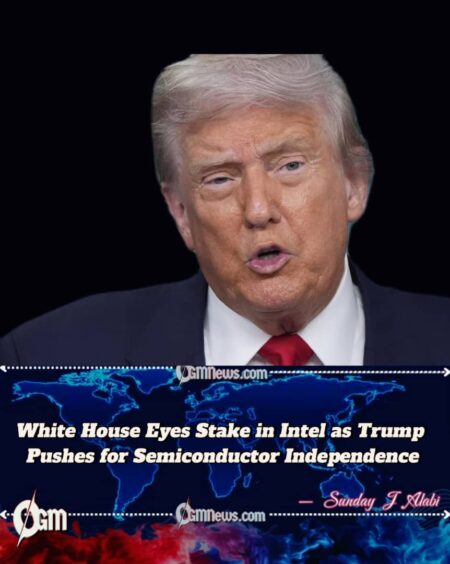
The Trump administration is reportedly considering taking a direct stake in Intel, the largest US chip fabricator, in what is being described as a modern-day “Manhattan Project.” The move, which could lead to the nationalization of part of Intel, is aimed at strengthening domestic semiconductor production and reducing America’s reliance on foreign suppliers, especially Taiwan.
While the specific percentage of shares the government is seeking has not been disclosed, sources familiar with the matter told Bloomberg that discussions remain preliminary and could collapse without a definitive agreement. Intel itself has not confirmed the talks, but emphasized its commitment to working with the administration to boost U.S. leadership in technology and manufacturing.
Echoes of History: A National Survival Strategy
Experts have drawn comparisons between this initiative and the United States’ mobilization efforts during World War II. MIT computer scientist Dave Blundin remarked that the effort is “every bit as important as the space race and the nuclear arms race” — even more so, given its implications for national defense, artificial intelligence, and economic security.
The analogy to the Manhattan Project underscores the urgency and scale of the government’s approach. Semiconductors are considered the backbone of modern economies, powering everything from smartphones to advanced AI systems and weapons platforms. As Taiwan currently produces more than 60 percent of the world’s chips, the U.S. government fears that any disruption — whether by geopolitical conflict or supply chain breakdowns — could threaten national security.
Industry on a War Footing
Nationalizing part of Intel would be a rare move in American economic policy, typically reserved for emergencies such as wartime production or financial crises. Critics argue that placing the semiconductor industry on what Blundin described as a “war footing” risks unsettling global markets and straining U.S. alliances.
Still, Trump’s administration sees the decision as a strategic necessity. “If the fabs all move to the U.S., then why would the U.S. defend Taiwan?” Blundin asked, highlighting the geopolitical calculations driving the move. By bringing more advanced semiconductor fabrication capacity to American soil, the government aims to insulate itself from foreign risks while asserting technological dominance in the chip wars.
AI Firms Already in Concession Deals with Washington
This development follows last week’s controversial agreement between the White House and two leading chipmakers, Nvidia and Advanced Micro Devices (AMD). Under the deal, both companies agreed to hand over 15 percent of their China-related chip sales revenue to the U.S. government in exchange for export licenses.
The unprecedented arrangement could pour more than $2 billion into federal coffers, according to the New York Times. While some experts view it as a clever way to fund America’s push to catch up in AI and semiconductor manufacturing, others warn it sets a dangerous precedent. “Very good business deal, but an incredibly slippery slope,” Blundin noted. Critics also argue the deal could backfire by provoking China to accelerate its own chip development and increase pressure on Washington.
Concerns Over U.S.–China Relations and Global Stability
Trump has further raised eyebrows by threatening a 100 percent tariff on imported semiconductors unless companies commit to building in the United States. While such protectionist measures are intended to bolster domestic production, they have drawn sharp criticism from trade experts and former national security officials.
Liza Tobin, former China director at the National Security Council, told the New York Times the arrangement amounts to “an own goal” that could damage U.S. interests. “This will incentivize China to up its game and pressure the administration for more concessions,” she warned. The backlash underscores the delicate balance between protecting national security and maintaining stable economic relations with Beijing.
As talks over Intel’s future continue, the administration’s strategy reflects a broader trend: Washington is preparing for a prolonged global contest over semiconductor dominance. Whether nationalizing Intel proves to be a bold solution or a risky gamble could define the next chapter of America’s technological and geopolitical future.