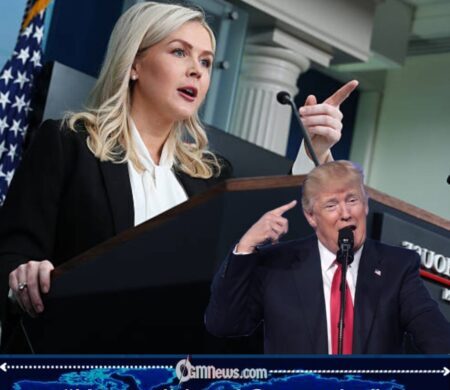









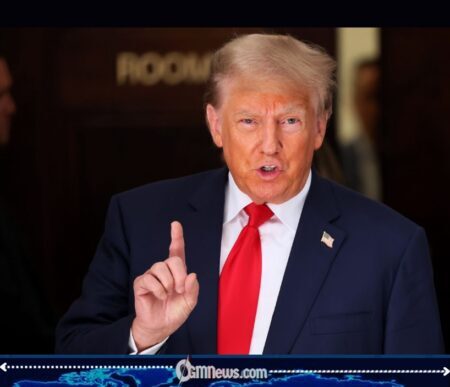
With a sweeping military offensive against Iran, President Donald Trump — now serving a second term as current U.S. president Trump— has stepped into what could become the defining foreign policy moment of his presidency. By authorizing large-scale air strikes in coordination with Israel, Trump has demonstrated a willingness to deploy raw American military power in pursuit of strategic objectives that previous administrations approached with caution.
In a brief pre-dawn video posted on his Truth Social platform, Trump announced what the Pentagon has dubbed “Operation Epic Fury.” He framed the strikes as a necessary move to neutralize Iran’s ballistic missile capabilities and to eliminate what he described as an urgent nuclear threat. The action, he suggested, would also create conditions for the Iranian people to challenge their leadership.
Yet the scale and ambition of the operation have left many observers questioning whether the president has embarked on the most consequential — and potentially perilous — gamble of his time in office.
Trump Administration Targeting Iran’s Supreme Leadership
A dramatic turn in the unfolding conflict came when Trump announced that Iran’s Supreme Leader, Ali Khamenei, had been killed during the strikes. If confirmed, Khamenei’s death would represent a seismic development in Iranian politics. He has led the Islamic Republic since 1989, consolidating clerical authority and overseeing the country’s security apparatus, including the powerful Islamic Revolutionary Guard Corps.
There was no immediate confirmation from Tehran. Iranian state media earlier reported that Khamenei remained “steadfast and firm in commanding the field.” The Israeli military said at least seven senior Iranian officials and commanders were killed in the operation, though independent verification remains limited.
Analysts caution that even the removal of Iran’s top leader may not translate into regime collapse. The Islamic Republic’s governing system is deeply entrenched, with overlapping political, military, and religious institutions capable of sustaining continuity despite leadership losses.
Regime Change: Ambition and Uncertainty
From the outset, Trump has made clear that his objectives extend beyond deterrence. In public remarks, he has openly called for regime change in Tehran, urging Iranians to seize what he described as an opportunity to oust their rulers.
However, experts argue that history offers few examples of air power alone achieving political transformation without ground involvement. The president has ruled out deploying U.S. troops, raising questions about how such an outcome might realistically be achieved. As Jon Alterman of the Center for Strategic and International Studies noted, it is difficult to change a government — or a population’s political alignment — solely through aerial bombardment.
The possibility of unintended consequences also looms large. Removing senior leadership figures could create instability within a nation of approximately 93 million people, potentially paving the way for a more hardline military-led authority rather than a democratic transition.
Diplomacy Derailed and Regional Fallout
Trump’s sudden resort to force appears to have halted diplomatic efforts, at least for now. Nuclear talks in Geneva days earlier had failed to achieve a breakthrough, but the strikes have likely closed the door to negotiations in the near term.
Iran responded by launching missiles toward Israel and several Gulf Arab states that host U.S. military bases, escalating tensions across the region. American installations in the Middle East were placed on heightened alert as officials assessed the potential for broader conflict.
The president’s justification — centered on claims of an imminent ballistic and nuclear threat — has drawn comparisons to the rationale offered by George W. Bush ahead of the 2003 Iraq War. Some intelligence assessments cited by sources familiar with classified reports suggest that Iran does not currently possess a missile capable of striking the United States, and Tehran continues to deny that its nuclear program has military objectives.
Domestic Political Stakes
The decision to expand military engagement overseas comes at a politically sensitive moment. Public opinion polls indicate that American voters remain primarily concerned about domestic economic pressures, including the cost of living.
Trump’s advisers have reportedly urged him to refocus on economic priorities ahead of November’s midterm elections, where his Republican Party faces the possibility of losing control of one or both chambers of Congress. Critics argue that foreign policy has increasingly overshadowed domestic governance during the first 13 months of his second term.
Daniel Shapiro, a former U.S. ambassador to Israel, remarked that many Americans may wake up questioning the rationale for war with Iran and seeking clarity about its ultimate objectives.
Appetite for Military Risk
The Iran operation follows a series of assertive foreign policy actions during Trump’s second term, including expanded military deployments and high-profile operations abroad. Supporters argue that decisive action may degrade Iran’s nuclear and missile capabilities regardless of whether regime change materializes.
Mark Dubowitz of the Foundation for Defense of Democracies contends that Tehran’s weakened state makes this a strategic opportunity to curb long-term threats. Others warn that Iran remains a formidable adversary with asymmetric capabilities that could prolong instability.
Ultimately, the strikes may redefine Trump’s presidential legacy. Whether viewed as a bold assertion of American strength or a high-stakes gamble with unpredictable consequences, the decision to escalate military action against Iran marks a turning point in U.S. foreign policy.