










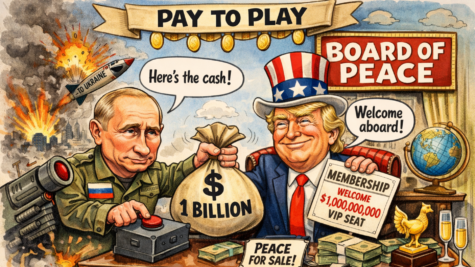
In January 2026, U.S. President Donald Trump — serving his second term — announced the launch of a new international peace initiative known as the Board of Peace at the World Economic Forum in Davos, Switzerland. Positioned as a potential new mechanism for conflict resolution and post-war reconstruction, Trump’s initiative seeks to attract global leaders and stakeholders to address persistent crises such as the Gaza conflict.
The Board is intended as a forum for coordinating peace efforts, offering both temporary membership and a permanent seat that comes with a proposed $1 billion contribution requirement. Although described by the Trump administration as a voluntary contribution, the figure has dominated international discourse as both a symbol of seriousness and a source of controversy. The initiative’s broader ambitions have drawn comparisons with, and concern from, traditional multilateral bodies like the United Nations.
Board of Peace or Board of War Crime? Putin Signals Willingness to Join
Is this a Board of Peace, a Board of War Crimes, or did we accidentally wander into the Board of the Corrupt — now accepting bribes? Russian President Vladimir Putin has publicly signaled that Russia could allocate $1 billion from assets frozen in the United States to satisfy the Board’s permanent-member contribution. Putin made the remarks during a high-level meeting in Moscow, saying Russia was prepared to direct the funds to the initiative and that his government had instructed the foreign ministry to study the proposal.
The idea of using frozen assets has been part of broader discussions between Moscow and U.S. officials. Putin suggested that these funds — currently held under Western sanctions imposed after Russia’s 2022 invasion of Ukraine — could also support the reconstruction of damaged regions once a peace treaty with Ukraine is concluded.
Despite the comments, Russia has not yet formally joined the Board of Peace. Kremlin officials have described the invitation as under review and emphasized the need for further clarification and consultation with strategic partners before committing.
Board of Peace: The Mechanics and Cost of Membership
According to reporting from Reuters and other international outlets, Trump designed the framework for this so called Board of Peace offers nations a free three-year membership period, after which permanent participation would require the contribution. The boundary between a voluntary donation and an expected fee has been a key source of debate among diplomats.
Supporters of the initiative argue that the financial contribution demonstrates commitment and helps secure long-term peace, while critics contend that adding a price tag to peace diplomacy could undermine legitimacy and exclude important voices. Countries approached about participation have responded diversely: some have accepted invitations, others have declined, and still others are evaluating their positions carefully.
Ongoing Conflict and Diplomatic Disconnect
Putin’s comments and Trump’s new initiative come amid continued militarized conflict in Ukraine. Despite diplomatic chatter about peace process mechanisms (Board of Peace), Russian forces have continued combat operations, including missile and drone strikes inside Ukrainian territory. Independent war analysts describe the fighting as persistent and intense, underscoring the gulf between rhetoric and on-the-ground reality. (Note: specific attack details reported by outlets such as Al Jazeera are consistent with continued hostilities but cannot be directly tied to the Board of Peace development.)
This backdrop has fueled criticism that geopolitical initiatives like the Board of Peace risk being perceived as symbolic or rhetorical exercises without parallel steps toward de-escalation or verified commitments from belligerents.
International Reaction and Strategic Implications
Reactions from global capitals have been mixed. Some governments cautiously welcome additional avenues for peace negotiation, viewing any constructive engagement as potentially beneficial. Other states — particularly in Europe — have expressed reservations about the structure and leadership of the Board, as well as the broader implications for established institutions like the United Nations.
Critics also question whether a body heavily shaped by one administration and tied to specific personalities can acquire the necessary credibility to exert positive influence in ongoing conflicts, especially when substantive peace agreements remain elusive.
Looking Ahead: Board of Peace Offering Peace with Conditions
Putin’s proposal to use frozen assets, even while holding off on formal entry, illustrates a nuanced diplomatic stance: signaling engagement with an initiative that might help rehabilitate Russia’s global standing while simultaneously tying any contribution to broader strategic negotiations. Analysts say how these talks unfold — including upcoming meetings between Russian officials and U.S. envoys — could shape future diplomatic engagements on Ukraine and broader international peace efforts.
For proponents of conflict resolution, the Board of Peace represents an ambitious experiment in 21st-century diplomacy. For skeptics, it highlights the persistent complexities of negotiating peace amid active conflict and geopolitical rivalries.


