











President Donald Trump is seriously considering a military strike on Iran’s Fordo nuclear site, one of the country’s most fortified and secretive uranium enrichment facilities. According to senior intelligence and defense officials, the president sees the move as critical to preventing Iran from producing nuclear weapons within a short window of time.
Sources told CBS News that Trump has already approved operational strike plans but is holding off on execution, awaiting Iran’s next move. “He believes there’s not much choice,” one official said. “Finishing the job means destroying Fordo.” Despite the intense deliberations, Trump has emphasized the need for flexibility, stating, “I like to make the final decision one second before it’s due, because things change, especially with war.”
Bunker-Buster Bombs, Military Logistics Under Review
The Pentagon is currently evaluating the logistical requirements for a potential strike, including the deployment of GBU-57 “bunker-buster” bombs capable of penetrating Fordo’s deep underground structure. While no final mobilization order has been given, officials confirm that discussions on military infrastructure and targeting are ongoing.
Trump has not ruled out diplomatic solutions, but he remains skeptical. “I may do it. I may not do it,” he said, reiterating that Iran could still avert an attack by voluntarily disabling its nuclear capabilities. Meanwhile, Iran has reportedly readied retaliatory assets, including ballistic missiles, for strikes against U.S. bases should Washington join Israel’s offensive.
European Allies Urge Diplomacy, Coordinate With Washington
As the world watches for Trump’s decision, active diplomatic efforts are underway. U.K. Foreign Secretary David Lammy flew to Washington to meet Secretary of State Marco Rubio and Middle East envoy Steve Witkoff. The United Kingdom, Germany, France, and the European Union plan to engage Iranian Foreign Minister Abbas Araghchi in Geneva on Friday in a last-ditch effort to avoid escalation.
Lammy emphasized the urgency of diplomacy: “Now is the time to put a stop to the grave scenes in the Middle East and prevent a regional escalation that would benefit no one.” Despite lacking an embassy in Tehran, the U.S. is coordinating with European countries, which maintain better intelligence visibility and diplomatic access in Iran.
CIA Warns of Nuclear Threshold, Intelligence Split in Congress
U.S. intelligence has revealed that Iran is dangerously close to achieving nuclear weapon capabilities, though officials say no final order to weaponize has been given by Iran’s Supreme Leader, Ayatollah Ali Khamenei. CIA Director John Ratcliffe likened Iran’s position to a football team “on the one-yard line.”
Senator Mark Warner, ranking Democrat on the Senate Intelligence Committee, expressed caution. “They were enriching uranium, but they were not weaponizing… If there has been a change in that intelligence, I need to know,” he said. The CIA has declined to comment publicly, but Congress remains split on the immediacy of the threat and the need for military intervention.
OGMNews.COM
Trump Mulls Strike on Iran’s Fordo Nuclear Site, Final Decision Looms
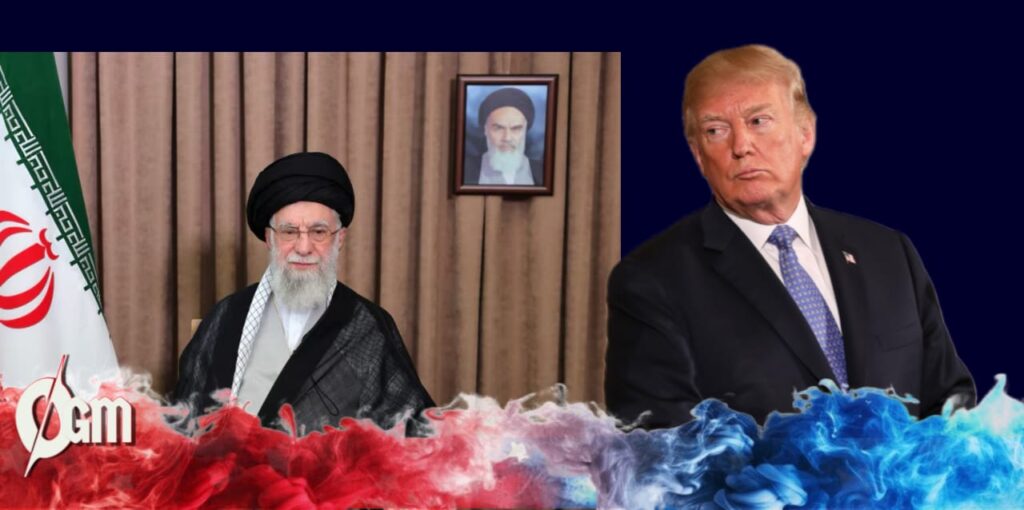
Iran has rejected the prospect of negotiation under pressure. In a statement on Wednesday, Tehran declared it “does NOT negotiate under duress” and warned that it would “respond to any threat with a counter-threat.” The country has reportedly prepared missile units for strikes against U.S. installations in the Middle East should the U.S. engage militarily.
Despite the escalating rhetoric, Iran has not conducted new strikes on Fordo since Israel began targeting Iranian sites. However, cyberattacks, telecommunications disruptions, and instability inside Iran are making diplomatic communication increasingly difficult. U.S. intelligence suggests the Iranian regime may be struggling to maintain control amid internal chaos and external threats.
Geneva Talks Offer Faint Hope for Breakthrough
Diplomatic channels remain open but strained. European countries, along with Turkey and Oman, have offered to host negotiations between Washington and Tehran. As of Thursday, no direct talks have been scheduled. Iran’s delegation, led by Araghchi, is expected in Geneva, but it is unclear whether they have a mandate to engage meaningfully with Western counterparts.
Italian and French foreign ministers have communicated that Secretary Rubio signaled U.S. readiness for direct talks. However, trust between the parties is at a low point. Iran’s government delayed responding to the latest U.S. proposal for two weeks, choosing instead to issue vague public statements. The Trump administration views this delay as a sign of insincerity and stalling tactics.
What Comes Next? Trump Balances War and Diplomacy
President Trump continues to weigh the political and military costs of a strike against the uncertain benefits. Although sympathetic to Israel’s unilateral military action, he remains wary of dragging the United States into a wider conflict in the Middle East. Officials have acknowledged internal discussions over regime collapse, nuclear material security, and environmental fallout if Fordo is bombed.
In a striking admission, Trump noted on social media that the U.S. has pinpointed the location of Ayatollah Khamenei but said, “We are not going to take him out (kill!), at least not for now.” He remains open to negotiations but insists time is running out. “My patience is wearing thin,” he warned. A final decision is expected within the next two weeks—a choice that could reshape the geopolitical balance of the Middle East.


