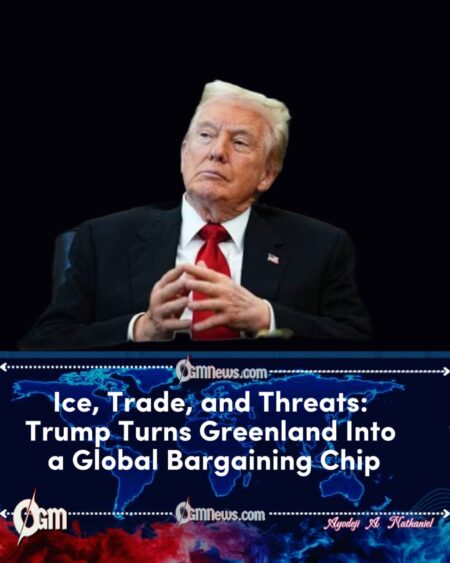
President Donald Trump, serving his second term as President of the United States, has escalated rhetoric over U.S. ambitions concerning Greenland by suggesting that the United States may impose tariffs on countries that do not “go along” with Washington’s plans to pursue control over the territory. The comments, made during a White House roundtable discussion, reflect mounting tensions between the U.S. administration and international allies over sovereignty, national security, and economic coercion.
Trump linked the strategic importance of Greenland—an autonomous territory of NATO ally Denmark—to bother U.S. security interests, asserting that countries opposing U.S. involvement could face trade repercussions. The remarks came as a bipartisan U.S. congressional delegation met Danish and Greenland counterparts in Copenhagen to ease tensions and affirm support for sovereign decision-making regarding the territory.
Trump’s Tariff Threat and Strategic Rationale
President Donald Trump said he may impose tariffs “if they don’t go along with Greenland, because we need Greenland for national security,” underscoring what he views as the territory’s critical role in geopolitical competition, particularly in the Arctic.
Speaking at a White House event, Trump compared the proposed tariff approach to previous trade threats used in other policy areas, though he did not specify which countries might be targeted or the extent of tariffs envisaged. The President’s remarks signal an intention to use economic leverage to push allied governments toward acquiescing to U.S. goals related to Greenland.
The policy suggestion represents a shift from traditional diplomatic negotiation to coercive economic measures, prompting widespread international commentary on the viability and consequences of such an approach.
Immediate International Reactions
European and NATO allies have responded to Trump’s tariff threat with a mix of caution and criticism. While countries recognize the strategic importance of the Arctic, they have reiterated the principle that Greenland’s political future must be determined by its people in accordance with international law.
France in particular warned that any attempt to undermine Danish sovereignty over Greenland could jeopardize broader trade relations with the European Union, signaling deep concern among EU states over potential disruption of economic ties with the United States.
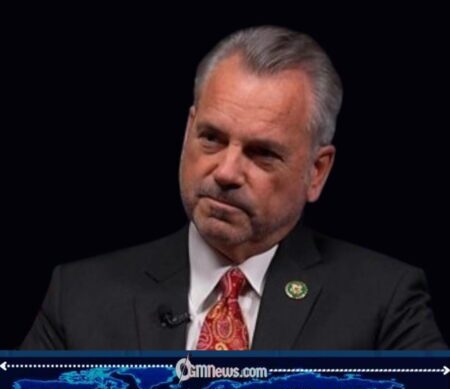
In Copenhagen, a bipartisan U.S. congressional delegation sought to lower diplomatic tensions, emphasizing longstanding alliances and cooperation. The lawmakers met with Danish Prime Minister Mette Frederiksen and Greenland leaders to affirm mutual respect for sovereign decision-making and to ease fears that U.S. policy is veering toward coercion.
Greenland’s Position and Sovereignty Assertions
Leaders in Greenland themselves have forcefully rejected the notion of U.S. takeover or control, emphasizing that their territory is not for sale and that any future political status should be decided by Greenlanders. Greenland officials have reaffirmed their commitment to the remaining part of the Kingdom of Denmark and have underscored the importance of collective defense arrangements through NATO.
Greenland’s political leaders have also expressed concern that U.S. rhetoric—especially threats tied to tariffs or military options—disregards the democratic will of the island’s residents and undermines principles of sovereignty.
NATO Dynamics and Arctic Security
The controversy over Greenland has intensified discussions within NATO about collective defense and Arctic security. Several NATO members, including Germany, Britain, Norway, and France, have reinforced their presence in the region under “Operation Arctic Endurance” to demonstrate support for Danish sovereignty and to counter perceived pressure from Washington.
The U.S. tariff threat has raised concerns in allied capitals that economic coercion could strain the alliance’s unity, particularly on shared security priorities in Europe and the Arctic. Diplomats emphasize that NATO’s strength relies on cooperation and mutual respect rather than pressure tactics.
Domestic and Congressional Responses
Within the United States, Trump’s Greenland policy—including tariff threats—has drawn mixed reactions. Some advocacy circles and national security commentators echo the President’s emphasis on Arctic strategic interests, while a growing number of lawmakers across party lines have expressed reservations about overreaching on territorial ambitions and the potential impact on longstanding alliances.
Bipartisan legislative efforts have been introduced to affirm U.S. respect for allied sovereignty and to limit executive authority over foreign territorial acquisitions without clear consent from Congress and affected sovereign states.