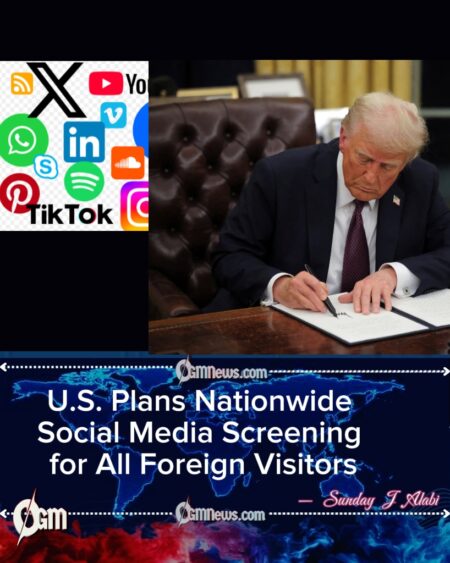
The Trump administration is moving forward with a new immigration policy that would require all foreign tourists to provide five years of social media history before entering the United States. The proposed measure, published by Customs and Border Protection in the Federal Register, forms part of a broader effort by the current U.S. president serving a second term to strengthen scrutiny of travelers and reduce perceived national security risks.
The policy notice signals yet another development in a series of actions in recent months designed to expand digital vetting and restrict access for foreign nationals. The American public has been given 60 days to submit comments on the proposal before it is formally adopted.
Expanded Digital Vetting Measures
Under the proposed policy, travelers—regardless of visa requirements—would be asked to provide social media identifiers covering a five-year period. This includes nationals from countries such as the United Kingdom and Germany that typically enjoy visa-free entry under long-standing travel arrangements.
In addition to social media history, applicants may be asked for email addresses, phone numbers, and family information to complete screening. The Trump administration argues that such steps will strengthen protections against threats and allow authorities to verify identity more consistently across platforms.
Officials previously required visa applicants to make their social media profiles public, following a June directive issued by the State Department. This latest move extends those requirements to temporary visitors, reflecting a broader shift toward monitoring online activity as a component of border security.
National Security as the Core Justification
According to Trump’s administration officials, the new measure is intended to guard against terrorism, address antisemitism, and detect anti-American sentiment among prospective visitors. Authorities say online behavior often provides early indications of hostile views or extremist ideology.
Federal agencies maintain that immigration benefits, including temporary residence and short-term travel, constitute privileges rather than rights. Trump administration Officials argue that individuals who actively oppose U.S. values should not gain access, even on a temporary basis.
The Trump administration has repeatedly emphasized that digital screening forms part of a comprehensive strategy to protect national security during a period of heightened concern, citing recent incidents involving foreign nationals.
Concerns About Interpretation and Bias
Critics warn that the expanding emphasis on “anti-Americanism” lacks clear definition and could allow subjective interpretations by immigration officers. Legal scholars and civil society advocates argue that personal or implicit biases may influence assessments of applicants’ online behavior, potentially leading to inconsistent decisions.
Experts also worry that broad screening criteria may inadvertently discourage legitimate travel or academic exchanges and may place an undue burden on individuals from particular regions or communities. Some analysts note that determining “good moral character” based on online expression risks encroaching on freedom of opinion and privacy.
The lack of specific guidelines regarding how social media posts will be evaluated has further fueled debate, as applicants may not know what content could be deemed disqualifying.
Trump Administration Broader Immigration Freezes and Travel Restrictions
The proposed requirements arrive alongside additional immigration restrictions announced in recent weeks. Earlier this month, the Trump administration paused immigration applications from 19 countries and temporarily halted citizenship ceremonies, citing national security concerns.
Reports indicate the freeze could affect more than one million applicants, including those seeking asylum or awaiting naturalization. Several of the affected nations have faced extended travel limitations, and further expansions to more than 30 countries are reportedly under consideration.
Federal memoranda also allow authorities to re-review pending applications, conduct supplementary interviews, and block individuals under broad definitions of inadmissibility. Officials assert that these actions are necessary responses to emerging threats, while critics remain cautious about potential overreach.
Implications for Global Travel and Major Events
With the United States preparing to host the World Cup in 2026 and the Olympics in 2028, hundreds of thousands of tourists will be required to comply with the new standards if adopted. Travel industry observers note that additional documentation requirements could complicate entry procedures for international visitors.
Officials contend that large-scale events present unique security challenges. They argue that pre-emptive digital screening is essential to prevent potential risks while accommodating a surge in arrivals. Nonetheless, analysts stress that implementation will need to balance public safety with maintaining an accessible travel environment.
International partners may also seek clarification on the policy, especially nations whose citizens have historically enjoyed expedited entry. Diplomats and travel associations are likely to engage U.S. counterparts over how data will be stored, reviewed, and protected.
A Continuing Shift in U.S. Immigration Policy
The Trump administration has made tightening immigration procedures a central element of its domestic policy agenda. From increased social media monitoring to expanded travel bans, the administration continues to pursue measures aimed at reducing unlawful entry and restricting access for individuals deemed high-risk.
Supporters say a robust vetting framework is essential in today’s digital environment, particularly given the prevalence of online radicalization. Critics, however, argue that overly broad policies risk undermining civil liberties and damage America’s international reputation as an open destination for tourism, study, and cultural exchange.
While the policy is still subject to public comment and potential legal scrutiny, its announcement reflects the administration’s intent to embed digital evaluations into standard immigration procedures for the foreseeable future.