

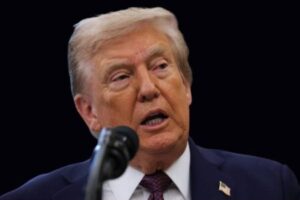
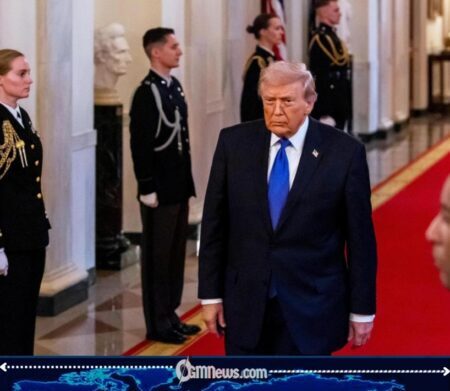
In a notable development in Washington’s political and media calendar, Donald Trump, the current U.S. president serving his second term, has announced that he will attend the White House Correspondents’ Dinner for the first time since assuming office. The decision marks a departure from his previous stance, having boycotted the annual event throughout both of his presidential terms.
Writing on social media on Monday, President Trump confirmed his intention to participate, framing his attendance as part of celebrations marking the nation’s 250th anniversary. His remarks, delivered in his characteristic style, emphasized his view of the moment as both symbolic and celebratory.
The announcement immediately drew attention in political and media circles, as the dinner has long served as a rare occasion where the president, journalists, and public officials gather in a less formal setting.
Trump Break from Past Boycotts
President Trump first declined to attend the correspondents’ dinner in 2017, during his first year in office, and continued that boycott for the remainder of his first term and into his second term, which began in 2025. His absence broke with modern precedent, as every U.S. president since 1921 had attended the event at least once while in office.
The correspondents’ dinner, organized annually by the White House Correspondents’ Association, traditionally celebrates the First Amendment and honors journalistic excellence. It also provides an opportunity for the president to deliver remarks, often mixing policy themes with light-hearted humor.
By choosing to attend this year, President Trump appears to be signaling a willingness to re-engage directly with members of the press corps in a setting historically associated with both camaraderie and critique.
The 2011 Moment That Echoes
President Trump’s relationship with the correspondents’ dinner dates back to 2011, when he attended as a guest rather than as president. At that event, then-President Barack Obama and host Seth Meyers delivered pointed jokes about Trump and his political ambitions.
The episode has often been cited in political commentary as a memorable cultural moment, reflecting the often sharp interplay between politics and media satire. While interpretations differ regarding its political significance, the 2011 dinner remains one of the most talked-about editions in recent history.
This year’s dinner will mark President Trump’s first appearance at the event as the nation’s chief executive, closing a chapter that began with that widely discussed appearance more than a decade ago.
A Different Format for 2026
Unlike many previous editions of the correspondents’ dinner, this year’s program will not feature a stand-up comedian delivering a traditional roast of the president. Instead, organizers have invited mentalist Oz Pearlman to provide entertainment for guests.
The decision to shift away from a comedic roast comes amid heightened sensitivities in political discourse and evolving expectations around the tone of public events. Observers note that the move could alter the atmosphere of the evening, traditionally known for its sharp humor.
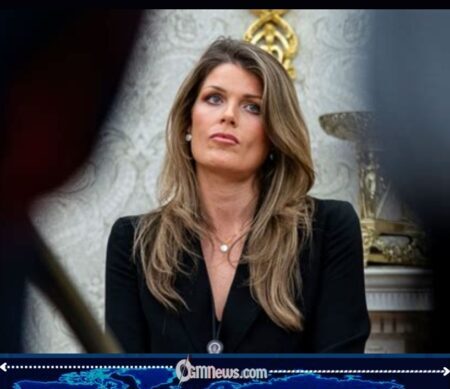
In a statement, Weijia Jiang, president of the White House Correspondents’ Association, welcomed President Trump’s acceptance of the invitation, saying the organization looks forward to hosting him at the event.
Media Landscape in Transition
President Trump’s return to the dinner comes at a time of notable shifts within the American media industry. Since his return to the presidency in 2025, several high-profile acquisitions have reshaped the ownership structure of major outlets.
Among them, David Ellison acquired Paramount, the parent company of CBS News. Paramount subsequently made a successful bid to acquire Warner Bros. Discovery, the operator of CNN. These developments have prompted discussions about consolidation and influence within the media sector.
While the correspondents’ dinner is primarily ceremonial, its symbolism is amplified in an environment where media ownership and political dynamics remain closely watched.
Symbolism and Public Perception
The White House Correspondents’ Dinner has long been viewed as both a celebration of press freedom and a reflection of the sometimes complex relationship between presidents and journalists. President Trump’s attendance may be interpreted by some as a gesture of openness, while others may view it as a strategic political move.
Regardless of interpretation, the event provides an opportunity for the president to address a room filled with reporters who cover his administration daily. The tone and substance of his remarks will likely be closely scrutinized.
As Washington prepares for the annual gathering, attention will focus not only on the evening’s entertainment but also on what the president’s presence signifies for the broader relationship between the White House and the press.