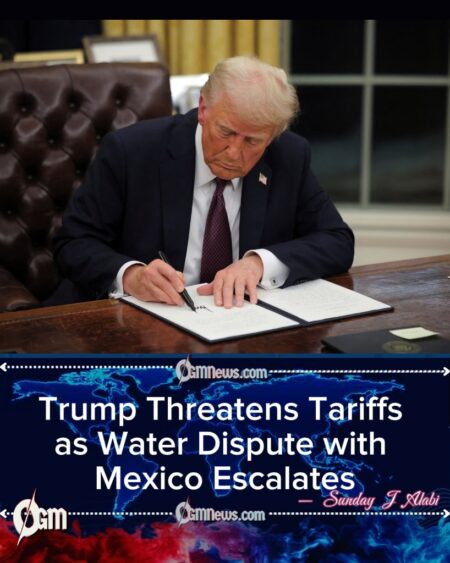
The current U.S. president serving a second term, Donald Trump, has issued a renewed warning to Mexico over what he describes as persistent violations of a decades-old water treaty that he says are harming Texas farms and livestock. In a statement posted on his Truth Social platform, Trump accused Mexico of withholding essential water deliveries owed to the United States, alleging the shortfall is placing American farmers at serious risk.
Trump’s comments come amid heightened attention on crop damage, drought conditions, and a recently announced $12 billion support package for American farmers facing economic hardship. He said he has authorized documentation to impose a 5 percent tariff on Mexico if the water is not released immediately, raising tensions ahead of critical trade discussions.
The Treaty Dispute and What Is Owed
Under the 1944 Water Treaty, Mexico is obligated to deliver 1.75 million acre-feet of water to the United States from the Rio Grande every five years. U.S. officials say Mexico still owes more than 800,000 acre-feet for the most recent cycle, which ended in October. Reports suggest Mexico has supplied less than 30 percent of its required quota during that timeframe.
Mexican authorities have pointed to severe drought and climate-driven water shortages as major factors limiting their ability to comply. The treaty includes flexibility in times of drought, allowing water deficits to roll into future cycles. Nonetheless, American officials argue the shortfall is worsening agricultural pressures in Texas, especially for crop irrigation and livestock.
Trump’s Pressure Tactics and Tariff Warning
In his statement, Trump said the United States needs 200,000 acre-feet by December 31, with the remainder delivered “soon after.” He argued that Mexico’s inaction was harming farmers who depend on a steady water supply for production. Trump said the longer Mexico delays, the more U.S. agriculture will suffer.
The president Trump’s threat includes a potential 5 percent tariff on Mexican imports—an action he previously signaled earlier in the year. Trump has maintained a fluctuating relationship with Mexico throughout his second term and has used tariffs in past disputes, particularly during earlier trade negotiations involving immigration and border security.
Mexico’s Position and Efforts to Respond
Mexican President Claudia Sheinbaum stated publicly that Mexico is complying “to the extent water is available” amid what she described as three years of severe drought. She announced she had submitted a proposal to U.S. officials aimed at addressing Texas water deficits and that negotiations were ongoing at ministerial levels.
Reuters has reported that Mexican officials are formulating plans to accelerate water deliveries due to growing concerns that Trump may tie water disputes to broader trade issues. Mexico has agreed to supply 122,000 acre-feet in the near term and is exploring options for additional releases. However, analysts note this would still fall significantly short of treaty requirements.
Impact on Texas Farmers and Cross-Border Tensions
Texas Republicans have long argued that Mexico has fallen behind on water deliveries and accuse Mexican authorities of diverting resources toward local agricultural industries, including cattle and pecan farming. They say the continued shortfall sharply affects Texas producers who are already struggling with drought and rising operational costs.
Farm communities along the Rio Grande have reported increasingly difficult conditions, with limited irrigation water and escalating feed prices. Some lawmakers have framed the issue as a national economic concern, urging the federal government to take stronger measures to ensure treaty enforcement and protect U.S. agricultural output.
Economic Pressures: Farm Aid and Market Volatility
The water dispute coincides with broader agricultural stress linked to trade conflicts, inflation, and fluctuating commodity prices. Trump recently unveiled a $12 billion aid package designed to shield producers from economic fallout—particularly soybean farmers affected by trade disputes with China.
The White House says the assistance reflects the combined impact of trade disruptions and market instability. Treasury officials have acknowledged that international negotiations have left American producers vulnerable, particularly those dependent on large foreign markets. Republican strategists worry that ongoing economic pressure on rural communities could reshape political dynamics ahead of 2026.
Outlook for Diplomatic Resolution
Despite sharp rhetoric, both countries have indicated interest in resolving the issue through negotiation. Mexican officials say discussions are advancing, while Trump maintains that immediate compliance is essential. Analysts say the situation may depend on rainfall patterns, infrastructure improvements, and broader U.S.–Mexico trade priorities in the year ahead.
As both nations navigate climate-related water challenges, long-term treaty adjustments or new cooperative frameworks may become necessary. For now, however, the dispute continues to place pressure on diplomatic ties—and on Texas farmers awaiting relief.