


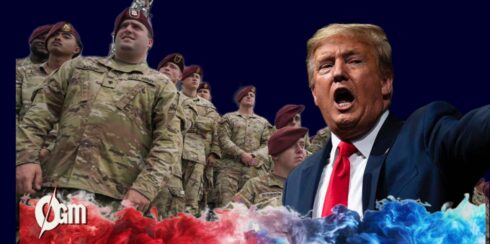
Military Heritage or Dog Whistle? Trump Rebrands Confederate Bases with Patriotic Spin
— President Trump announced Tuesday that seven U.S. Army bases, originally named after Confederate figures and renamed under the Biden administration, will again carry variations of their historical names. However, the new namesakes will not honor Confederate generals but instead commemorate other distinguished service members who share the same surnames.
Speaking at Fort Bragg, a base previously renamed Fort Liberty, Trump declared that the United States is “restoring tradition” while respecting modern sensibilities. “We won a lot of battles out of those forts. It’s no time to change,” he said. “And I’m superstitious, you know?”
A Symbolic Restoration Without Confederate Ties
Trump emphasized that while the restored names reference historic military installations, the honorees will not include Confederate generals. Instead, they will recognize American service members with valorous records, including Medal of Honor recipients and war heroes.
The new naming approach seeks to strike a balance between preserving historical continuity and honoring national unity. For example, Fort Gordon in Georgia, once named after Confederate Gen. John Brown Gordon, will now honor Master Sgt. Gary I. Gordon, a Medal of Honor recipient killed in action during the 1993 Battle of Mogadishu in Somalia.
The Seven Bases and Their New Namesakes
The Army has provided a list of the bases, their former Confederate namesakes, and the new honorees:
Fort A.P. Hill (VA): Will now honor three Black Civil War Medal of Honor recipients — Lt. Col. Edward Hill, 1st Sgt. Robert A. Pinn, and Pvt. Bruce Anderson.
Fort Hood (TX): Will honor World War I hero Col. Robert B. Hood.
Fort Lee (VA): Will now recognize Pvt. Fitz Lee, commended for heroism in the Spanish-American War.
Fort Pickett (VA): Will honor 1st Lt. Vernon W. Pickett, a decorated World War II officer.
Fort Polk (LA): Will commemorate Gen. James H. Polk, a U.S. Army Europe commander during the Cold War.
Fort Rucker (AL): Will now be named after WWI aviator Capt. Edward W. Rucker.
This follows earlier decisions by the Trump administration to revert Fort Liberty and Fort Moore back to Fort Bragg and Fort Benning, respectively — honoring non-Confederate soldiers with the same surnames.
OGMNews.Com
Trump Reinstates Army Base Names — Swaps Confederates for War Heroes, Sparks Backlash

According to a spokesperson, Secretary of the Army Daniel Driscoll has been instructed to “take immediate action” to carry out the renaming orders. The directive includes updating signage, documentation, and internal records to reflect the restored base names and their new honorees.
The Army’s public affairs office said the process will be implemented in stages and completed before the end of 2025. A revised naming policy is also expected to be issued, ensuring that future naming decisions avoid divisive historical associations.
Undoing the Naming Commission’s Work
This move effectively reverses a years-long process driven by the Congressional Naming Commission, a bipartisan panel established in the final days of Trump’s first term. Despite Trump’s initial veto, Congress overrode it, leading to the removal of Confederate-linked names during the Biden administration.
The Commission had argued that honoring Confederate officers — who fought against the Union — was inappropriate for U.S. military installations. Their work resulted in nine major base name changes, which have now begun to be unraveled under the Trump administration’s renewed directive.
Mixed Reactions Across the Political Spectrum
The restoration of the base names has sparked both support and criticism. Advocates argue the new honorees reflect a more inclusive and merit-based military tradition. “We’re preserving history while celebrating American heroes — not traitors,” one Army official noted.
However, critics say the move still appeals to those nostalgic for the Confederacy, even if the honorees themselves are not Confederates. Civil rights groups warn that the symbolic impact of returning to names like “Bragg” and “Benning” could reinforce old wounds.
A Trump Doctrine on Military Heritage
President Trump’s stance on preserving traditional military symbols and legacy naming reflects a broader ideological battle over historical memory. “These are the names our grandfathers and fathers served under,” he said at Fort Bragg. “We’re not erasing them — we’re restoring them with honor.”
The president’s decision to keep the original surnames but reassign them to valorous service members marks a notable shift in military heritage policy. While it avoids direct association with Confederate leaders, it simultaneously rejects the renaming initiatives of recent years — a move likely to remain politically and culturally significant ahead of the 2024 election.