








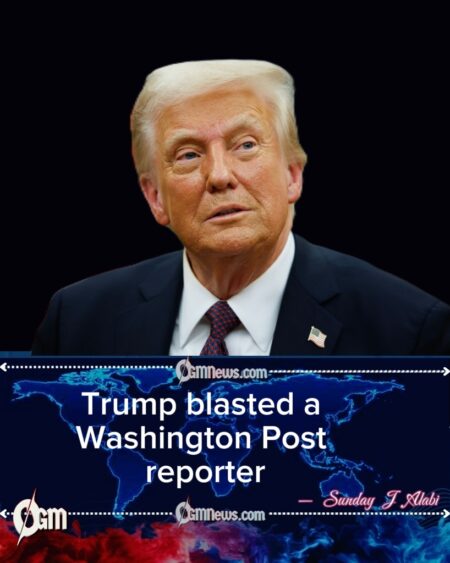
President Donald Trump, currently serving his second term as U.S. president, publicly rebuked a female journalist during a press interaction aboard Air Force One on Friday, accusing her of having a “very bad attitude” and questioning the relevance of her newspaper. The exchange, which unfolded as the reporter attempted to ask about immigration policy and sentiment within Trump’s political base, has renewed debate over the president’s confrontational relationship with sections of the American media.
The incident came only days after another tense encounter between Trump and CNN correspondent Kaitlan Collins in the Oval Office, underscoring a pattern of sharp exchanges between the president and female journalists during questioning on sensitive political issues, including immigration enforcement and the handling of the Jeffrey Epstein files.
A Confrontation in the Press Gaggle
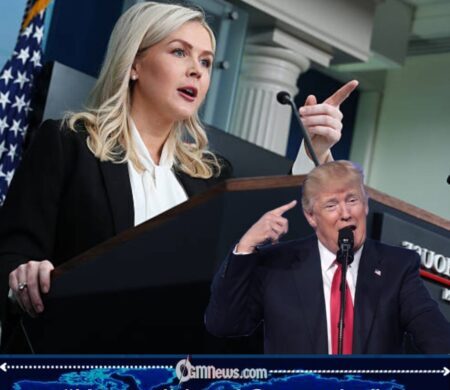
The latest episode occurred as President Trump addressed reporters during a press gaggle aboard Air Force One. As a Washington Post reporter began asking a question about how some supporters within the “MAGA base” viewed the administration’s immigration crackdown, the president interrupted before the question was completed.
Trump first asked the journalist to identify her news organization. Upon learning she was Natalie Allison, a White House correspondent for The Washington Post, the president criticized the publication, telling her it was “doing very poorly” and struggling to retain readers. He then accused Allison directly of having a “very bad attitude.”
Despite the rebuke, Trump invited the reporter to continue her question, only to interrupt her again mid-sentence. The exchange highlighted the strained tone of the interaction and reflected the broader friction between the White House and certain media outlets during the president’s second term.
Immigration Policy and the President Trump’s Base
At the center of Allison’s question was the Trump administration’s immigration enforcement strategy and whether it aligned with the expectations of Trump’s political base. The reporter appeared to reference claims that some supporters wanted all undocumented immigrants deported, not only those convicted of violent crimes.
In response, President Trump rejected the premise of the question and reframed the discussion around his own leadership. “My base is me and other very good people,” he said, adding that supporters who backed his “America First” agenda were pleased with the direction of the country.
Trump asserted that crime rates were at historic lows, the border was “totally closed,” and the economy was performing strongly. He also contrasted current conditions with what he described as high prices under the previous administration led by Joe Biden, insisting that his supporters were “very happy” with his policies.
Focus on Criminal Deportations
When pressed on whether the administration would support mass deportations of law-abiding undocumented immigrants, the president emphasized that enforcement efforts were focused primarily on violent offenders.
“We want to see everybody, but we’re focusing on the criminals,” Trump said, specifying “killers” and individuals involved in serious crimes. He acknowledged that many people had already been deported but maintained that the priority remained on those he described as murderers, drug dealers, and individuals he characterized as mentally unstable.
Trump also suggested that those removed from the country could potentially return if they followed proper legal procedures, though he did not provide details on how such processes would work. The comments reflected a continued emphasis on strict enforcement while leaving questions about broader immigration reform unanswered.
Earlier Clash With CNN’s Kaitlan Collins
The confrontation with the Washington Post reporter followed a widely reported exchange earlier in the week between President Trump and CNN correspondent Kaitlan Collins during a White House briefing. Collins had asked about the administration’s handling of information related to convicted sex offender Jeffrey Epstein and the release of related files.
Trump attempted to steer the discussion away from the topic, arguing that the country should “get onto something else” and asserting that the matter had been used as a conspiracy against him. When Collins persisted, the president sharply criticized her performance and CNN’s ratings, calling her “the worst reporter” and questioning her demeanor.
The interaction drew significant attention, with critics accusing the president of undermining press freedom, while supporters argued he was pushing back against what they viewed as hostile or repetitive questioning.
Pattern of Sharp Exchanges With Journalists
The incidents involving Allison and Collins are not isolated. In November, President Trump also clashed with Bloomberg reporter Catherine Lucey aboard Air Force One when she asked about the Epstein files. During that encounter, Trump waved a finger at the journalist and told her to be quiet, an exchange that was widely circulated online.
Such moments have become a recurring feature of Trump’s media interactions, particularly when questions touch on controversial subjects. The administration has defended the president’s approach as direct and candid, while press advocates have raised concerns about the tone and implications for respectful engagement between elected officials and journalists.
Washington Post Layoffs Add Context
Trump’s criticism of The Washington Post came amid reports of significant layoffs at the newspaper. Earlier in the week, the publication announced job cuts during an internal meeting, with reports suggesting that more than 300 journalists could be affected.
Owned by Amazon founder Jeff Bezos since 2013, the Post has faced declining subscriptions and reduced web traffic as it seeks greater profitability. According to reports, the layoffs have curtailed international coverage, eliminated the sports section, scrapped the books desk, and suspended a flagship podcast.
The timing of the layoffs added another layer to Trump’s remarks, linking his critique of the outlet’s performance with broader challenges facing traditional news organizations in a changing media landscape.