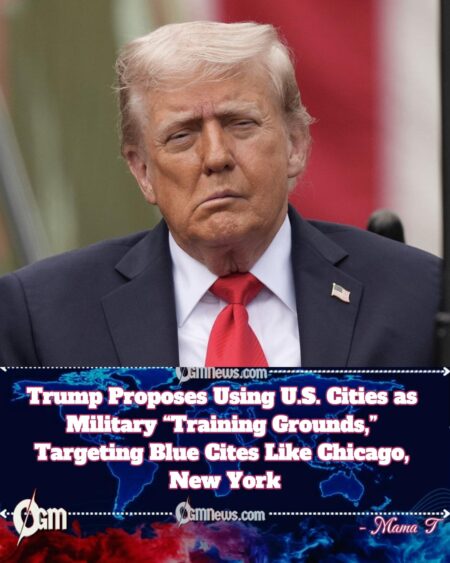
Military Training Grounds — In a controversial address at Marine Corps Base Quantico, Virginia, on September 30, 2025, President Donald Trump, currently serving his second term, suggested that U.S. cities deemed “dangerous” could serve as military training grounds. Specifically naming Chicago, Trump criticized its governor and indicated plans for the military’s involvement, sparking immediate debate over the legal and political implications of such proposals.
Military Training Grounds — Targeting Chicago and Its Leadership
President Trump singled out Chicago during his remarks, describing it as a “big city with an incompetent governor. Stupid governor.” His comments were delivered alongside Defense Secretary Pete Hegseth, whom Trump referenced in discussions about the use of cities for military exercises. Critics contend that these remarks unfairly politicize city governance and raise tensions between federal and state authorities.
The president’s focus on Chicago aligns with broader narratives in his administration that portray certain urban areas as high-risk environments requiring federal intervention. While Trump framed the initiative as a measure to strengthen national security, legal and political experts caution that such direct military involvement in domestic cities carries significant risks.
“Enemy from Within”: Framing Domestic Threats
Military Training Grounds — In his speech, Trump characterized parts of the country as facing an internal threat, referring to “the enemy from within.” This framing suggests a shift in the administration’s approach, positioning the military not only against external threats but also domestic unrest.
Such rhetoric has alarmed civil liberties groups, who argue that describing U.S. citizens as potential “enemies” blurs the line between lawful governance and authoritarian oversight. Political analysts note that the language echoes broader trends in which domestic security policies increasingly overlap with military operations.
Legal Implications of Military Deployment — Military Training Grounds
The president’s suggestion of deploying the military on U.S. soil raises immediate questions under the Posse Comitatus Act of 1878, which restricts the federal government from using armed forces for domestic law enforcement without Congressional authorization.
Legal scholars warn that any attempt to implement Trump’s proposal could be swiftly challenged in court. “The law clearly limits domestic military operations,” noted one constitutional expert. “Using cities as training grounds without proper authorization could violate multiple statutes and civil liberties protections.”
Historical Context: Operation Legend and Federal Deployment
Military Training Grounds — Trump’s proposal follows a pattern initiated with Operation Legend in 2020, where federal forces were sent to cities like Chicago, Albuquerque, and Baltimore under the pretext of crime reduction. The current administration has expanded these efforts to include potential deployments in New York and San Francisco.
Supporters argue that federal involvement can stabilize areas with high crime rates. Critics, however, view these actions as political maneuvers that risk undermining local authority and militarizing domestic law enforcement, further fueling national debates over federal power.
Reactions from Political Leaders and Military Officials
Military Training Grounds — Democratic leaders immediately condemned Trump’s remarks, comparing them to authoritarian tactics that threaten democratic norms. Senate Minority Leader expressed concern that framing U.S. cities as “training grounds” could erode public trust in the military.
Within the administration, however, some officials, including Secretary Hegseth, emphasized that the military must be prepared to act in diverse environments. While their statements did not directly endorse using cities as training grounds, they echoed Trump’s broader push for an assertive domestic security posture.
Military Training Grounds — Public Debate and Media Coverage
The president’s comments have sparked widespread discussion in media outlets and public forums. Analysts highlight concerns about civil liberties, federal overreach, and the potential precedent of using the military in domestic policing roles.
Conversely, some conservative media and political commentators defend Trump’s statements as a practical approach to addressing urban crime, underscoring ongoing divisions in public perception of military involvement in domestic affairs.