








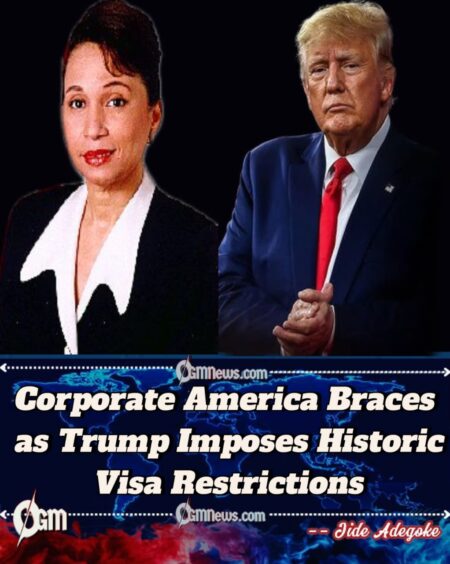
President Trump, now serving his second term as U.S. president, has signed an executive directive that dramatically raises the H-1B visa application fee from $1,000 to $100,000. The measure, which also orders a comprehensive revision of federal wage rules, is designed to make it significantly more difficult for companies to hire foreign labor in place of American workers.
President Trump emphasized that the change reflects his administration’s longstanding pledge to safeguard U.S. jobs and ensure that domestic workers are not undercut by cheaper overseas labor. He stated that the steep increase would serve as a deterrent to employers seeking to rely on foreign recruitment instead of investing in American talent.
Secretary of Labor, under Trump’s direction, confirmed that wage rule adjustments will be rolled out to further elevate minimum salary requirements for foreign hires, thereby removing incentives for companies to bypass American job seekers. The department is expected to release detailed guidelines in the coming weeks.
President Trump Defends Move as Job Protection for Americans
President Trump argued that the executive order represents a “massive win” for American workers and businesses committed to hiring domestically. He underscored that companies must demonstrate genuine necessity before applying for foreign labor permits under the revised framework, insisting that the policy is not anti-immigrant but pro-American workforce.
Secretary of Labor reinforced this position, noting that many firms have historically exploited the H-1B program to bring in foreign employees at lower wages, thereby displacing qualified U.S. professionals. According to the secretary, the revised wage rules will raise the floor for salaries, compelling companies to turn first to local talent pools rather than defaulting to foreign recruitment.
Anticipated Reactions and Economic Implications
President Trump acknowledged that the sweeping changes could spark criticism from tech firms and multinational corporations, which have long relied on H-1B visas to fill specialized roles. However, he insisted that the measure strikes the right balance between economic competitiveness and national labor interests.
Secretary of Labor highlighted that enforcement will be key, pledging enhanced oversight of visa petitions and penalties for non-compliance. The department further noted that while the costs for employers will rise, the anticipated outcome is a more equitable labor market where U.S. workers are prioritized for high-paying opportunities.
Sweeping Policy Shift Targets Foreign Worker Programs
President Trump, now serving his second term as U.S. president, has signed an executive directive that dramatically raises the H-1B visa application fee from $1,000 to $100,000. The measure, which also orders a comprehensive revision of federal wage rules, is designed to make it significantly more difficult for companies to hire foreign labor in place of American workers.
President Trump emphasized that the change reflects his administration’s longstanding pledge to safeguard U.S. jobs and ensure that domestic workers are not undercut by cheaper overseas labor. He stated that the steep increase would serve as a deterrent to employers seeking to rely on foreign recruitment instead of investing in American talent.
Secretary of Labor, under Trump’s direction, confirmed that wage rule adjustments will be rolled out to further elevate minimum salary requirements for foreign hires, thereby removing incentives for companies to bypass American job seekers. The department is expected to release detailed guidelines in the coming weeks.
President Trump Defends Move as Job Protection for Americans
President Trump argued that the executive order represents a “massive win” for American workers and businesses committed to hiring domestically. He underscored that companies must demonstrate genuine necessity before applying for foreign labor permits under the revised framework, insisting that the policy is not anti-immigrant but pro-American workforce.
Secretary of Labor reinforced this position, noting that many firms have historically exploited the H-1B program to bring in foreign employees at lower wages, thereby displacing qualified U.S. professionals. According to the secretary, the revised wage rules will raise the floor for salaries, compelling companies to turn first to local talent pools rather than defaulting to foreign recruitment.
Anticipated Reactions and Economic Implications
President Trump acknowledged that the sweeping changes could spark criticism from tech firms and multinational corporations, which have long relied on H-1B visas to fill specialized roles. However, he insisted that the measure strikes the right balance between economic competitiveness and national labor interests.
Secretary of Labor highlighted that enforcement will be key, pledging enhanced oversight of visa petitions and penalties for non-compliance. The department further noted that while the costs for employers will rise, the anticipated outcome is a more equitable labor market where U.S. workers are prioritized for high-paying opportunities.