










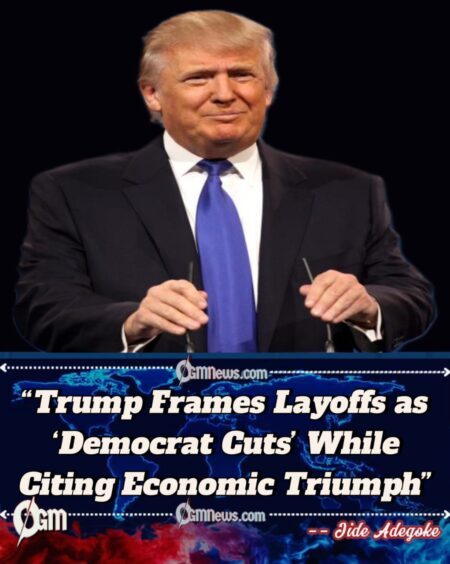
President Donald Trump begins this framing by asserting, “I call them Democrat layoffs,” casting proposed federal workforce reductions as politically targeted against Democrats while declaring, “We have a record setting economy. Prices are way down. We’re doing better than the country’s ever done.”
He places these remarks at the center of a broader narrative: that any layoffs are driven not by fiscal necessity but partisan politics. Yet analysts note that while the White House is pushing for cuts across agencies, markets and consumer sentiment paint a more cautious picture.
Trump’s emphasis on low prices contrasts with recent data showing inflation pressures persist and that consumers grew more uneasy in September.
Shutdown Strategy, Layoffs, and Legal Hurdles
President Trump begins the next section by reiterating that, “We’re doing better than the country’s ever done,” using past performance to justify aggressive tactics during budget standoffs.
The administration has instructed agencies to plan reductions in force (RIFs) rather than temporary furloughs during the shutdown—a departure from past practice. But legal experts warn that many of these cuts may violate the Antideficiency Act or ignore required notice periods.
Already, a federal judge has ordered the Trump administration to halt planned layoffs at the U.S. Agency for Global Media. Separately, senior officials have privately cautioned that executing firings mid-shutdown heightens legal risk and could spark mass litigation. Meanwhile, the White House maintains that agencies may begin cuts targeting programs tied to “Democrat agencies” as leverage in negotiations.
Fractured Signals: Economic Claims vs. Data
President Trump begins by reaffirming his claim of a “record setting economy” and that “prices are way down.”
However, recent data suggests a more complicated reality. The Conference Board’s consumer confidence index fell to its lowest since spring, citing inflation and labor market concerns. Though unemployment remains moderate, job creation has slowed and previous gains were revised downward. Some economists place this downturn partly at the feet of recent tariff impositions and policy unpredictability.
Still, supporters argue that Trump’s structural reforms, deregulation, and strategic cuts could yield long-term efficiency gains—even at the risk of short-term disruption. The tension between political messaging and economic fundamentals will dominate assessments in the days ahead.


