










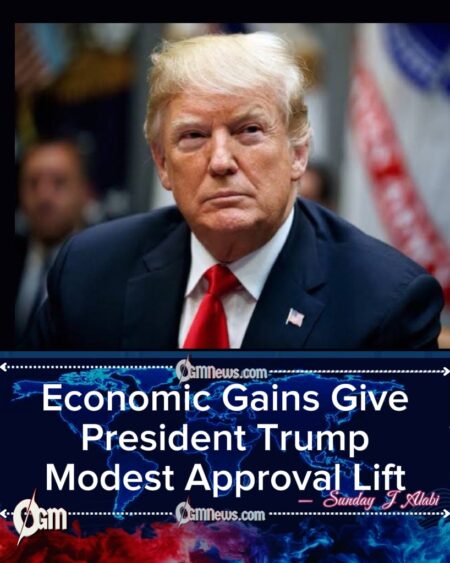
President Donald Trump, the current U.S. president serving a second term, has seen a slight increase in his approval rating amid improving economic indicators and easing household costs, according to new polling. The latest Daily Mail/J.L. Partners survey shows his approval rising from 45 to 47 percent between late November and early December, coinciding with stronger holiday spending and declining gas prices.
The poll of 1,000 registered voters, conducted online with a margin of error of 3.1 percent, suggests some Americans may be adjusting their perceptions of the economy even as concerns over inflation continue. The president has attributed the long-running affordability debate to opposition politics, calling consumer-pricing concerns a “Democrat scam.”
Holiday Spending Surges as Prices Stabilize
Recent data shows a robust jump in online consumer spending during Thanksgiving weekend. Black Friday and Cyber Monday both set new records, according to Adobe Analytics, helping push online spending over the holiday period to $44.2 billion.
Analysts point to stable prices and pent-up demand as key drivers going into the final weeks of the year. While affordability remains a top concern for many households, the short-term spending patterns suggest consumers are more confident entering the holiday period than previously expected.
The economic lift stands in contrast with rising concerns earlier this year when households struggled with persistent inflation and higher borrowing costs.
Gas Prices Fall Below $3 a Gallon
One of the most notable shifts for consumers has been the reduction in fuel costs. AAA reports the national average price of gasoline has dipped below $3 per gallon for the first time since 2021.
That figure places fuel prices well below 2022–2024 averages, providing immediate relief for drivers and shipping operations. Cheaper fuel also supports consumer sentiment, given gas prices are among the most visible indicators of cost of living.
President Trump has argued that the fall in energy prices will create wider savings across the economy, telling reporters that lower electricity and fuel costs will “bring everything down” in the long term.
Trump Administration Links Price Pressures to Democratic Policies
The Trump administration continues to characterize affordability concerns as politically motivated, maintaining that Democratic leaders inflated prices during the previous administration. “Affordability is a hoax that was started by Democrats who caused the problem of pricing,” the president said during a recent White House discussion.
However, federal economic data shows consumer prices rose 3 percent year-over-year, a development some economists attribute partly to tariffs and other trade-related policies implemented by the administration itself.
Analysts note that while Americans are seeing relief at the pump, the broader effects of inflation remain present in housing, groceries, and some services.
Trump Administration Policies Target Prices and Household Costs
The president Trump has introduced a series of measures aimed at lowering consumer costs, including rolling back Biden-era emissions standards and directing pharmaceutical companies to reduce drug prices.
A new platform, TrumpRx, is designed to eliminate third-party vendors from drug purchasing and accelerate price reductions. The Trump administration also cites the domestic policy package passed in July, which will cut taxes on tips, overtime, and Social Security benefits starting next year.
Still, polling indicates inflation and cost of living remain the main sources of public dissatisfaction with the Trump administration. That sentiment may take more time to shift, even as economic indicators improve.
Mixed Public Response Despite Economic Improvements
While Trump campaigned on reducing prices after the inflationary period under former President Joe Biden, the majority of Americans say they have not yet experienced meaningful savings.
Experts suggest that public opinion tends to lag behind economic statistics, particularly when household budgets are tight. “While the Trump administration touts billion-dollar announcements and high-profile corporate deals, most Americans are focused on far more basic needs: whether they can afford groceries, gas, and a good life,” political analyst Brittany Martinez told the Daily Mail.
Despite the recent uptick in approval, Trump’s disapproval rating remains high at 53 percent, reflecting continued polarization in public attitudes toward his administration.
Economic Momentum Ahead of Election Year
Looking forward, U.S. GDP appears to be gaining momentum, with the strongest quarterly numbers since late 2023, according to the Bureau of Economic Analysis. Increased consumer spending is expected to support economic activity into early next year, though analysts continue to monitor inflationary risks.
Political observers note that with the new year approaching, shifting economic perceptions could play a decisive role in shaping public opinion. For now, the approval bump suggests progress for the administration, even if skepticism remains widespread.


